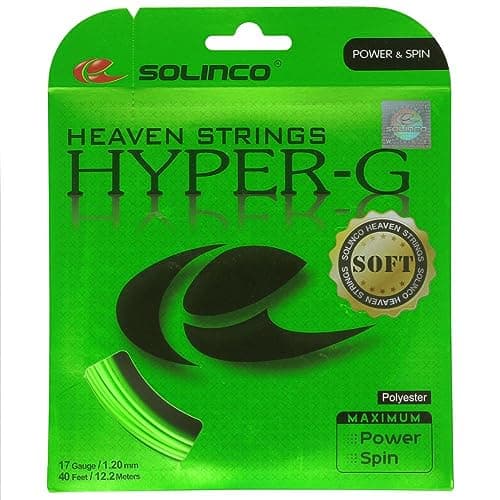
The best tennis string for most club players is Solinco Hyper-G Soft 17 — a shaped polyester that delivers most of an RPM Blast's spin and control for roughly half the money, which matters because polyester needs replacing often. If your arm is the constraint, buy a multifilament instead: HEAD Velocity MLT on a budget, Wilson NXT if you restring frequently enough to justify a reel.
Why string is the upgrade nobody makes
Club players obsess over frames and ignore strings, which is backwards. The same racquet strung with a stiff polyester and with a soft multifilament plays like two different racquets: one gives you control at full swing speed and a tiring arm, the other gives you free depth and comfort. Nothing you can do to a frame changes it that much.
It is also where the money is. A restring costs a fraction of a racquet, and a dead string bed in a good frame plays worse than a fresh one in a mediocre frame. If you have not restrung this year and you play weekly, that is the upgrade — not a new racquet. See how often to restring.
The three families
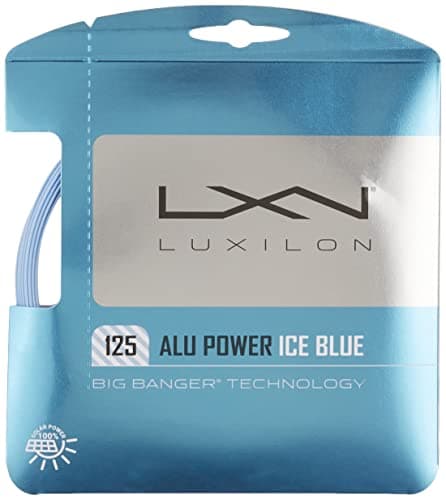
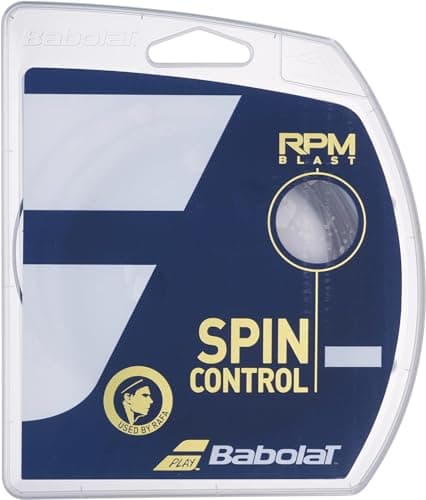
Polyester (co-polyester, “poly”).Stiff, low-powered, high-control — see strings for controlfor the ranking. The mains slide and snap back, which generates spin. Everything the professional game uses. The cost is comfort: poly is hard on arms, and it goes dead well before it breaks. Examples here: Hyper-G, ALU Power, RPM Blast, Lynx Tour.
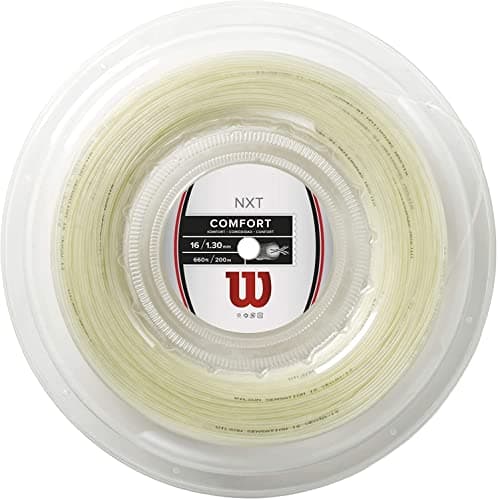
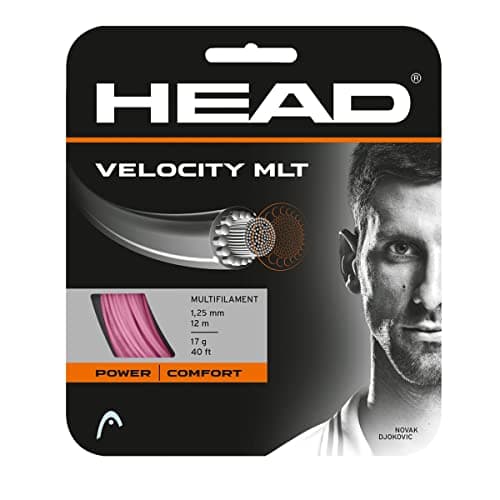
Multifilament.Thousands of fibres bundled in polyurethane, engineered to imitate natural gut. Soft, elastic, powerful, comfortable. The cost is control at high swing speeds and durability — it frays and breaks far faster under heavy spin. Examples here: NXT, Velocity MLT, Sensation.
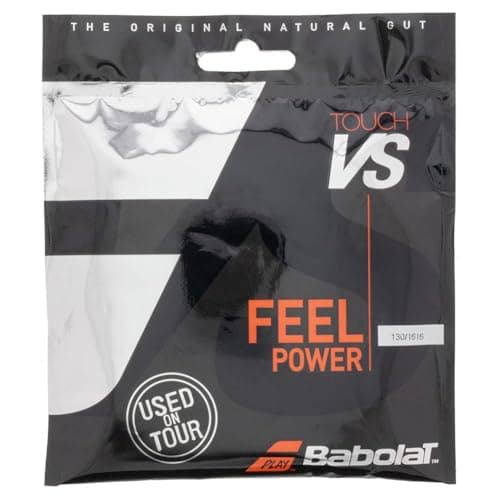
Natural gut.Actual processed cow intestine, and still the best-playing string in tennis. Unmatched elasticity, the best tension maintenance of any string, and the most arm-friendly option that exists. The cost is money and water — it is several times the price of a quality poly and it is damaged by moisture.
The hybrid most club players should actually use
You do not have to choose. A hybrid puts polyester in the mains, where the snapback that creates spin happens, and a multifilament or gut in the crosses, where comfort lives. You get most of the control and spin of a full poly bed with meaningfully less shock.
For a 3.5–4.5 player this is very often the right answer and almost nobody is told about it. Ask your stringer for poly mains and a multifilament cross; the cost difference is negligible.
Which string, by what you want
| If you want… | Buy | Type |
|---|
| Best all-round value | Solinco Hyper-G Soft 17 | Shaped polyester |
| Maximum control at full swing | Luxilon ALU Power 125 | Co-polyester |
| Maximum spin | Babolat RPM Blast 17g | Octagonal polyester |
| Comfort on a budget | HEAD Velocity MLT 17 | Multifilament |
| Premium comfort, bought by the reel | Wilson NXT 16 | Multifilament |
| The best-playing string there is | Babolat VS Touch Natural Gut | Natural gut |
Gauge: thinner plays better, thicker lasts longer
String gauge runs backwards — a higher number means a thinner string. 16g (1.30 mm) is thick and durable. 17g (1.25 mm) is the club standard and the best compromise. 18g (1.20 mm) is thin, bites the ball harder for more spin, and breaks sooner.
If you break strings often, go thicker. If you never break strings and want more spin, go thinner. Most players should be at 17g, which is why most of this page is.
Sets or reels?
A set is roughly 40 feet — enough for one racquet. A reel is 200 m and strings about sixteen frames, at a much lower cost per job.
A reel only makes sense if you string your own racquets, or your stringer will work from string you supply. If you restring twice a year at a shop, buy sets: a reel will deteriorate before you finish it. If you string your own and have settled on a string you like, a reel is the single biggest saving available in tennis.
Stringing your own
At club restringing prices, a basic drop-weight machine pays for itself in roughly ten jobs. The Klippermateis the classic entry point — gravity-based tensioning that never needs calibration, made in the US for decades. The GAMMA Momentum 2 adds six-point mounting and swivel clamps, which matters if you are stringing for a family or a team.
Both are slow. Expect well over an hour for your first few frames and around 30–40 minutes once you are practised. That is the real cost, and whether it is worth it depends entirely on how much you value the money against the time.
What we cannot tell you
We have not strung these strings and played with them. What we have is the published construction — material, profile, gauge, the manufacturer's own description — and the physics of how each family behaves, scored against a rubric we publish. String feel is more subjective than almost any other piece of tennis equipment, and anyone claiming an objective ranking of it is overstating their case. Including us, if we did.