Skip to content
Four Oh Club

The cheapest upgrade · Strings

Polyester vs Multifilament Tennis String

The single most consequential equipment decision in club tennis, and most players make it by accident — whatever the shop had on the machine.

By Stephen V.Updated How we score
#ad

We earn a commission when you buy through our Amazon links, at no extra cost to you. It never changes our rankings, and we say so when the cheaper racquet is the better buy. How this works.

Use polyester if you swing fast, hit with topspin and break strings; use multifilament if you value comfort, play at 3.5 or below, or your arm has ever complained. If you are between the two, hybrid it — poly mains, multifilament crosses.

They are different materials, not different grades

This is the misunderstanding that drives bad purchases. Polyester is not the “better” string and multifilament is not the beginner version. They are built differently and behave differently, and the right one depends entirely on what you need.

Polyesteris a single stiff monofilament, usually a co-polyester blend. It barely stretches. Its surface is slick against itself, which lets the mains slide and snap back — the mechanism behind topspin.

Multifilament is thousands of fine fibres bundled in a polyurethane matrix, engineered to imitate natural gut. It stretches substantially and returns energy elastically. Its fibres grip each other, so the mains do not slide much.

Head to head

PropertyPolyesterMultifilament
ControlHigh — low power, predictable depthLower — lively, balls fly at speed
PowerLowHigh
SpinHigh — snapback plus shaped profilesLow — mains do not slide
ComfortLow — stiff and inelasticHigh — stretches and absorbs
Durability (breakage)HighLow — frays under spin
Playable lifeShort — goes dead well before it breaksDegrades more gradually
Tension maintenancePoor — drops quickly after stringingModerate
Cost per jobLow to moderateModerate to high

Note the two durability rows, because conflating them is the most expensive mistake here. Polyester lasts longer before it snaps and dies much sooner as a playable string. A poly bed that has not broken in six months is not a bargain; it is a stiff, dead string bed that is worse for your arm than the day it was strung.

The short answer

Quick picks

#Racquet / gearBest forScorePrice
01
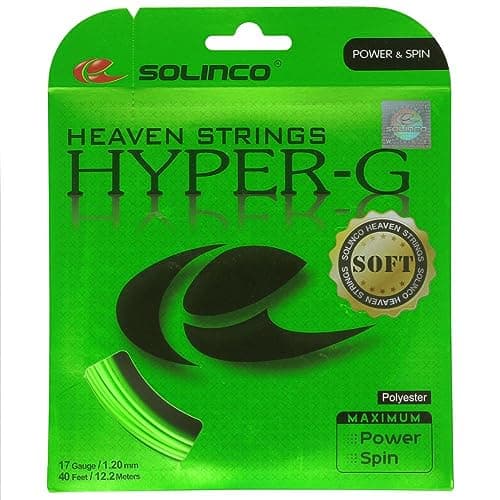
Solinco Solinco Hyper-G Soft 17 (set)
Solinco Hyper-G Soft 17 (set)

The best-value spin poly, and the one to buy first. Hyper-G gives you most of an RPM Blast for roughly half the price.

Best-value polyester
8.2
$12.99Amazon
02
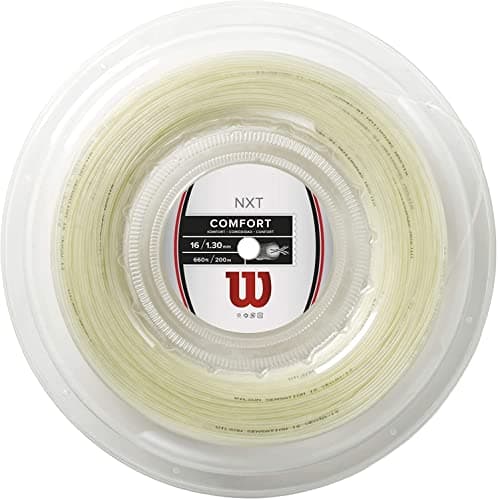
Wilson Wilson NXT 16 (200 m reel)
Wilson NXT 16 (200 m reel)

The premium multifilament, bought the sensible way — a reel. The closest a synthetic string gets to natural gut, at a tenth of gut's price.

Comfort and feel
6.6
$324.95Amazon
03
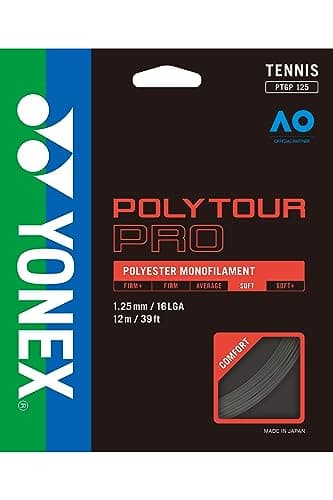
Yonex Yonex Poly Tour Pro 125 (set)
Yonex Poly Tour Pro 125 (set)

The most comfortable polyester sold. Yonex's silicone-infused poly is the bridge between a control string and an arm you can still use tomorrow.

Comfortable polyester
7.6
$20.50Amazon
04
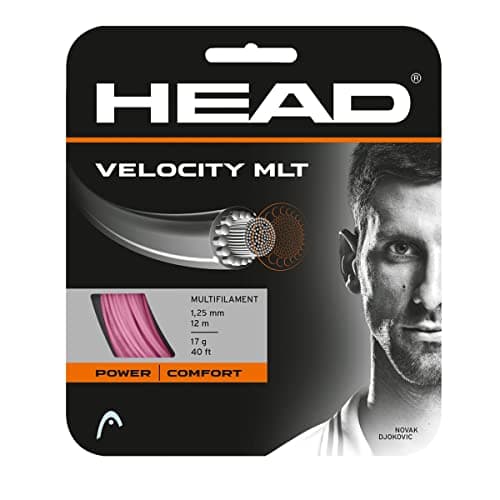
HEAD HEAD Velocity MLT 17 (set)
HEAD Velocity MLT 17 (set)

The budget multifilament, and the right first upgrade from factory string — comfortable, lively and genuinely cheap.

Arm-friendly on a budget
7.0
$10.00Amazon

#ad · Live prices from the Amazon Product API, as of October 7, 2026. Where we have no verified live price, we show none — we would rather leave a gap than print a number that has rotted.

In detail

The picks, in full

01
Solinco Solinco Hyper-G Soft 17 (set)

Best-value polyester

Solinco Hyper-G Soft 17 (set)

Square-profile co-polyester17g / 1.20 mmSoft variant40 ft set
8.2/10

The best-value spin poly, and the one to buy first. Hyper-G gives you most of an RPM Blast for roughly half the price.

Control
9
Spin
9
Comfort
6
Durability
7
Value
10

Pros

  • Square profile for spin, in the Soft version that takes a real edge off the harshness of standard Hyper-G
  • Among the cheapest quality polys sold, which matters because poly needs replacing often
  • Holds tension noticeably better than most budget polyesters

Cons

  • 'Soft' is relative — it is still a polyester and still stiffer than any multifilament
  • The bright green dye transfers onto light-coloured frames

Don't buy this if…

…you are stringing a stiff frame and have elbow history. Soft poly is not soft enough for that combination.

$12.99View on Amazon

$13.997% off

Price as of October 7, 2026. Prices change — Amazon's is the one that counts.

#ad · we may earn a commission from this link to Solinco Hyper-G Soft 17 (set)

02
Wilson Wilson NXT 16 (200 m reel)

Comfort and feel

Wilson NXT 16 (200 m reel)

Multifilament16g / 1.30 mm200 m reel (~16 jobs)High elasticity
6.6/10

The premium multifilament, bought the sensible way — a reel. The closest a synthetic string gets to natural gut, at a tenth of gut's price.

Control
6
Spin
5
Comfort
10
Durability
4
Value
8

Pros

  • Thousands of fibres bundled in polyurethane give it the elastic, ball-pocketing feel of natural gut
  • The most arm-friendly synthetic string widely sold — the first thing to try if your elbow hurts
  • A 200 m reel works out to a fraction of the per-job cost of sets

Cons

  • Multifilament frays and breaks far faster than poly if you hit heavy spin
  • A reel is a large up-front purchase that only pays back if you restring often

Don't buy this if…

…you break strings in under ten hours. You will be restringing weekly and should hybrid with a poly.

$324.95View on Amazon

Price as of October 7, 2026. Prices change — Amazon's is the one that counts.

#ad · we may earn a commission from this link to Wilson NXT 16 (200 m reel)

03
Yonex Yonex Poly Tour Pro 125 (set)

Comfortable polyester

Yonex Poly Tour Pro 125 (set)

Silicone-infused poly1.25 mm40 ft setSoft co-polyester
7.6/10

The most comfortable polyester sold. Yonex's silicone-infused poly is the bridge between a control string and an arm you can still use tomorrow.

Control
8
Spin
7
Comfort
7
Durability
8
Value
8

Pros

  • Silicone infusion genuinely softens the string without turning it into a multifilament — the best poly option for a player with mild arm sensitivity
  • Round profile means it is gentler on the frame's grommets than aggressive shaped strings
  • Holds tension well for a soft poly

Cons

  • Round profile gives up spin relative to a shaped string
  • Still a polyester; it is not in the same comfort class as NXT or natural gut

Don't buy this if…

…spin is the whole reason you are going to poly. Buy RPM Blast or Hyper-G instead.

$20.50View on Amazon

Price as of October 7, 2026. Prices change — Amazon's is the one that counts.

#ad · we may earn a commission from this link to Yonex Poly Tour Pro 125 (set)

04
HEAD HEAD Velocity MLT 17 (set)

Arm-friendly on a budget

HEAD Velocity MLT 17 (set)

Multifilament17g / 1.25 mm40 ft setNylon multifilament
7.0/10

The budget multifilament, and the right first upgrade from factory string — comfortable, lively and genuinely cheap.

Control
6
Spin
5
Comfort
9
Durability
5
Value
10

Pros

  • Multifilament comfort at roughly a third of NXT's per-set price
  • The cheapest meaningful step a 3.0–3.5 player can take toward a softer string bed
  • Lively enough to add free depth to a low-powered frame

Cons

  • Frays and breaks faster than NXT, never mind poly
  • Less control than any polyester — big swings will send balls long

Don't buy this if…

…you break strings every few sessions. Hybrid it with a poly in the mains instead.

$10.00View on Amazon

Price as of October 7, 2026. Prices change — Amazon's is the one that counts.

#ad · we may earn a commission from this link to HEAD Velocity MLT 17 (set)

Which one, by level

NTRP 2.0–3.0:multifilament, or a synthetic gut if cost is the constraint. You need the free depth, you are not generating the swing speed that makes poly work, and poly's control is solving a problem you do not have.

NTRP 3.5: multifilament for most, hybrid if you are starting to hit through the court and finding balls sailing long.

NTRP 4.0: the genuine fork. Hybrid is the sensible default. Full poly if you swing fast, hit heavy topspin and have no arm history.

NTRP 4.5+: poly or hybrid. At these swing speeds a full multifilament bed is very hard to control.

The hybrid, properly explained

A hybrid uses two different strings in one frame: typically polyester in the mains (the vertical strings, running handle to tip) and multifilament or natural gut in the crosses.

It works because the two sets of strings do different jobs. The mains do almost all the sliding and snapping back, which is where spin and control come from. The crosses contribute disproportionately to how the bed feels and how much energy it absorbs. Putting the stiff string only where it is needed gets you most of the control with much less of the shock.

Ask your stringer for “poly mains, multi crosses”. It is a standard request, it costs no more than a normal restring, and it is the setup a lot of 4.0 players should be using and are not.

Tension differs between the two

An important practical point. Polyester plays stiffer than its tension number suggests, so it should be strung two to four pounds lower than you would string a multifilament in the same frame.

Stringing a poly at the tension you used for multifilament is a common and painful error: the bed is far too stiff, control becomes harshness, and the arm pays. See the tension guide.

What about synthetic gut?

A third category that gets overlooked: a solid nylon core with a wrap, sitting between the two families. It is cheaper than both, softer than poly, more durable than multifilament, and it has no standout property whatsoever.

For a club stringing dozens of racquets, or a 3.0 player who just needs string in the frame, it is entirely sensible. For anyone making a deliberate choice about how their racquet plays, it is a compromise with no upside.

The honest summary

Most club players are in a full polyester bed because that is what the tour uses and what the shop defaults to, and a meaningful share of them would play better and hurt less in a multifilament or a hybrid. Polyester is a tool for controlling a swing that is already too powerful. If that is not your problem, it is not your string.
How we picked

We have not physically tested this gear

Everyone in this category says they tested twenty racquets. We have not tested any — and we say so. What we did instead: compiled the manufacturer-published specifications (head size, strung weight, string pattern, stiffness, outsole compound), normalized them, and scored each product against a published rubric weighted for the NTRP tier this page serves. The scores are judgments from documented research, not measurements we took, because we do not have a lab and are not going to pretend we do.

Questions

Frequently asked

Is polyester or multifilament better for tennis?
Neither is better in general. Polyester gives control and spin and is hard on the arm; multifilament gives power and comfort and less control. Poly suits fast swings and heavy topspin from 4.0 upward; multifilament suits 3.5 and below, and anyone with arm trouble.
How long does polyester string last?
It resists breaking well but goes dead as a playable string in roughly 10–20 hours for most club players, as it loses tension and elasticity. Playing on an unbroken but dead poly bed is harsher on your arm than a fresh one.
What is a hybrid string setup?
Two different strings in one racquet — usually polyester in the mains and multifilament or gut in the crosses. You keep the spin and control from the mains and gain a meaningful share of the comfort from the crosses, at no extra stringing cost.
Should I string polyester at a lower tension?
Yes, two to four pounds below what you would use with a multifilament in the same frame. Polyester plays considerably stiffer than its tension number suggests.

Keep reading

Receipts

Sources

We do not run a testing lab, and we do not pretend to. Our specs come from manufacturer listings and spec sheets; our rules and dimensions come from the official rulebook. Where we could not verify something, we say so on the page rather than quietly leaving it out. Read our full method.