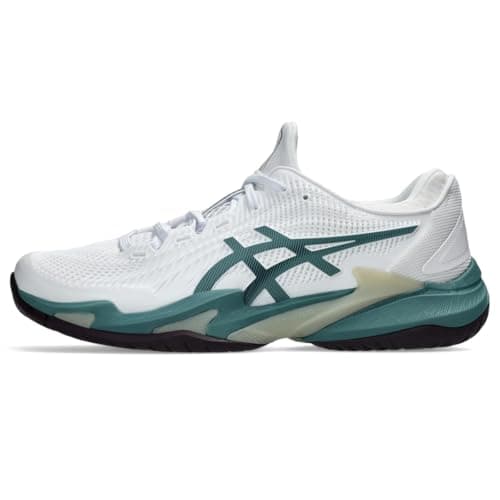
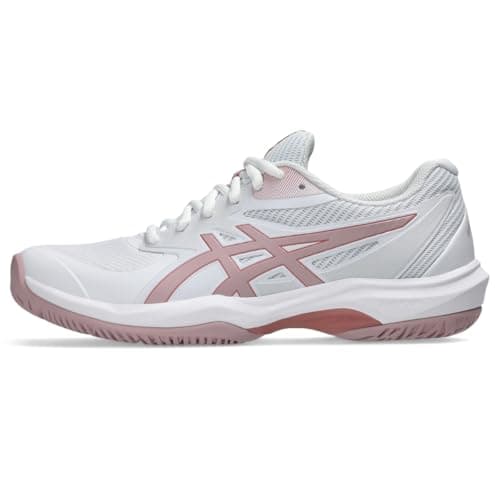
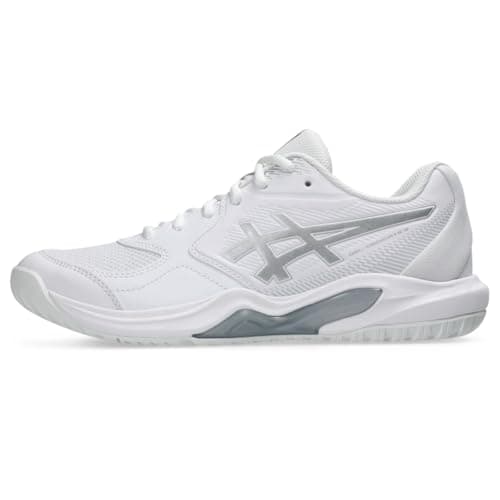
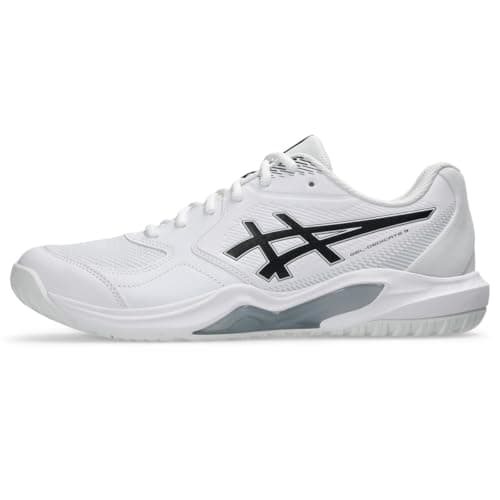
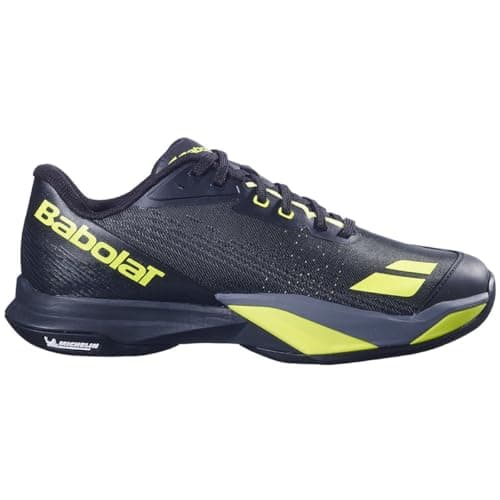
For men, the lightest serious court shoe here is the Babolat Jet Mach 4 All Court — a Matryx woven upper over a Michelin outsole, built for a quick player who wants the shoe to disappear. For women, the ASICS Game FlyteFoam is the light pick with real cushioning, and the Gel-Dedicate 9 is the lighter, cheaper one. If light matters to you because your legs are not what they were rather than because you are fast, buy the ASICS Game FlyteFoam or the Gel-Dedicate rather than a low-profile performance shoe — they are light and cushioned, which is the combination that actually helps.
Three searches land on this page — lightweight tennis shoes, lightweight tennis shoes for women, lightweight tennis shoes for men — and they come from two completely different players. One is quick and wants nothing between their foot and the court. The other is sixty and finds a modern support-heavy court shoe exhausting to drag around for two hours. The picks below are labeled so you can tell which half of the page is yours.
What you give up when a court shoe gets lighter
Weight in a tennis shoe is not padding for its own sake. It is structure, and structure is what stops a lateral cut from rolling your ankle. Podiatry guidance on court sports is blunt about why tennis shoes exist at all: they have "reinforced lateral walls, extra durability at the toe drag area, and appropriate lateral stability," and the same source notes that "wearing running shoes for tennis significantly increases lateral ankle sprain risk because running shoes are designed for forward motion, not the lateral cuts that tennis requires constantly."
So the honest version of this page is that lightness is bought with three things:
Lateral containment. The heavy shoes on this site — the Gel-Resolution, the Barricade — are heavy because of a lateral wall and a support chassis. A light shoe has less of both. If you have rolled an ankle, this is the wrong page; go to the hard-court page and buy the stable shoe.
Outsole durability. Durable rubber is dense rubber. The lightest shoes here wear through at the toe and the lateral forefoot faster than the heavyweights do — see the durability page for the other end of that trade.
Cushioning, sometimes. Not always: foam is light. A low-profile performance shoe is thin because it is built to keep you close to the court, which is a feature for a quick player and a problem for a 60-year-old on concrete. The two light-and-cushioned picks here are the ASICS Game FlyteFoam and the adidas Gamecourt with its Cloudfoam midsole.
Light for speed, or light for your legs?
If you are quick and the shoe feels like luggage: you want a low-profile performance shoe. The Babolat Jet Mach 4 is the one here — its Matryx woven upper is a structural fabric rather than a foam-and-mesh sandwich, which is how it stays supportive while staying light, and Babolat pairs it with a Michelin outsole. The ASICS Court FF 3 is the alternative: the same low-profile idea with FLYTEFOAM underfoot and an AHAR outsole.
If you are older, or coming back, and two hours is the problem: you want a light shoe with foam in it, not a race shoe. The ASICS Game FlyteFoam is the pick: FLYTEFOAM cushioning, an AHAR outsole (the durable compound, not the entry one), and lighter than the Gel-Resolution it sits under in the ASICS range. Below it, the Gel-Dedicate 9 in men's or women's is lighter still, cheaper, and thinner underfoot — fine for an hour on a cushioned court, noticeable after two on concrete.
If light means cheap for you: the adidas Gamecourt 3 and the Gel-Dedicate 9 are both light because they are entry-level, with less structure in them. That is a legitimate way to get a light shoe, as long as you know you are also getting an entry-level shoe. The full budget ranking is on the budget page.
Two cheap ways to make any shoe feel lighter
Take the stock insole out and weigh the replacement. Factory insoles in court shoes are often heavier than a good aftermarket one, and swapping gets you a small weight saving plus better support for a fraction of a new pair. The caveat is that a thinner insole changes the volume of the shoe, so it fits looser — fine if you were between sizes, not if the shoe already fitted.
Check your socks. A thick cushioned tennis sock is real weight on each foot and real volume inside the shoe. For a player who wants the shoe to disappear, a thinner sock changes the feel more than most people expect — and for the player whose legs are the problem, a thicker cushioned sock is worth the weight. Both are covered on the tennis socks page.
What we are not doing on this page
We are not publishing gram weights, because the manufacturers do not publish them consistently for court shoes and we do not have a scale we would stand behind for a comparison across six models in multiple sizes. What we have instead is the construction: which shoes are built on a low-profile last, which uppers are woven rather than layered, which midsoles are foam rather than foam-plus-chassis, and which outsoles use a durable compound at the cost of density. Those are published, and they are what determines the weight.
We are also not ranking any shoe that is not a tennis shoe. "Lightweight tennis shoes" pulls a great many walking and lifestyle sneakers, and none of them belong on a court for the reason the podiatry guidance above gives. Every pick here has a court outsole.
One thing that is worth more than the shoe choice if your legs are the issue: the racquet. A light frame does more for a tired player over two hours than a light shoe does, and the seniors racquet page is the one to read next.