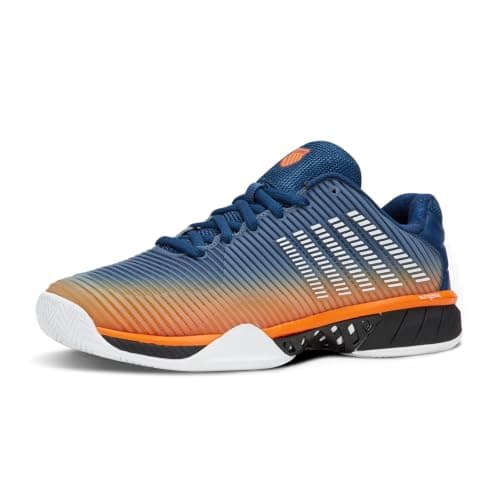
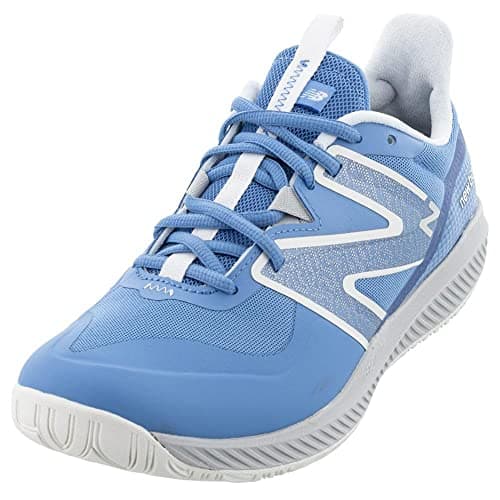
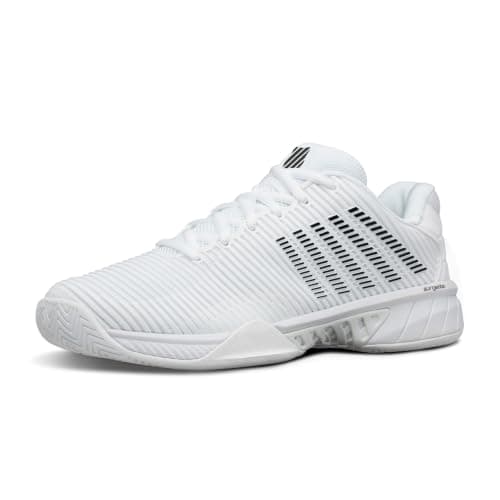
If you have genuinely wide feet, buy New Balance. The FuelCell 996 v6 (men's) and 796 v3 (women's) are the only tennis shoes here sold in real width options — different lasts, not stretched versions of the standard one. If you need roomy rather than technically wide, the K-Swiss Hypercourt Express 2 has the most generous standard toe box in tennis and costs less.
Roomy is not the same as wide
This distinction is the whole page, and the industry blurs it constantly.
A genuine wide fitting (2E, 4E for men; D for women) is built on a different last. The forefoot is wider, but so is the midfoot, and critically the heel is notproportionally wider — so you get room where you need it without losing the heel lock that makes the shoe work.
A roomy standard last is simply a wider version of the same shape. It helps if your foot is uniformly broad, and it does not help if you have a wide forefoot and a narrow heel, which is the most common combination. You end up with a comfortable front and a heel that lifts.
Know which problem you have before you buy. If your complaint is “my toes go numb”, roomy may be enough. If it is “nothing fits anywhere”, you need a real width.
Why this matters more in tennis than anywhere else
In a running shoe, a poor width fit is uncomfortable. In a tennis shoe it defeats the shoe. The entire value of a lateral support structure is that it holds your foot while the shoe changes direction. If your foot can move inside the shoe, the support catches the shoe and your foot keeps going — which is the moment ankles roll.
The failure mode players actually adopt is worse: lacing loosely to relieve the pinching, which adds even more movement. If a shoe only fits unlaced, it does not fit.
Brands, ranked by how accommodating they are
New Balance — genuine widths, and the only brand here that does. If you have struggled for years, start and probably finish here.
K-Swiss — the roomiest standard last in tennis, with a broad toe box and no break-in period. The practical answer for most moderately wide feet.
HEAD and Wilson — standard lasts that run slightly generous.
adidas — standard, neither generous nor punishing.
ASICS — standard-to-snug, with some models offered in a 2E in certain markets. The Court FF line is notably narrow.
Babolat — the narrowest major brand in tennis. Beautifully made shoes that are simply the wrong shape for a broad foot. Avoid, however good the reviews are; see men's tennis shoes for where it does suit.
A related but genuinely different problem: tennis shoes for bunions. A wide foot is uniformly broad and needs a bigger last everywhere; a bunion foot may be a normal width with one prominent joint, and going a full width up on it lets the foot slide. If your issue is arch height rather than width, high arches is the page.
And the opposite problem? It is the less-served one, because no tennis brand sells a narrow fitting and none of them publish a last width either. Court shoes for narrow feet ranks the models by third-party measured interior and toebox width against the category average — the mirror image of this page, with none of the same picks.
What is actually available
| Shoe | For | Width approach |
|---|
| New Balance FuelCell 996 v6 | Men | Genuine D / 2E / 4E lasts |
| New Balance 796 v3 | Women | Genuine B / D lasts |
| K-Swiss Hypercourt Express 2 | Men | Roomiest standard toe box |
| K-Swiss Hypercourt Express 2 | Women | Roomiest standard toe box |
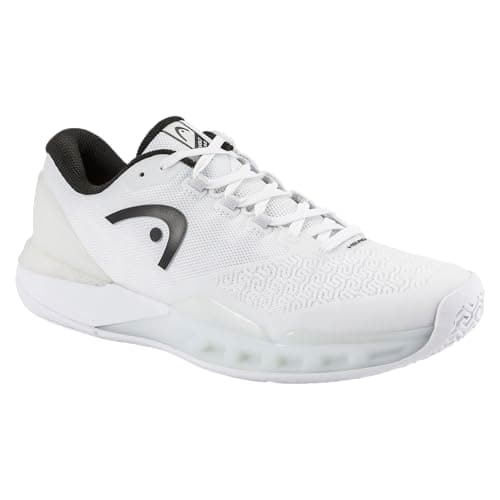
| HEAD Revolt Pro 5.0 | Men | Standard, runs slightly generous |
Note that width availability moves around by colorway and by season far more than core sizing does. A model sold in 4E one year may be standard-only the next, so check the specific listing rather than assuming the model carries it.
Do not size up instead
The universal wide-foot workaround is buying a half or full size longer, because a longer shoe is also a slightly wider one. In tennis this trades one problem for a worse one: the extra length puts your foot behind the shoe's flex point and leaves slack at the heel, so you get toe bang on stops and heel lift on pushes.
Buy the right length in the right width. If the right width does not exist in the model you want, change the model.
Things that buy you a few millimeters
If you are close rather than hopeless, three adjustments genuinely help.
Remove the stock insole and fit a thinner one. A flat replacement insole can free up a surprising amount of volume, particularly for a high instep.
Skip a lace eyelet. Window-lacing over the widest part of the foot relieves pressure there while keeping the heel locked — this is the fix most people never try.
Thinner socks. A technical tennis sock is thinner than a cushioned running sock and still wicks well.
None of these turns a narrow shoe into a wide one, and none of them fixes a Babolat.
The support trade
Be aware of what you are giving up. The most supportive shoes in tennis — the Gel-Resolution X, the Barricade — achieve part of that support by holding the foot tightly. A roomier shoe allows slightly more internal movement by definition.
That is a real trade but it is the right one: a well-fitting shoe with moderate support protects you far better than a highly supportive shoe your foot does not sit properly in. The New Balance models mitigate it with PROBANK stability structures, which is why they lead this list rather than merely appearing on it.
One related case worth separating out. A wide foot is frequently also a flatfoot, because an arch that flattens spreads the foot — and the two problems want different things from a midsole. Width without support is not enough if the arch is collapsing under load: see tennis shoes for flat feet, which ranks the same New Balance models on their stability structure rather than their width grade.