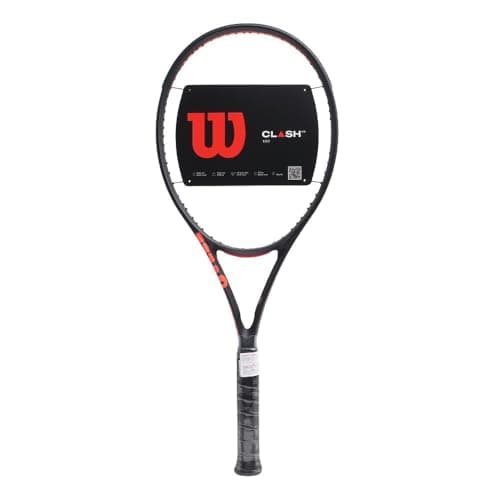
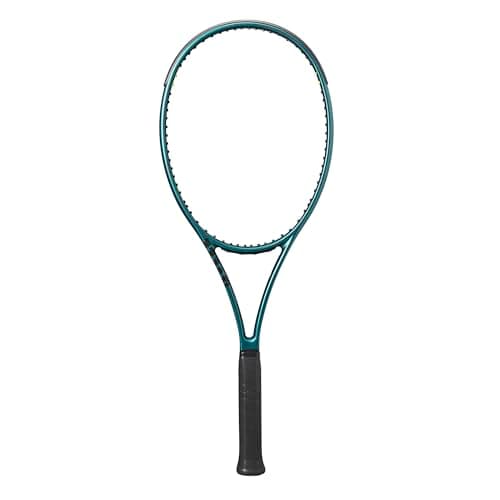
For a 4.0 player, the Wilson Blade 98 (16x19) v9 is the best racquet you can buy: a 98 sq in head with an open pattern is the exact point where you gain real control without losing the spin your game now depends on. If you are a 4.0 who still mishits under pressure, or whose elbow has ever complained, take the Wilson Clash 100 v3 instead — a bigger face and a far softer frame, for the same game.
What a 4.0 actually is
A 4.0 player has dependable strokes on both wings, can hit with direction and depth on moderate shots, and is starting to use spin and pace as tactics rather than accidents. Serves go in with intent. Volleys are deliberate. What is still missing is consistency under real pressure, and that is what separates 4.0 from 4.5. The official definitions are published by the USTA; our plain-English version is in what a 4.0 player looks like.
This site is named for that level, and not by accident. 4.0 is the rating the recreational game is organised around: it is where the competitive leagues get serious, where equipment decisions start to show up in results, and where most players who stick with tennis eventually land.
The spec window for 4.0
Narrower than you would think. Across the five frames here:
Head size 98–100 sq in. Below 98 you are buying a 4.5+ frame and will pay for it on off-centre days. Above 100 you are giving away control you can now use.
Strung weight 11.0–11.4 oz. Enough mass to stand up to a hard hitter; not so much that your swing slows in the third set.
16x19 pattern. Almost universal at this level, and correctly so. You are hitting with enough racquet-head speed for the mains to slide and snap back, which is where topspin comes from.
If a frame you are considering falls outside that window, it is not necessarily wrong — but you should be able to say why.
Where 4.0 players waste money
Two places, consistently. The first is buying a 4.5 frame because it is what the better player at the club uses. A Pro Staff 97 in a 4.0 hand produces short balls, not precision.
The second is buying a new racquet when the actual problem is a dead string bed. If your current frame is in the window above and you have not restrung it this year, do that first. It costs a tenth as much and the difference is larger — see how often to restring.
Picking between the five
| If you are… | Buy | Because |
|---|
| A 4.0 who hits clean and wants more control | Wilson Blade 98 v9 | 98 sq in and 16x19 is the control-plus-spin benchmark |
| A 4.0 with any arm history | Wilson Clash 100 v3 | RA 54 stiffness, the softest modern frame at this spec |
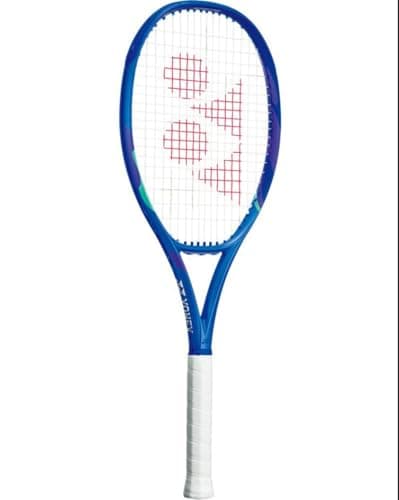
| A 4.0 who wants power without harshness | Yonex EZONE 100 | Isometric head plus VDM dampening in the handle |
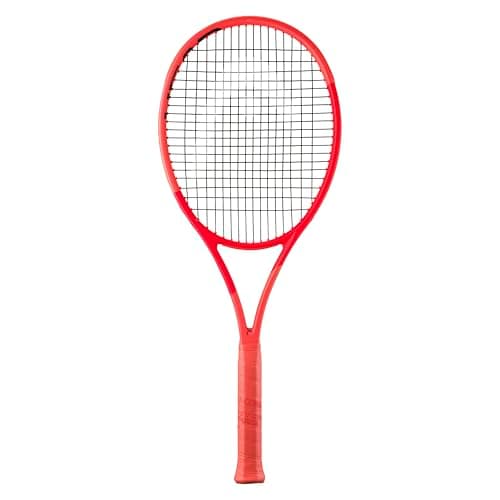
| A genuine all-court 4.0 | HEAD Radical MP | No weaknesses anywhere, ships strung |
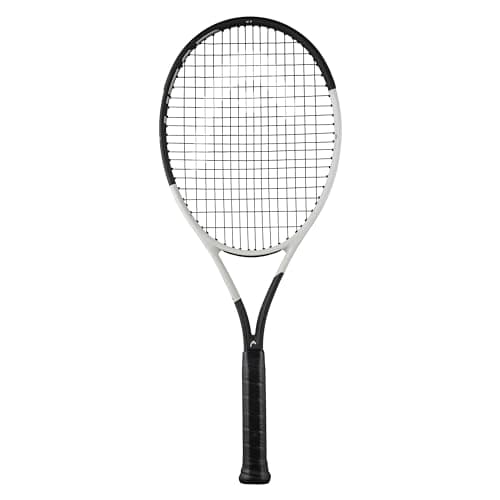
| A 4.0 with a big serve and a first-strike game | HEAD Speed MP | Fast through the air, crisp feedback, 100 sq in |
The 98-versus-100 question for a 4.0
This is the decision that stalls more 4.0 purchases than any other. The honest test: think about your last three matches. Were your errors mostly balls that went long, or balls that died in the net off the frame?
Long balls mean you have more power than you can control — go to the 98. Frame shanks and netted balls mean your contact is not yet consistent enough — stay at 100. Our head size guide works through this in more detail, including why the gap between 98 and 100 is larger in practice than two square inches suggests.
String it for the level, not the brand
A 4.0 is the level where a full polyester bed starts to be defensible — and also the level where it causes the most injuries, because swing speeds are now high but technique is not yet efficient. The safe, genuinely good setup for most 4.0 players is a hybrid: polyester in the mains, multifilament in the crosses. You get the control and the spin snapback from the mains and keep a meaningful amount of comfort.
If you are going full poly, drop the tension two to four pounds below what you would use with a multifilament. Poly is a stiffer material and plays tighter than the number on the machine suggests. The tension guide explains why.
What will not make you a 4.5
None of these racquets. The gap between 4.0 and 4.5 is consistency under pressure and tactical patience, and no frame supplies either. What equipment can do is stop holding you back: a frame in the right window, strung within the last few months, with shoes that let you get to the ball. Everything else on this site is secondary to that.
How we picked
We have not physically tested this gear
Everyone in this category says they tested twenty racquets. We have not tested any — and we say so. What we did instead: compiled the manufacturer-published specifications (head size, strung weight, string pattern, stiffness, outsole compound), normalized them, and scored each product against a published rubric weighted for the NTRP tier this page serves. The scores are judgments from documented research, not measurements we took, because we do not have a lab and are not going to pretend we do.