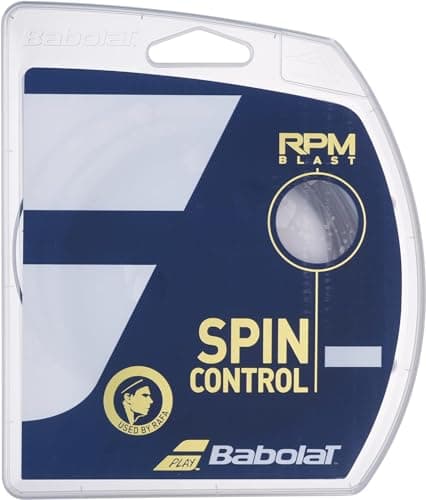
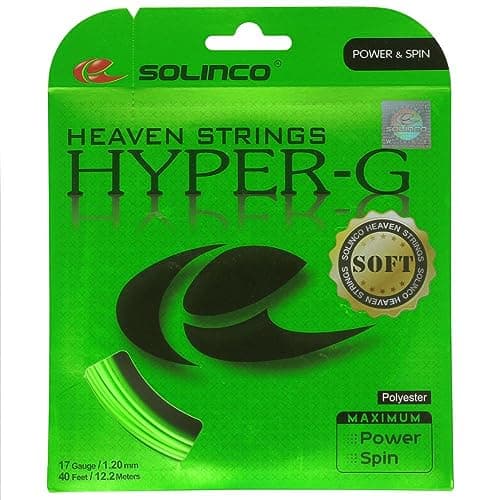
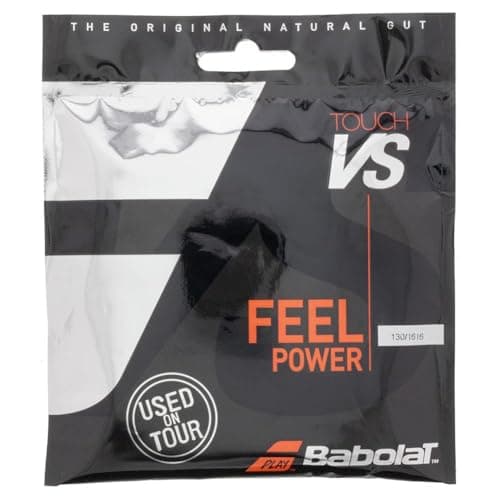
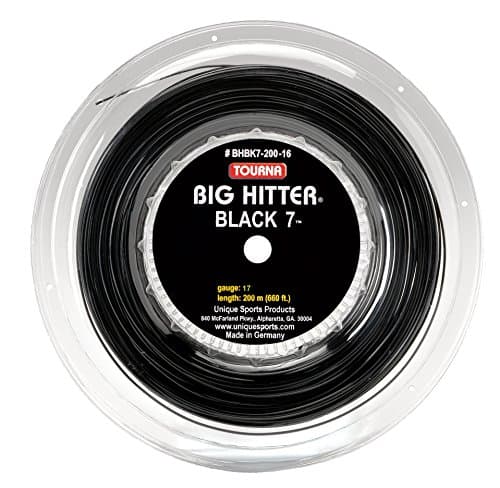
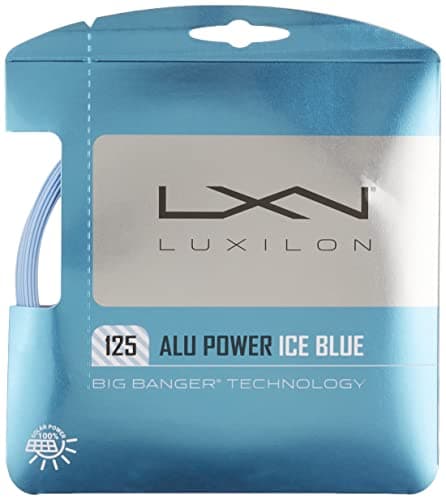
Luxilon ALU Power 125 is still the answer for an advanced player who wants control. It is the most-used string on the professional tour and the benchmark every other polyester gets compared against: a co-polymer with aluminum fibers at 1.25 mm, low-powered, crisp, and utterly predictable at full swing speed. If your game is heavy topspin rather than flat drives, Babolat RPM Blast 17g is the spin standard — an octagonal profile with the edges to grab the ball. Solinco Hyper-G Soft 17 gives you most of an RPM Blast for roughly half the money, which matters because you will be replacing it often. Babolat VS Touch Natural Gut 16 is the pick if you have arm history and will not give up control: use it in the crosses of a gut-poly hybrid. And Tourna Big Hitter Black 7 on the reel is the honest answer for anyone breaking a string a week.
An advanced player's string problem is different from everyone else's. You are not trying to find comfort or free power — you generate your own. You are trying to keep a very fast swing inside the lines, keep the string bed consistent from week to week, and keep the cost of doing both from becoming absurd. Those are three separate decisions and this page takes them in order.
Control: why ALU Power is still the reference
A full bed of a low-powered co-polyester is what lets a 4.5 swing out. The string takes the ball, flattens, and returns it with less launch than a softer string would, so a swing that would send a multifilament five feet long lands a foot inside the baseline. ALU Power is the version of this everyone measures against, and its published build is a co-polymer with aluminum fibers in a 1.25 mm, 40 ft set.
Its two real costs are stated plainly on its own card: it is stiff, and it loses tension faster than its reputation suggests. A full ALU bed in a stiff frame is the textbook tennis-elbow recipe, and the string goes dead sooner than it breaks. Both are manageable — string it in a flexible frame, restring on a calendar — but neither goes away because you are good.
Spin: shaped profiles, and what they actually do
RPM Blast's octagonal cross-section is not marketing. Edges on the main strings give the ball something to catch on, and the mains then slide across each other and snap back, which is the mechanism that puts rotation on the ball. Hyper-G uses a square profile for the same reason, Big Hitter Black 7 uses seven sides, and all three wear their crosses faster than a round poly as the price of it. If you live on heavy, high-bouncing topspin, that is a trade worth making; see strings for spin for the full field.
The gut hybrid: the setup half the tour actually plays
Natural gut in one direction and polyester in the other is the most common professional setup for a reason: gut has the highest elasticity and best tension maintenance of anything, and poly has the control and bite. Put gut in the mains for maximum comfort and feel, or poly in the mains and gut in the crosses for more spin and a cheaper restring. Either way you get a string bed that is softer than full poly without surrendering control — which is why this is the answer for an advanced player whose elbow has started to object.
Gut's weaknesses are real and worth repeating: it is several times the price per set and it is damaged by moisture, so it does not survive a rained-on match or a damp trunk. If you play outdoors in the wet, hybrid with a cheaper multifilament cross instead and accept a little less feel. Types of tennis string sets the four families side by side.
Buying by the reel, which is the real advanced decision
If you break a string a week, the brand on the package matters much less than the price per job. A reel is roughly sixteen string jobs at a fraction of the per-set cost, and it is why Tourna Big Hitter Black 7 is on this page: a seven-sided shaped poly sold by the reel is the cheapest route to a quality spin string if you string your own frames. The caveat, from its own card, is that a reel only makes sense if you or your stringer will work from it — and that a reel bought for twice-a-year restringing will go off before you finish it.
If you are getting to one restring a week, do the arithmetic in what restringing costs and then look at stringing machines. At that volume a machine pays for itself inside a season, and how to restring a racquet walks the process.
Two strings, two frames, one honest caveat
Advanced players chase string setups the way other people chase racquets, and the most common mistake is changing everything at once. Keep two frames strung the same way, change one variable at a time, and give each setup a week before you judge it. Also worth saying plainly: we have not tested any of these strings in a lab. What we have done is compile the manufacturer-published build and gauge for each, weight them against the rubric on our methodology page for a 4.5+ swing, and tell you what each one gives up.
The gut-mains hybrid above is the setup worth the most scrutiny, because it is where the real money goes. Is natural gut worth it? works through the three ways to buy gut cheapest-first, what the published tension-maintenance claim is actually worth per hour of play, and the moisture problem nobody mentions until it happens.
A gut-poly hybrid, specified
Natural gut 16 in the mains, polyester 17 in the crosses, crosses 2 lb tighter. For more spin and a cheaper job, reverse it — poly mains, gut crosses. Both are standard requests and neither costs extra labor.
Tension goes down as swing speed goes up
An advanced player with a full poly bed usually lands several pounds below the middle of the frame's printed range, because the string supplies control the tension used to. Going tighter to "get more control" is the most common self-inflicted comfort problem at this level. The tension guide covers the trade in both directions.
Gauge: 17 for bite, 16 for a string-breaker
Published charts put 17 gauge at 1.16–1.24 mm and 16 at 1.26–1.34 mm. Thinner bites better and dies sooner. If you are already restringing weekly, moving up a gauge buys you time without changing the string. 16 vs 17 gauge has the detail.