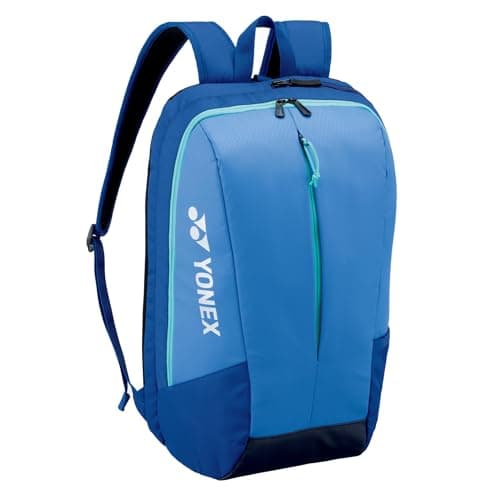
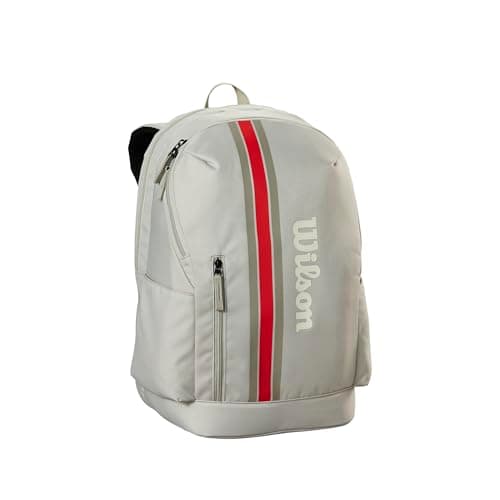
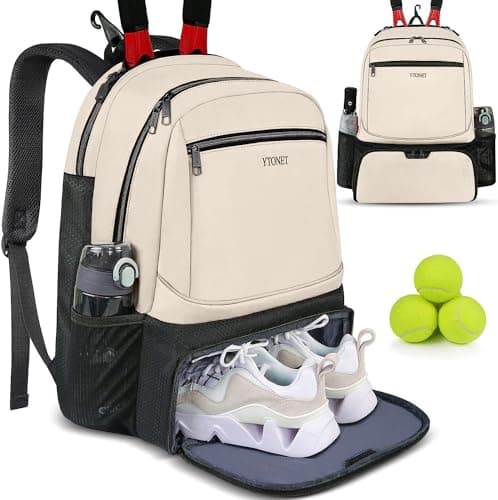
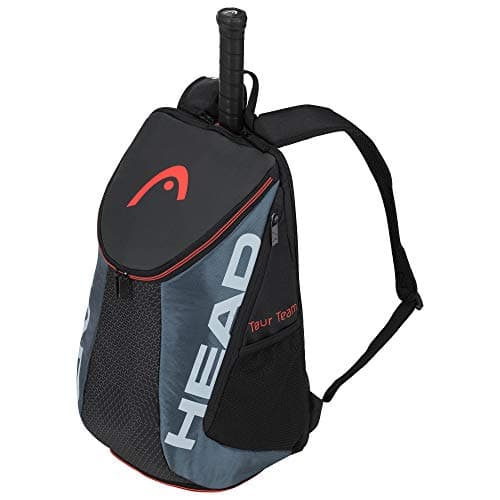
Buy the HEAD Tour Team backpack. Two racquets, padded shoulder straps and — the feature that decides this whole category — a separate shoe compartment, from a bag line HEAD has kept in production long enough that you can re-buy the same bag in three years. If you overpack, the Yonex Team is the biggest at a published 28 liters with YKK zippers named on the listing. If this is your first bag and you are not yet sure tennis will stick, the Ytonet does the same job for about a quarter of the money, and that is the correct amount to spend while you find out.
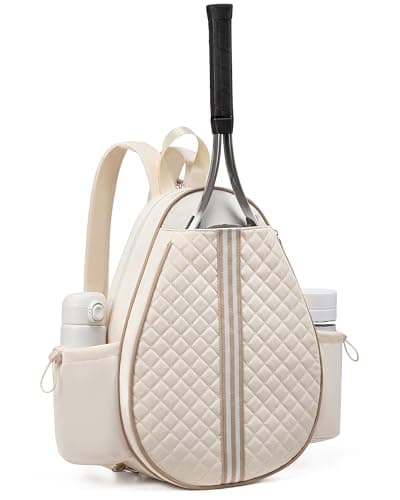
Two things before the picks. First, on the men's and women's question, since that is how this page gets found: for a racquet backpack, there is no load-bearing difference. A 2-racquet bag with a shoe compartment serves anyone. What does differ is strap length and styling, and the one place it genuinely matters is torso length — if a bag rides low and the straps are at their shortest, it will be uncomfortable regardless of who is wearing it. The styling difference is real but it is a preference, not a spec, and the quilted Sucipi below exists because the frame makers mostly do not offer that look.
Second: why a backpack at all. The 6, 9 and 12-racquet bags are built for a player who carries multiple frames, multiple string jobs and a change of shoes to a tournament. If you carry one or two racquets to a weekly hit, a 12-pack is a very expensive way to carry air, and you will hold it on one shoulder, which is the worst way to carry anything.
Shoe compartment, or no bag
This is the one feature to decide on before anything else. A tennis backpack without a separate shoe compartment means your court shoes go into the same space as your shirt, your towel and your phone. One session in the rain and you will understand the problem permanently.
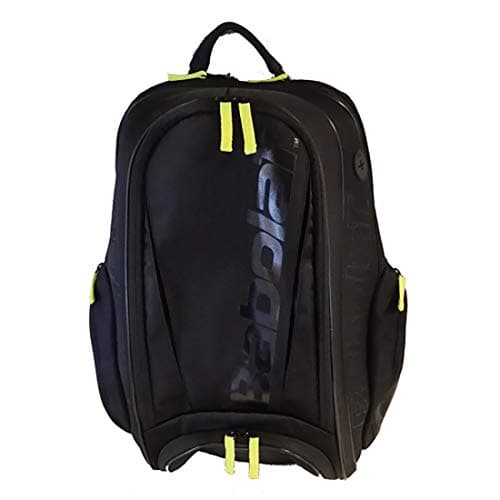
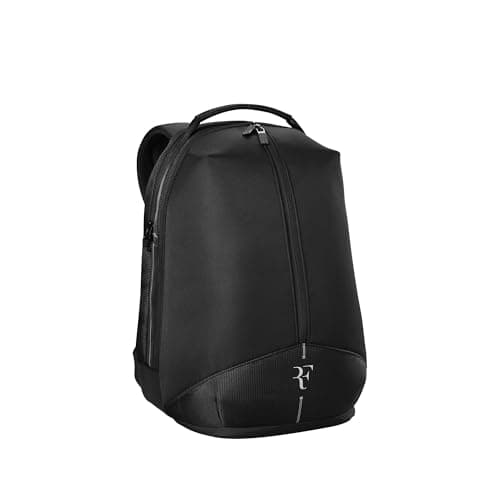
Of the bags here, the HEAD Tour Team names a shoe compartment on the listing. The Yonex names multiple storage compartments and a 28 L capacity, which is enough that shoes can have their own space even if it is not labeled as such. The Babolat Pure is slim by design and does not have one, which is the honest trade for being the bag you can take on a train.
A workaround, if you fall for a bag without one: a cheap drawstring shoe sack inside the main compartment solves most of it for a few dollars. It is not as good as a separate zippered compartment, and it is a lot better than nothing.
Two racquets is almost always enough
Every brand backpack here holds two. That is not a limitation the makers imposed on you, it is a description of what club players carry. The reason to carry two is that strings break, and a match with a broken string and no spare is over. The reason not to carry four is that three of them never come out of the bag.
If you genuinely need three or more frames, the backpack format is wrong for you and the larger bags are the page. If you need two frames and almost nothing else, the small 3-racquet bags are cheaper and flatter.
What to look at on the listing
Zippers. The part that fails first on every bag ever made. The Yonex listing names YKK, which is a real signal rather than marketing — it is the industry's reference zipper maker and naming it is a commitment.
Strap padding and a structured back panel. A loaded tennis backpack is 12 to 15 pounds. Thin webbing straps will dig in, and an unstructured back lets a racquet handle press into your spine.
Published capacity, if there is one. Most bag listings do not state liters. Where one does — the Yonex at 28 L — it is worth more than any adjective.
Whether the racquet compartment is thermal. Thermal lining slows the rate at which a frame and its strings heat up in a car. It matters if you leave the bag in a trunk in summer, and it matters not at all otherwise. None of the listings here leads on it, so treat it as a bonus rather than a criterion.
For juniors
A junior should carry their own bag, which means weight and width matter more than capacity. The Ytonet is the right answer for most juniors: cheap enough that growing out of it is fine, light enough to carry, and big enough for a frame and a kit. Do not buy a 28 L bag for a ten-year-old — a bag that is wider than the child is a genuine hazard on a bicycle.
As everywhere on this site, the chips on each pick are limited to what the live listing states. Bags do not have published spec sheets, so where a listing does not state a racquet count or a capacity, we say so rather than estimating one.
A shoe compartment is the feature that decides most of this page, so if that is what you are actually shopping for, tennis bags with a shoe compartment ranks every bag in our registry that publishes one — across formats rather than just backpacks — including the two 12-packs with sealed, vented shoe pockets.