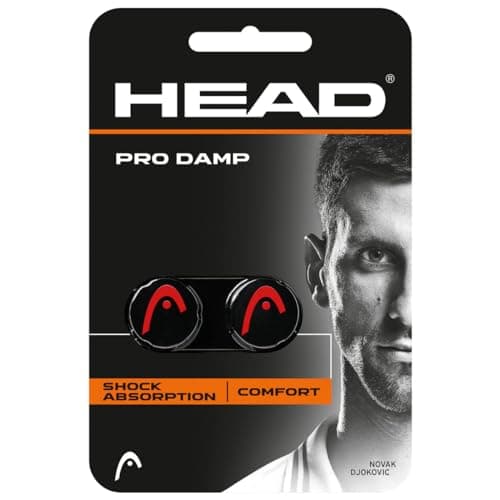
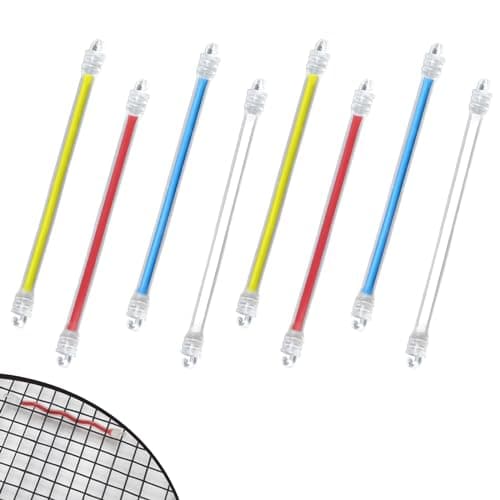
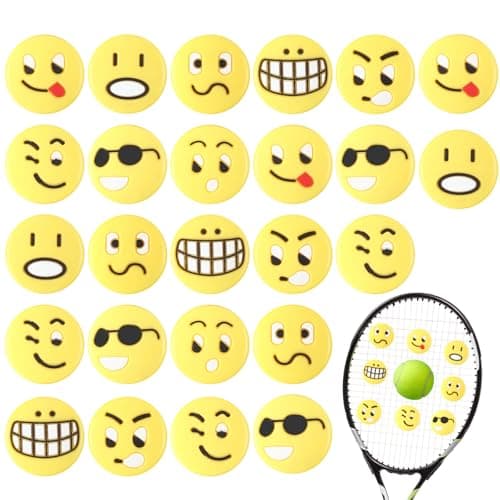
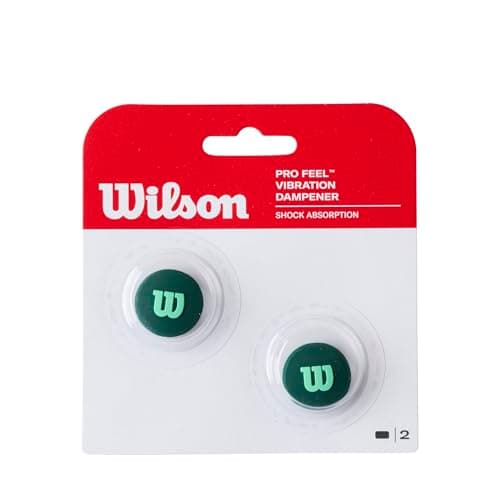
Buy the Wilson Blade Pro Feel two-pack. It is a proper button dampener from a frame maker, in the shape that stays wedged between the main strings through a two-hour match, and it comes in a pair because the honest failure mode of this product is loss, not wear. The HEAD Pro Damp is the quietest of the branded buttons and the flattest, which makes it harder to knock loose. If yours keep vanishing, skip both and buy the SPORTIC eight-pack. And the thing to know before you spend anything: a dampener is a sound modification. It will not fix a sore arm.
This page is in our health and safety group because that is how people arrive at it — searching for a dampener after an elbow starts complaining. So the first section is the part most dampener pages skip.
What a dampener actually does, and what it does not
A vibration dampener is a small piece of rubber or silicone wedged between the main strings below the cross strings. When you hit a ball, the stringbed rings at a high frequency — that is the "ping" — and the dampener absorbs that ringing. The result is a duller, lower thud and, for many players, a more pleasant hit.
What it does not touch is the frame vibration: the much lower-frequency, higher-energy shock that travels down the shaft, into the handle and up your forearm. That is the vibration associated with arm pain, and a 2-gram piece of silicone in the stringbed does not meaningfully reduce it. The sensation of a quieter hit can genuinely feel like a softer hit, which is why the belief persists — but the physics and the position of the thing both point the same way.
So if you are here because of your elbow: the American Academy of Orthopaedic Surgeons describes tennis elbow as overuse causing microtearing of the tendons that join the forearm muscles at the outside of the elbow, and reports that approximately 80 to 95% of patients succeed with nonsurgical treatment. The equipment levers that actually matter are, in order of effect: string type and tension (a soft multifilament at the low end of your frame's range), frame stiffness (a flexible frame), and grip size (too small makes you squeeze, and squeezing transmits shock). Read strings for tennis elbow, racquets for tennis elbow and how to prevent tennis elbow. Buy a dampener because you prefer the sound. That is a perfectly good reason.
Where to put a vibration dampener on a tennis racket
This is the other half of the search and it has a precise answer, including a rules answer.
Below the bottom cross string, between the two center mains. That is the standard position: push the dampener in from the front between the two middle main strings, just underneath the lowest cross string, and let the lowest cross trap it in place. The dampener should sit outside the pattern of crossing strings, not within it.
That is not a style convention, it is the Rules of Tennis: anti-vibration devices may be placed outside the pattern of the crossed strings, which in practice means below the bottom cross. Threading one up into the middle of the stringbed is both illegal in sanctioned play and pointless — it alters the stringbed where you actually hit the ball.
Fitting it so it stays in. Three things help. Push it in from the front face and twist it slightly so the channel grips both mains. Choose the two center mains rather than the ones either side, where the string spacing is wider. And if yours fires out repeatedly, your string spacing is wide for the shape you chose — the flatter, broader HEAD-style button holds better in an open 16x19 pattern than a small narrow button does.
The two specs worth ranking on
There is no meaningful published spec sheet on a dampener, so we rank on the two things that actually differentiate them.
1. Does it stay in? This is the whole product. A dampener that leaves the racquet every fourth game is worse than no dampener, because now you are looking for it. Shape and grip channel decide this, and the branded buttons are better at it than the generic multipacks.
2. How much ping does it kill? More is not automatically better. Some players want the stringbed almost silent; others want to keep the crack, because the sound of contact is real feedback on how cleanly you hit the ball. The HEAD mutes the most; the worm-style strips and smaller buttons mute less.
And one anti-spec: price is nearly irrelevant. The entire field costs less than a single string job. If you like one, buy four.
Button, worm or whistle
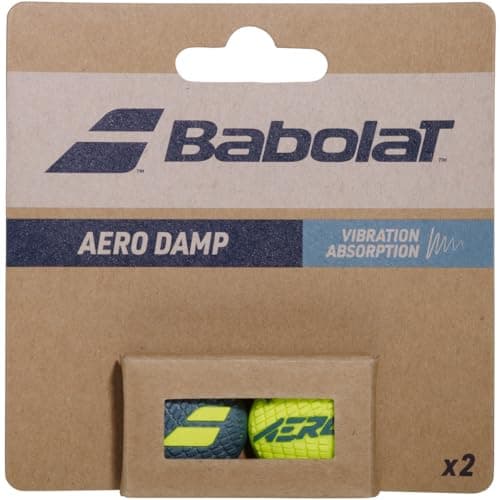
Button dampeners — the small round ones — are the default, damp the most, and are the shape that stays in best. Start here.
Worm or strip dampeners weave across several mains. They damp less and look different; they also sit more loosely and are easier to lose. A genuine preference rather than a performance choice.
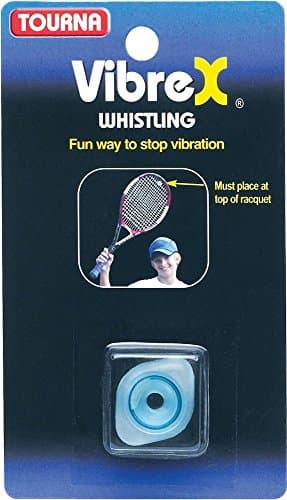
Whistling dampeners like the Tourna Vibrex are their own thing: they make an audible whistle when you swing hard, which is real feedback on racquet-head speed and a legitimate coaching cue. Children love them. Opponents in league matches do not, and it is worth knowing that before you fit one for a match.
One last honest note: the single most effective way to change how a stiff stringbed feels is to change the string, not to add a dampener. A polyester at high tension will still feel harsh with a dampener in it. The tension guide is the cheaper and larger lever.