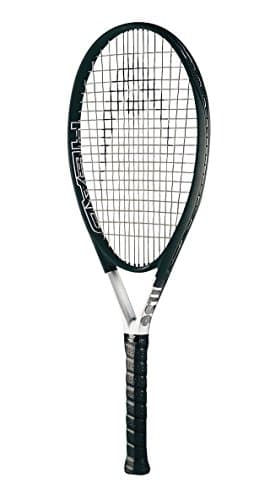
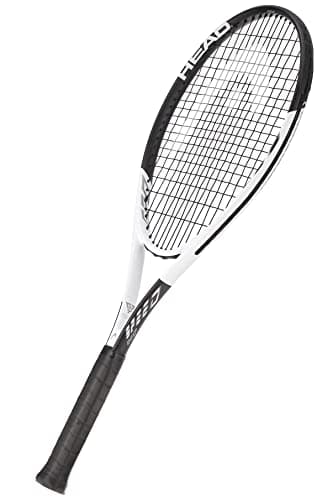
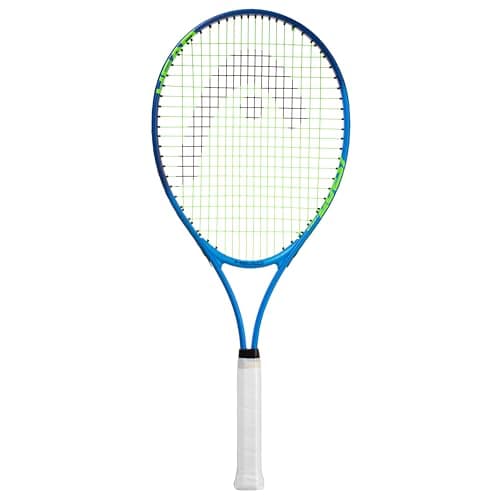
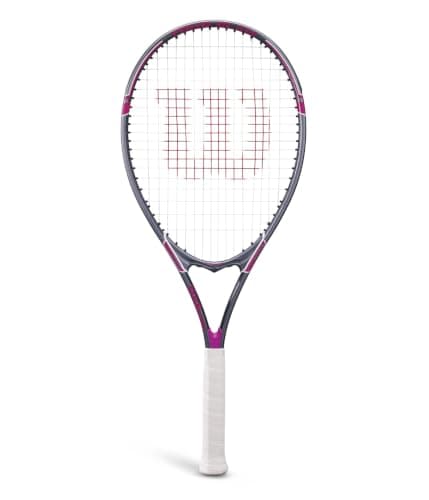
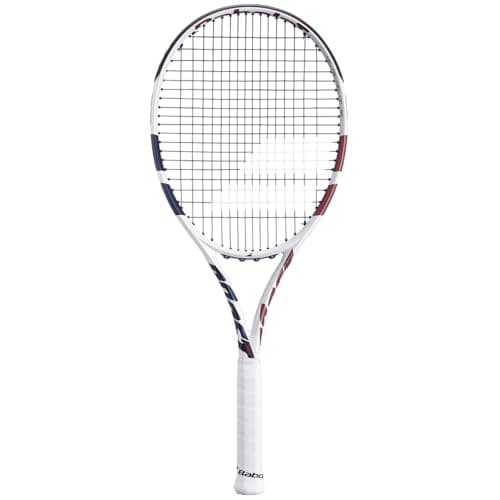
The best cheap tennis racket is the Babolat Boost Drive: it is a genuine performance frame — full graphite, 100 sq in head, the lightened version of Babolat's best-selling Pure Drive layup — at a price that sits with recreational aluminum frames. If your budget is tighter than that, the HEAD Ti Conquest is the cheapest thing on this site that is still a real racket from a real racket company. If what you want is maximum free power for the money, the HEAD Ti S6 at 115 sq in and under 9 oz has outsold almost everything for twenty years and still makes sense.
This page is written for a budget, so it starts with the part most racket pages skip: what you are actually giving up, and whether it matters to you.
What you give up under $100
Three things, in order of how much they matter.
1. Stability. A cheap frame is light and often aluminum-class, which means it twists in your hand when the ball lands away from the center, and it gets pushed around by a hard hit. At 2.5 or 3.0 this barely registers, because you are not generating or receiving much pace. In a weekly league against someone who hits hard, it is the first thing you notice.
2. Control at full swing. Cheap frames are usually powerful, because power is easy and cheap to engineer: large head, light weight, stiff beam. That combination is perfect while your swing is short and tentative and becomes a problem the moment you develop a real one, because the ball starts going long. This is the honest reason to "upgrade" a racket: not that the cheap one is bad, but that you have outgrown free power.
3. String choice. Budget frames usually arrive pre-strung with a generic string at a generic tension, and a few cannot sensibly be restrung because a restring costs most of what the racket did. That is fine, and it is worth knowing: string is normally the cheapest way to change how a racket plays, and at this price point you are giving that lever up. See types of tennis strings for what you are missing.
What you are not giving up: a usable racket. Every frame on this page is from Wilson, HEAD or Babolat and will hold up to regular recreational play. The gap between the cheapest real racket and a $250 performance frame is much smaller than the gap between a real racket and a supermarket one.
Pick by what your budget actually is
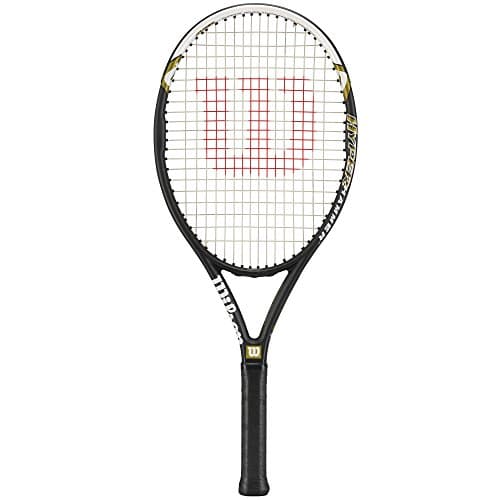
Around $35–50: the HEAD Ti Conquest or the Wilson Tour Slam. Both cost less than a single restring on a performance frame, both arrive strung and gripped, and both have oversize heads (110 and 112 sq in) that keep mishits in play while your contact point is still random. This is the right spend if you are not yet sure you will keep playing. The Wilson has shock-absorbing pads in the grommet strip, which matters more at this level than anything else on the spec sheet; the HEAD is the plainer, cheaper option.
Around $60–100 and you have decided you are playing: the Babolat Boost Drive. This is the one worth stretching for, and the reason is a real construction difference rather than a brand name. It is full graphite rather than aluminum, which means it holds its shape through contact instead of flexing and twisting, which is what makes depth repeatable. It is also 100 sq in rather than 110-plus, so you are not buying power you will have to unlearn. If there is one "best value tennis racket" on this site, it is this.
Same money, but you want maximum help: the HEAD Ti S6. 115 sq in, under 9 oz strung, and 27.75 inches long for extra serve leverage. It is the most forgiving frame on this page by a distance and the best-selling beginner racket of the last twenty years. The caveat is the one above: it is so light and so powerful that controlling depth gets hard once you develop a swing, and the stiff thin beam transmits shock, so it is the wrong pick if your arm already hurts — see arm-friendly racquets instead.
If you want something between the two: the HEAD Geo Speed or the Wilson Hyper Hammer. Both sit in the middle on head size and weight, and both are sensible frames for a social player who plays once a week and does not want to think about this decision again.
Where cheap stops being the right answer
We would rather tell you to wait and save than sell you the wrong frame, so: three signals that a budget racket is no longer what you want.
You can rally twenty balls cross-court consistently. At that point your swing is developed enough that free power is working against you. You want control, which means a heavier frame with a tighter string pattern — the intermediate ranking is the next step.
You play a weekly league. League tennis exposes a light frame's lack of stability within a month, because you are facing people who hit with pace deliberately.
Your arm hurts. Cheap frames are often stiff and light, which is the worst combination for shock. This is a reason to spend more, and it is the one reason on this list where waiting is a bad idea.
If none of those apply to you, a $60 racket is genuinely the right racket, and anybody telling you otherwise is selling something. Where the money is worth spending at this level is shoes: a court shoe is the one purchase where the cheap version has a real injury cost, because running shoes do not support lateral movement. That argument is in tennis shoes vs running shoes, and the cheap end of the court-shoe shelf is ranked at best budget tennis shoes.
If you are reading this page because you want to spend once rather than spend little, that is a different question with a different answer, and the honest version of it is at high quality tennis rackets — starting with the fact that a graphite frame does not wear out.
Cheap, inexpensive, budget, affordable: the same question
One note, because these searches split across half a dozen wordings. "Cheap tennis racket", "budget tennis racket", "inexpensive tennis racquet", "affordable tennis racket" and "best value tennis racket" are the same question with different connotations — except the last one, which is slightly different and worth separating.
Cheapest is the HEAD Ti Conquest. Lowest price, real brand, arrives ready to play.
Best value — most racket per dollar rather than lowest price — is the Babolat Boost Drive, because the jump from aluminum to full graphite is the biggest single construction step in this price range and it comes with a sensible 100 sq in head rather than an oversize one.
If you are buying for a child rather than yourself, none of this applies — junior frames are chosen by length, and the whole decision is in the junior racket size guide.
One thing worth the extra $20
Whatever you buy, add an overgrip. It costs a few dollars, it makes a cheap handle feel considerably better, and it protects the base grip underneath from sweat. It is the highest ratio of improvement to money anywhere in tennis, and it is the one upgrade that works on every frame on this page. Which kind depends on your hands — the overgrip ranking splits tacky from absorbent, and how to grip a tennis racket covers the rest.