NTRP — the National Tennis Rating Program — is the USTA's scale for adult recreational tennis, running from 1.5 to 7.0 in half-point steps. Almost all club tennis happens between 2.5 and 4.5, and 4.0 is the level most recreational players are aiming at.
The scale, in plain English
What follows is our plain-English characterisationof each level, not a quotation. The official definitions are published by the USTA in its NTRP player guidelines — linked in the sources at the foot of this page — and that document is the authority if you need the formal wording.
| Level | What it looks like on court |
|---|
| 2.0–2.5 | New to tennis. Working on getting the ball in play at all; rallies are short and serving is still a project. |
| 3.0 | Can sustain a slow rally on medium-paced balls. Serve goes in but without much direction. Struggles with pace and with anything out of the comfort zone. |
| 3.5 | Reliable on moderate-paced shots and starting to control direction. Developing a second serve. Net play is tentative but happening. Described in full at what is a 3.5 player. |
| 4.0 | Dependable strokes on both wings, with direction and depth on moderate shots. Using spin and pace as tactics. Comfortable at the net. Still inconsistent under real pressure. |
| 4.5 | Varies pace and spin deliberately, handles pace well, constructs points. Dependable second serve. Sound footwork. |
| 5.0 | Shot-making is a weapon rather than a tactic. Good anticipation, strong serve, frequently competing in tournaments. |
How you actually get a rating
Two routes, and the second one overrides the first.
Self-rating.You read the guidelines, decide which level describes you, and enter it through the USTA's TennisLink system. This is how everyone starts.
Computed rating. Once you have played enough USTA League matches, your rating is calculated from your actual results against other rated players. That number replaces your self-rating, and it is the one that matters.
The practical consequence: self-rating too low to win more matches works for exactly one season, after which the computer corrects you and you get moved up anyway.
Why this site is organised around it
Because the right racquet for a 2.5 is actively wrong for a 4.5, and the reverse is worse. A beginner frame supplies power because the swing does not; a 4.5 frame removes power because the swing supplies too much. Give either player the other's racquet and they play worse.
That is the whole reason our racquet rankings are split by level rather than presented as one leaderboard, and why the site is called the Four Oh Club.
NTRP versus UTR
You will see both. NTRPis USTA's adult league rating: half-point steps, 1.5 to 7.0, designed to group players for compatible recreational matches. UTR(Universal Tennis Rating) is a global 1–16.5 scale computed purely from match results, used heavily in junior and college tennis.
They measure similar things on different scales and there is no clean official conversion between them. Rough rules of thumb circulate, and we are not going to publish a conversion table we cannot source — if you need both numbers, get both ratings.
The short answer
Quick picks
| # | Racquet / gear | Best for | Score | Price |
|---|
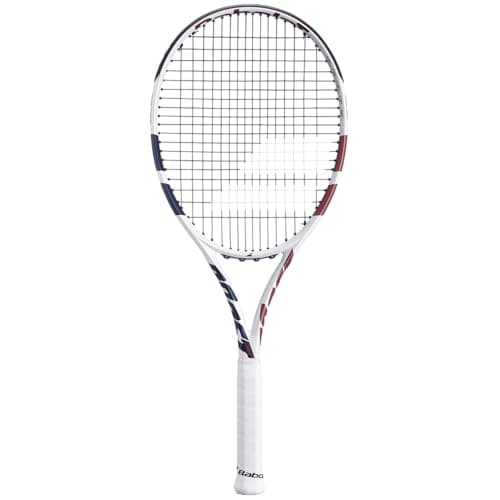
| 01 | Babolat Boost DriveThe best true beginner racquet here: a real graphite Babolat tuned down to beginner weight, so it plays like the frame you will upgrade to. | Committed beginners | | $119.00·Amazon |
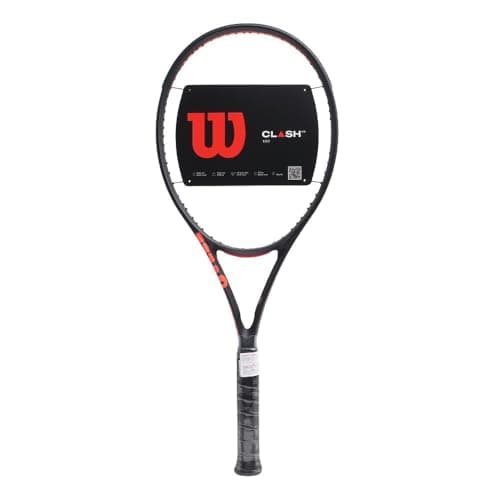
| 02 | Wilson Clash 100 v3The 4.0 player's racquet. Unusually flexible for a modern frame, so it bends around the ball instead of jarring your arm — and it still hits a heavy ball. | NTRP 3.5–4.0 all-courters | | $299.00·Amazon |
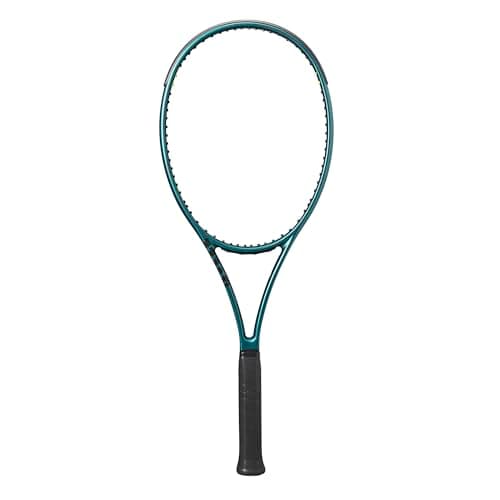
| 03 | Wilson Blade 98 (16x19) v9The control benchmark that still hits a heavy ball — the most-used frame in competitive club tennis, and deservedly. | Advanced all-courters | | $199.00·Amazon |
#ad · Live prices from the Amazon Product API, as of October 7, 2026. Where we have no verified live price, we show none — we would rather leave a gap than print a number that has rotted.
In detail
The picks, in full
Committed beginners
Babolat Boost Drive
105 sq in head9.5 oz strung16x19 patternFull graphite
The best true beginner racquet here: a real graphite Babolat tuned down to beginner weight, so it plays like the frame you will upgrade to.
- Control
- 7
- Power
- 7
- Spin
- 6
- Comfort
- 7
- Value
- 8
Pros
- +Full graphite construction, not aluminium — it holds its shape through contact, which is what makes depth repeatable
- +Shares the Pure Drive's cosmetic and feel family, so moving up later is a small step rather than a relearn
- +105 sq in is forgiving without being so oversized that it teaches bad habits
Cons
- −Costs several times a Tour Slam, which is a lot to spend before you know you will play
- −Strung at factory mid-tension with generic string — budget a proper restring within a year
Don't buy this if…
…you are buying a racquet for a one-off holiday week. This is the frame for someone who has booked lessons.
NTRP 3.5–4.0 all-courters
Wilson Clash 100 v3
100 sq in head11.0 oz strung16x19 patternRA 54 stiffness
The 4.0 player's racquet. Unusually flexible for a modern frame, so it bends around the ball instead of jarring your arm — and it still hits a heavy ball.
- Control
- 8
- Power
- 7
- Spin
- 8
- Comfort
- 10
- Value
- 7
Pros
- +Low stiffness rating with modern power — the combination that makes it the default recommendation for a club player with a twinge in the elbow
- +Flexible layup gives a long dwell time on the string bed, which translates directly into feel on drop shots and touch volleys
- +100 sq in and a 16x19 pattern is the most forgiving spec that still rewards clean contact
Cons
- −The flex that makes it comfortable also costs you some free depth against a pusher
- −Premium price; this is the most expensive intermediate frame we list
Don't buy this if…
…you want a frame that does the work for you. The Clash asks you to swing; the Pure Drive does not.
Advanced all-courters
Wilson Blade 98 (16x19) v9
98 sq in head11.4 oz strung16x19 patternFORTYFIVE flex
The control benchmark that still hits a heavy ball — the most-used frame in competitive club tennis, and deservedly.
- Control
- 9
- Power
- 7
- Spin
- 8
- Comfort
- 8
- Value
- 7
Pros
- +FORTYFIVE construction gives it a flex profile that is comfortable without going soft — the reason it is the default 4.5 recommendation
- +16x19 on a 98 is the sweet spot of the whole racquet market: control, but with real spin access
- +Ships strung with Sensation 16, a comfortable multifilament, so the factory setup is actually usable
Cons
- −Needs a full swing to produce depth; it does not help a short stroke
- −The v9's muted feel divides opinion against the crisper v7
Don't buy this if…
…you need help generating pace. The Blade rewards the swing you bring; it adds nothing.
Which gear tier belongs to which level
This is the practical payoff of knowing your rating. The three picks above are one frame from each tier.
| Level | Racquet spec | String | Shoes |
|---|
| 2.0–3.0 | 105–115 sq in, under 10 oz, strung | Multifilament or synthetic gut | Entry court shoe |
| 3.5–4.0 | 100 sq in, 10.5–11.3 oz, 16x19 | Multifilament or hybrid | Mid or full performance |
| 4.5+ | 97–100 sq in, 11.3–11.7 oz | Polyester or hybrid | Full performance |
Follow the links for the full rankings: beginner racquets, intermediate racquets, advanced racquets.
Be honest about your level
Two failure modes, and both cost you tennis.
Over-rating yourself is the expensive one. A 3.5 who buys a 4.5 control frame hits short balls, compensates by swinging harder, degrades their technique, and concludes they need a different racquet. This happens constantly and it is the single most common equipment mistake in club tennis.
Under-rating yourself is less harmful but still wrong: an improving 4.0 on an oversize beginner frame spends every match decelerating to keep balls in, which also degrades technique.
If you are unsure, ask a coach or the better player you lose to regularly. They will tell you accurately and immediately.
Levels move, equipment should not move with every half point
A performance racquet is a three-to-five-year purchase. If you are a solid 3.5 heading for 4.0, buy the 3.5–4.0 spec rather than trying to buy ahead into 4.5 — you will get more out of the frame that suits you now, and you will improve faster on it.
The exception is shoes, which are a consumable, and string, which is a consumable. Those you change as your game changes, because they are cheap enough to.
What a rating is not
It is not a measure of how much you enjoy tennis, how fit you are, or how hard you hit. Plenty of 3.5 players hit the ball harder than plenty of 4.5 players; the 4.5 just keeps it in the court when it matters. Consistency under pressure, not power, is what the scale is really measuring as you move up it.
It is also not permanent. Ratings are recalculated, people improve, people get older. The number is a tool for finding compatible matches and the right gear, not an identity.
How we picked
We have not physically tested this gear
Everyone in this category says they tested twenty racquets. We have not tested any — and we say so. What we did instead: compiled the manufacturer-published specifications (head size, strung weight, string pattern, stiffness, outsole compound), normalized them, and scored each product against a published rubric weighted for the NTRP tier this page serves. The scores are judgments from documented research, not measurements we took, because we do not have a lab and are not going to pretend we do.
Questions
Frequently asked
What does NTRP stand for?+
The National Tennis Rating Program, the USTA's rating scale for adult recreational tennis. It runs from 1.5 to 7.0 in half-point steps, with almost all club tennis happening between 2.5 and 4.5.
How do I find my NTRP rating?+
You self-rate first, by reading the USTA's published guidelines and entering a level through TennisLink. Once you have played enough USTA League matches, a computed rating based on your actual results replaces that self-rating.
Is a 4.0 tennis player good?+
Yes — a 4.0 has dependable groundstrokes on both wings, uses spin and pace as tactics, and is comfortable at the net. It is the level most recreational players aim at and a strong standard of club tennis. See
what a 4.0 player looks like.
What is the difference between NTRP and UTR?+
NTRP is USTA's adult league scale (1.5–7.0, half-point steps, designed for compatible recreational matches). UTR is a global 1–16.5 scale computed purely from match results and used heavily in junior and college tennis. There is no official conversion between them.
Receipts
Sources
We do not run a testing lab, and we do not pretend to. Our specs come from manufacturer listings and spec sheets; our rules and dimensions come from the official rulebook. Where we could not verify something, we say so on the page rather than quietly leaving it out. Read our full method.