Skip to content
Four Oh Club

The flagship · Racquets

Tennis Racquet Head Size: 98 vs 100 vs 105

Two square inches does not sound like much. In practice it is the difference between a frame that forgives you and one that reports on you.

By Stephen V.Updated How we score
#ad

We earn a commission when you buy through our Amazon links, at no extra cost to you. It never changes our rankings, and we say so when the cheaper racquet is the better buy. How this works.

Head size is the single biggest lever on how forgiving a racquet is. 100 sq in is right for most club players; drop to 98 when your errors are consistently long rather than short, and go to 105+ only if you are a beginner or have lost swing speed.

What head size actually changes

Four things move together when the face gets bigger, and it is worth separating them because people conflate them constantly.

Sweet spot size. The obvious one. A larger string bed has a larger area that produces a clean, powerful shot. This is forgiveness, and it is the main reason beginners need big heads.

Power. Less obvious and equally real. A bigger head holds longer strings, and longer strings stretch further on impact and return more energy. A 110 sq in frame is a trampoline compared with a 97.

Twist stability.This one runs the other way at the extremes. A wider head resists twisting better on off-centre hits — but only if the frame has the mass to go with it. A very light oversize frame twists badly despite the width.

Control. Everything above is bought with precision. A bigger, more powerful string bed launches the ball at a less predictable angle, and depth control suffers.

The 98 vs 100 decision

This is the one that stalls purchases, and there is a clean test for it. Think about your last three matches and ask which kind of error you made more of.

Balls sailing long means the frame is giving you more power than your swing can contain. Drop to 98. You will get the depth control back and barely notice the lost forgiveness, because your contact is already good.

Frame shanks, netted balls and mishits mean your contact point is not yet repeatable enough to give up two square inches. Stay at 100, and revisit in a season.

The reason two square inches matters more than it sounds: the difference is not in the area, it is in the margin at the edges. A 100 gives you roughly a centimetre more tolerance in each direction before the shot degrades, and a centimetre is the size of a typical club-player miss.

Oversize: who it is genuinely for

105–115 sq in frames have a bad reputation among better players, which is unfair. They are the correct tool for three groups: genuine beginners, players over about 60 who have lost racquet-head speed, and anyone returning from a long break. In all three cases the free power and the huge sweet spot are not a crutch — they are what makes the game playable and therefore enjoyable.

What oversize frames are not is a shortcut for an improving player. Once you are swinging fully at 3.5, an oversize frame will send balls long and you will start decelerating to compensate, which is a technique problem you then have to unlearn.

The short answer

Quick picks

#Racquet / gearBest forScorePrice
01
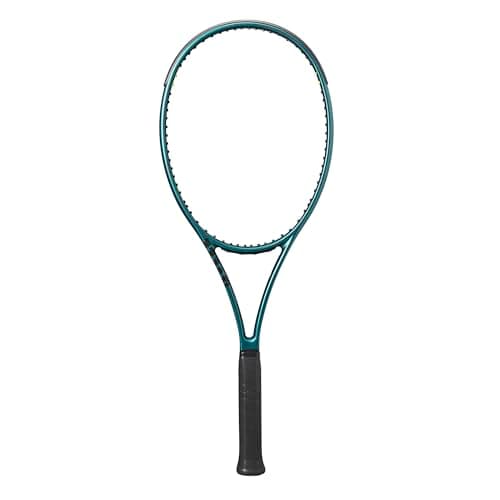
Wilson Wilson Blade 98 (16x19) v9
Wilson Blade 98 (16x19) v9

The control benchmark that still hits a heavy ball — the most-used frame in competitive club tennis, and deservedly.

Advanced all-courters
7.8
$199.00Amazon
02
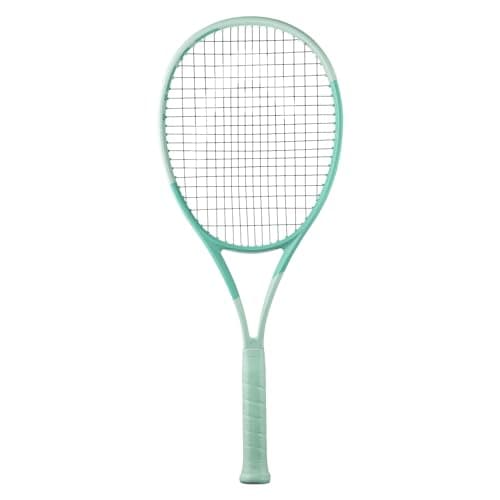
HEAD HEAD Boom MP
HEAD Boom MP

HEAD's answer to the Clash: a soft, spin-friendly 100 that ships strung, which makes it the easiest full upgrade to actually order.

3.5 players upgrading
8.0
$159.00Amazon
03
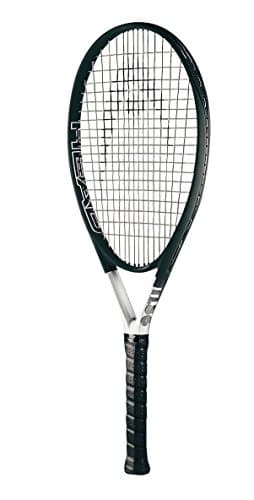
HEAD HEAD Ti S6
HEAD Ti S6

The best-selling beginner frame of the last twenty years, and still the right answer: enormous head, feather weight, free power on every swing.

Beginners and seniors
6.6
$99.00Amazon

#ad · Live prices from the Amazon Product API, as of October 7, 2026. Where we have no verified live price, we show none — we would rather leave a gap than print a number that has rotted.

In detail

The picks, in full

01
Wilson Wilson Blade 98 (16x19) v9

Advanced all-courters

Wilson Blade 98 (16x19) v9

98 sq in head11.4 oz strung16x19 patternFORTYFIVE flex
7.8/10

The control benchmark that still hits a heavy ball — the most-used frame in competitive club tennis, and deservedly.

Control
9
Power
7
Spin
8
Comfort
8
Value
7

Pros

  • FORTYFIVE construction gives it a flex profile that is comfortable without going soft — the reason it is the default 4.5 recommendation
  • 16x19 on a 98 is the sweet spot of the whole racquet market: control, but with real spin access
  • Ships strung with Sensation 16, a comfortable multifilament, so the factory setup is actually usable

Cons

  • Needs a full swing to produce depth; it does not help a short stroke
  • The v9's muted feel divides opinion against the crisper v7

Don't buy this if…

…you need help generating pace. The Blade rewards the swing you bring; it adds nothing.

$199.00View on Amazon

Price as of October 7, 2026. Prices change — Amazon's is the one that counts.

#ad · we may earn a commission from this link to Wilson Blade 98 (16x19) v9

02
HEAD HEAD Boom MP

3.5 players upgrading

HEAD Boom MP

100 sq in head10.9 oz strung16x19 patternAuxetic + Graphene
8.0/10

HEAD's answer to the Clash: a soft, spin-friendly 100 that ships strung, which makes it the easiest full upgrade to actually order.

Control
8
Power
8
Spin
8
Comfort
8
Value
8

Pros

  • Ships strung with HEAD Velocity at mid tension, so it is playable the day it arrives — no stringing trip
  • Auxetic construction gives a muted, connected feel rather than the hollow ping of cheaper frames
  • Comfortable enough to string with a full poly bed without punishing the arm

Cons

  • Factory stringing is a generic multifilament at a generic tension — fine, not optimised for you
  • Less plow-through than an 11.5 oz player's frame against heavy hitters

Don't buy this if…

…you already have a stringer you trust. Buy an unstrung frame and spend the difference on string you chose.

$159.00View on Amazon

Price as of October 7, 2026. Prices change — Amazon's is the one that counts.

#ad · we may earn a commission from this link to HEAD Boom MP

03
HEAD HEAD Ti S6

Beginners and seniors

HEAD Ti S6

115 sq in head8.9 oz strung16x19 patternTitanium/graphite
6.6/10

The best-selling beginner frame of the last twenty years, and still the right answer: enormous head, feather weight, free power on every swing.

Control
5
Power
9
Spin
5
Comfort
6
Value
8

Pros

  • 115 square inches is one of the largest heads on the market — the sweet spot is huge and off-centre hits still clear the net
  • Under 9 oz strung, so it is swingable for a player with no developed technique and for anyone with shoulder trouble
  • Extended 27.75" length adds reach and serve leverage without adding weight

Cons

  • So light and so powerful that controlling depth is hard once you develop a real swing
  • Thin, stiff beam transmits shock — not the frame for an arm that already hurts

Don't buy this if…

…you already rally consistently. You will out-grow the free power within a season and spend that season learning to hit short to compensate.

$99.00View on Amazon

Price as of October 7, 2026. Prices change — Amazon's is the one that counts.

#ad · we may earn a commission from this link to HEAD Ti S6

Head size by level, with examples

SizeNTRPGainsCostsExample
97–98 sq in4.0+Control, feel, depth consistencyForgiveness on mishitsWilson Blade 98 v9
100 sq in3.0–4.5The balanced defaultNothing much; it is the compromiseHEAD Boom MP
105–115 sq in2.0–3.0Huge sweet spot, free depthPrecision, and control at speedHEAD Ti S6

Head size interacts with string pattern

The two specs are not independent, and the combination tells you more than either alone. A 16x19 pattern on a 98 has tighter string spacing than the same pattern on a 100, because the same number of strings is covering less area — so a 98 with 16x19 is already somewhat more controlled than the pattern suggests.

The unusual and clever combination is an 18x20 on a 100 sq in head, which is what the HEAD Gravity MP does. You get the depth control of the dense pattern with the off-centre tolerance of the larger face — genuinely the best of both for a flat-hitting 4.5. Most 18x20 frames put the dense pattern on a 95–98, which compounds the unforgiveness.

Head size and the serve

An under-discussed effect: larger heads make the first serve easier and the second serve harder. The bigger sweet spot helps you find the middle on a fast swing, but the extra power means a kick second serve, which needs a full swing to generate spin, tends to fly long.

Players who switch from a 100 to a 98 often report the second serve improving within a few weeks, because they can finally swing properly at it. If your second serve is a patted-in liability, head size may be part of the reason.

What about extended-length frames?

A separate spec that often gets lumped in. Standard length is 27 inches; extended frames run 27.25–28 inches. The extra length adds reach and serve leverage and increases swing weight noticeably — which means it is harder to get the racquet round in a fast exchange.

For most club players the trade is not worth it. The exception is the oversize beginner category, where frames like the Ti S6 use a slightly extended length to add serve power without adding weight.

Do not change two things at once

If you are moving from a 100 to a 98, keep your string and tension the same for the first few weeks. Changing head size and string setup together means you have no idea which one caused what, and the most common outcome is going back to the old frame having learned nothing. See string tension explained for what to change second.
How we picked

We have not physically tested this gear

Everyone in this category says they tested twenty racquets. We have not tested any — and we say so. What we did instead: compiled the manufacturer-published specifications (head size, strung weight, string pattern, stiffness, outsole compound), normalized them, and scored each product against a published rubric weighted for the NTRP tier this page serves. The scores are judgments from documented research, not measurements we took, because we do not have a lab and are not going to pretend we do.

Questions

Frequently asked

Is a 98 or 100 head size better?
100 for most club players; 98 once your errors are consistently long rather than short. The two square inches translate to about a centimetre of extra margin in each direction — roughly the size of a typical club-player miss.
What head size do professionals use?
Most tour players use 95–100 sq in, with 97–98 being the most common. This is not a reason to buy one: they are controlling swing speeds no club player generates, and their frames are custom-weighted well beyond retail spec.
Does a bigger head size give more power?
Yes. A bigger head holds longer strings, which stretch further on impact and return more energy to the ball. It is one of the main reasons oversize frames suit players with slower swings.

Keep reading

Receipts

Sources

We do not run a testing lab, and we do not pretend to. Our specs come from manufacturer listings and spec sheets; our rules and dimensions come from the official rulebook. Where we could not verify something, we say so on the page rather than quietly leaving it out. Read our full method.