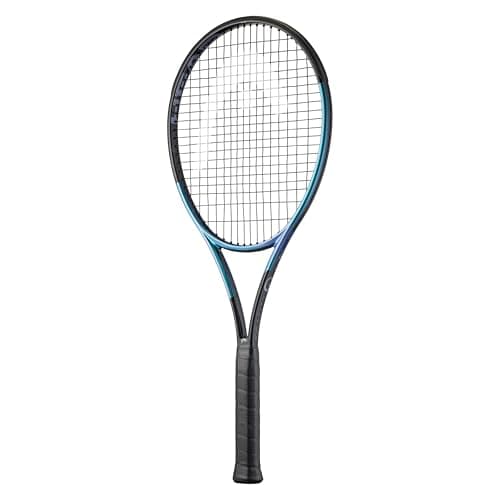
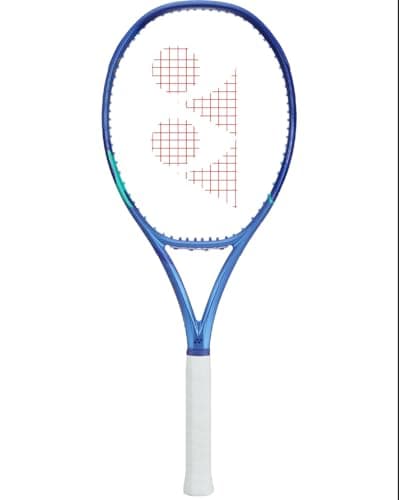
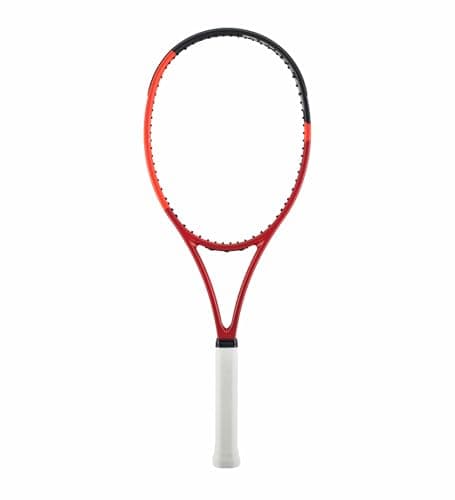
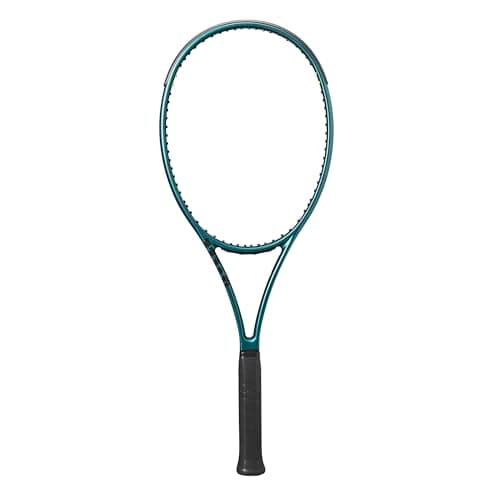
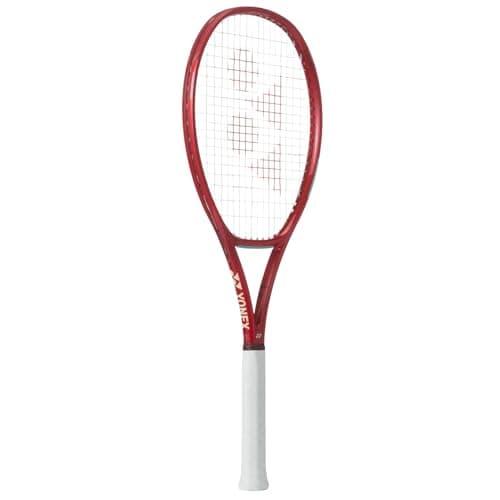
The closest alternative to a Wilson Blade 98 is the Yonex VCORE 98: same 98 sq in head, same published 11.4 oz strung weight, a swingweight within three points of it and a stiffness within one. If you are leaving the Blade because it felt too firm, the HEAD Gravity MP is the softer frame by a wide margin on published stiffness. If you wanted more free power, the Yonex EZONE 98. If the problem was simply that the Blade was too much racquet, the Blade 100L is the lighter frame in the same line, and the Dunlop CX 200 LS is the cheapest way to keep a control frame in your hand.
Start with what the Blade is, because it is worth being straight about it. Wilson introduced the current generation with the line “The Most Played Racket On Tour”, and that is the claim the whole family rests on. The 98 in a 16x19 pattern is the one most club players end up with: a published 98 sq in head, 11.4 oz strung, 4 points head-light, a swingweight of 324 and a stiffness of 62, in a 21 mm box beam built from basalt and braided graphite. The technologies Wilson names are the FortyFive layup for lateral flexibility, a DirectConnect handle where the butt cap is fused straight to the carbon fiber, and StableFeel. The spec sheet calls its power level low.
Read that list again and you have the reason people both love it and leave it. A low-power, 62-stiffness, 324-swingweight frame rewards a full swing with precision and gives a short swing almost nothing. So the useful question is never “what else is good” — it is which Blade trait am I actually chasing, and which one am I trying to get away from. This page is organized around that, not around a leaderboard.
The criteria, before the picks
Five frames below. Each one was chosen against the Blade 98 on published manufacturer and retailer specs, not on feel, because we have no lab and do not pretend to. The four numbers that decide whether a frame can replace another one for a club player:
- Head size.98 sq in is the Blade's whole personality. Move to 100 and you gain forgiveness and lose a little precision; move to 97 and you reverse the trade. Anything outside 97–100 is a different racquet, not an alternative.
- Strung weight and balance. The Blade 98 is a published 11.4 oz at 4 points head-light. A frame two ounces lighter will feel faster and less stable on a heavy ball, and no amount of string choice fixes that.
- Swingweight. The number that decides whether a racquet feels like effort. 324 is substantial. If your reason for leaving is late preparation or a sore shoulder in the third set, this is the number to drop, and what swingweight actually measures matters more here than static weight does.
- Stiffness (RA).The Blade is published at 62, which is already in the flexible half of modern frames. If you found it harsh, the problem was probably your string bed rather than the frame — but there are softer frames, and one of them is below.
One honest caveat on all of it: published stiffness and swingweight are manufacturer and retailer figures for an unmodified, factory frame. Two frames off the same production line can differ by several swingweight points, and a lead-taped racquet is a different animal entirely. Treat every number here as the center of a range.
How the five compare with the Blade on paper
| Frame | Head | Strung weight | Swingweight | Stiffness | Pattern |
|---|
| Wilson Blade 98 (16x19) v9 — the benchmark | 98 sq in | 11.4 oz / 323 g | 324 | 62 | 16x19 |
| Yonex VCORE 98 (8th Gen) | 98 sq in | 11.4 oz / 323 g | 321 | 63 | 16x19 |
| HEAD Gravity MP (2025) | 100 sq in | 11 oz / 312 g | 323 | 57 | 16x20 |
| Yonex EZONE 98 | 98 sq in | 11.4 oz / 323 g | 320 | 63 | 16x19 |
| Wilson Blade 100L v9 | 100 sq in | 10.6 oz / 301 g | 308 | 69 | 16x19 |
| Dunlop CX 200 LS (2024) | 98 sq in | 10.7 oz / 303 g | 309 | 63 | 16x19 |
Every figure in that table is a published spec read from the manufacturer or the retailer spec page, listed in the sources at the foot of this page. We measured none of them.
1. Yonex VCORE 98 — the one that reads like a Blade on the spec sheet
If you want the shortest possible answer, this is it. The VCORE 98 publishes the same 98 sq in head and the same 11.4 oz strung weight as the Blade 98, a swingweight of 321 against the Blade's 324, and a stiffness of 63 against 62. On paper there is barely a frame between them. Both are 16x19. Both are specified at a low-to-medium power level with a medium-full stroke and a medium-fast swing speed. A player who was comfortable with one will not be startled by the other.
The differences that are real are shape and bias. Yonex uses its Isometric head — a squarer top that widens the contact zone at 10 and 2 o'clock — and the 8th-gen VCORE goes further with what Yonex calls an “Energized” Isometric shape and an enlarged frame top, specifically to widen the spin window. The retailer spec page says the frame “moves surprisingly fast” and gives “a more precise and predictable response” than its 100 sq in sibling. The VCORE line is Yonex's spin line, where the Blade sits closer to the middle of the control/spin axis.
So pick it if:you liked the Blade's weight and head size and want more bite on a brushed ball. Skip it if:you were leaving the Blade because it was too much racquet — this is the same amount of racquet. The EZONE vs VCORE comparison sorts out which of the two Yonex lines you actually want before you spend.
2. HEAD Gravity MP — the softer frame, by a lot
The number to look at is stiffness: the 2025 Gravity MP publishes 57, against the Blade's 62. Five RA points is a large gap at the flexible end of the scale, and the retailer page is explicit about what HEAD did to get there — “For 2025, the Gravity MP gets a softer beam, resulting in an even more buttery feel than the previous generation”. It calls the frame a “uniquely comfortable modern player's racquet” whose “payoff is controllable power along with outstanding touch and feel”.
Two other things change with it. The head is 100 sq in rather than 98, with a teardrop shape that HEAD says gives “a larger, more responsive contact area near the tip” — more forgiveness on a stretched return. And the pattern is 16x20 rather than 16x19, a denser bed that holds a ball in rather than launching it. Published strung weight is 11 oz against the Blade's 11.4, at 3 points head-light rather than 4, with a swingweight of 323 that is effectively identical. In other words: nearly the same effort to swing, a slightly bigger and notably plusher string bed.
So pick it if: the Blade felt harsh, or your elbow has started talking to you. Skip it if:you want a 98 head and a 16x19 bed — this is a different string pattern and it plays like one. Before you blame any frame for arm pain, read the arm-friendly racquet page and then the string side of it, because a full polyester bed in a flexible frame is still a stiff string bed.
3. Yonex EZONE 98 — same chassis, more free power
The most common unspoken reason for leaving a Blade is that a low-power frame asks you to generate everything yourself, and some weeks you cannot. The EZONE 98 is the answer that changes the least: published 98 sq in head, 11.4 oz strung, 6 points head-light, swingweight 320, stiffness 63 — all within a hair of both the Blade and the VCORE — but built for a different outcome. The listing is written “for intermediate to advanced players looking for electrifying blasts of power and ultimate comfort”, and Yonex publishes specific generational claims: a wider beam that “increases the power & responsiveness by 4.8% over the previous model” and an extended tapered inner frame that “increases flex and ball-pocketing by 6.0%”.
Those are Yonex's own percentages against its own previous model, not an independent measurement, and not a comparison with the Blade. What they tell you is the direction of travel. The EZONE also carries the Oval Pressed Shaft, which Yonex says “flexes at impact, increasing dwell time and minimizing vibrations”, plus Vibration Dampening Mesh in the handle.
So pick it if: you kept the Blade for the feel but wanted a cheaper first serve. Skip it if:you already hit a big ball — a power frame plus a big swing is how a control player starts missing long.
4. Dunlop CX 200 LS — the budget pick
The cheapest frame on this page by a clear margin, and the only one that is usually sold in the bracket where a club player buys two. The CX 200 LS publishes a 98 sq in head — the Blade number — with a 10.7 oz strung weight, a swingweight of 309 and a stiffness of 63, in a 21.5 mm beam. The retailer page says it “puts the outstanding control and feel of the CX series into a light and user-friendly package” and that it is “perfect for the improving player who wants the precision of a player's racquet without all the bulk”.
Dunlop names three technologies on it: Powergrid Stringtech+, with “wider cross-string spacing to enhance spin and power”; Vibroshield, “a highly elastic material” in the midsection of the hoop and shaft; and “Sonic Core with Infinergy, a uniquely pliable material applied to the 3/9 axis of the head to boost comfort and power”.
So pick it if:you want the Blade's head size and control bias and the price was the thing that pushed you off. Skip it if:you hit a heavy ball — 309 swingweight gets pushed around by a big hitter, and no string job compensates. Two notes on buying it: the listing ships unstrung, so budget a string job on top, and if price is the real constraint, the under-$200 roundup covers the whole band rather than one frame in it.
5. Wilson Blade 98 v9 — the benchmark, if you have not actually hit one
An unusual entry on an alternatives page, and a deliberate one. A fair number of people searching for Blade alternatives are not leaving a Blade at all — they have read that it is the most-played frame on tour, looked at the price, and gone hunting for something that plays like it for less. If that is you, the honest recommendation is to look at the original first, because the v9 generation sits well below the v10 launch band now that the new line has replaced it on shelves.
You know the specs by now: 98 sq in, 11.4 oz strung, 4 points head-light, swingweight 324, stiffness 62, 16x19, in a 21 mm box beam of basalt and braided graphite, with the FortyFive layup and the DirectConnect handle. Power level low. It is the frame every row of the table above is measured against, and there is a reason it keeps winning that comparison on feel.
So pick it if: you came here on price rather than on a problem, and you have a full, fast swing. Skip it if:you have genuinely played one and did not like it — in which case one of the four frames above is the answer, and which one depends on what specifically bothered you. Clash vs Blade is the next read if you are staying with Wilson either way.
Or stay in the Blade line and go lighter: the Blade 100L
Not everyone leaving the Blade 98 should leave the line. A lot of the time the frame was simply too heavy, and the fix is one model sideways rather than one brand over. The Blade 100L publishes 10.6 oz strung against the 98's 11.4, a swingweight of 308 against 324, and a 100 sq in head — and it keeps the FortyFive layup that gives the Blade family its feel. The honest trade is in the stiffness column: 69 against the 98's 62. The lighter Blade is the firmer Blade, which is counter-intuitive and worth knowing before you buy, because lighter frames are generally built stiffer to keep some stability.
There is no buy row for it on this page, and the reason is worth stating. Our daily price check returned its listing with no live price on the day this page was written, and we do not put a buy button on a product we cannot price. The recommendation stands — it is the right frame for a player whose only complaint was weight — so it is here as advice rather than as a product card. You will find it priced where it is in stock, and the lightweight frame roundup covers the same ground across brands if weight is the main thing.
Before you replace the frame, replace the strings
This is the single most useful thing on the page and it costs about a tenth of a new racquet. A dead polyester bed in a flexible 98 sq in frame feels exactly like a frame that has gone harsh and lost its pop, and almost nobody restrings often enough to tell the difference. If the Blade you are leaving has not been restrung in the last three months, restring it first and then decide — the same advice the frame-replacement guide gives, for the same reason.
Where the string bed, not the frame, is the actual answer:
- “It feels harsh.” Full polyester in any 62-RA frame is a stiff bed. Drop to a multifilament or run a hybrid before you blame the graphite.
- “It has no power.” The Blade is specified low-power on purpose. Three or four pounds lower tension and a softer string gets you more of it than switching brands will.
- “It flies long.” Usually a dead or over-powerful bed rather than a frame problem. Control strings are the cheaper fix, and if you are already on a polyester, which polyester changes more than most players expect.
- “It feels heavy late in a match.” This one IS the frame. Swingweight is not fixable downward in any meaningful way, so this is a genuine reason to change racquets.
Which generation you are actually comparing
The Blade is on a two-year cycle and the generations are not interchangeable. Wilson launched the v10 family in April 2026 with eight models including the Blade 98 in both 16x19 and 18x20, at a published $289 – $299 across the line, naming TurboTaper as responsible for a power increase and StableFeel+ for stability, while carrying over the X-Loop design, FortyFive carbon and the DirectConnect handle. Every spec in the table above is for the v9 generation, which is the one in this registry and the one most club players own.
That matters when you shop. “Blade alternatives” written against a v10 is a slightly different comparison from the same page written against a v9 or a v8, and a listing that does not state a generation is a listing you should be careful with. The frames on this page are specified by generation for exactly that reason.
The one you should try before any of these
A demo program. Every figure on this page is a published number, and published numbers cannot tell you how a frame feels in your hand — they can only narrow the field to three or four that are worth your time, which is what they have done here. If you can hit with the VCORE 98 and the Gravity MP back to back on the same afternoon with the same strings, you will learn more in forty minutes than any spec table can tell you.
If a demo is not realistic, bias your choice toward the frame whose published numbers sit closest to what you already play, because the thing that goes wrong when club players switch is almost never the brand. It is a swingweight jump they did not notice.
Where this leaves you
Keep the 98 head and the weight, gain spin: the VCORE 98. Soften the impact and accept a 100 head with a denser bed: the Gravity MP. Keep everything and buy some free power: the EZONE 98. Stay in the Blade family and drop three-quarters of an ounce: the Blade 100L. Keep the control and spend the least: the Dunlop CX 200 LS. And if none of those describes your reason for looking, it is worth reading the intermediate racquet roundup or the advanced one from the top, because the frame you want may not be a Blade-shaped frame at all.