Skip to content
Four Oh Club

Bags, machines & training · Gear

The Cheapest Tennis Balls (and the Best Value Ones)

Brand choice barely moves what you pay per ball. Pack size moves it enormously — which is why the answer to this question is a case, not a can.

By Stephen V.Updated How we score
#ad

We earn a commission when you buy through our Amazon links, at no extra cost to you. It never changes our rankings, and we say so when the cheaper racquet is the better buy. How this works.

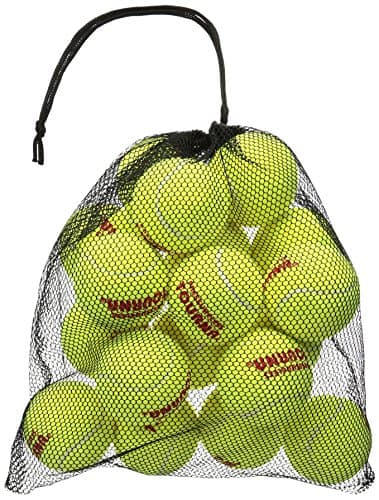
If you want cheap balls to play matches with, buy a 24-can case of Penn Championship. It is the default US club ball and the case is where its cost per ball drops below anything a single can can reach. If you want the outright cheapest tennis balls to hit, buy the Tourna mesh bag of 18 pressureless practice balls — several times cheaper per ball than anything else here, and not a match ball. Those are two different purchases and confusing them is why people end up disappointed with cheap balls.

Four searches land here: cheapest tennis balls, best cheap tennis balls, best value tennis balls, and where to buy cheap tennis balls. They are not quite the same question, so this page answers the arithmetic once and then splits the recommendation by what you are doing with the balls.

The only number that matters is cost per ball

Look at the live prices in the table above and divide by the ball count rather than comparing sticker prices. Once you do, two things become obvious.

Pack size dominates brand. The spread between a cheap club ball and a premium tournament ball bought in the same quantity is modest. The spread between a single can and a 24-can case of the same ball is large. If lowering your ball spend is the goal, buying by the case is the whole move; which brand you pick is a rounding error by comparison.

Pressureless balls are in a different price class entirely. A bag of pressureless practice balls is the cheapest way to own tennis balls, full stop, because they are built for volume rather than for a fresh-can feel. They are also not match balls, and the reason is physical rather than snobbery — see below.

Where to buy cheap tennis balls

By the case, from whoever is cheapest this week, and that is genuinely the answer. Club pro shops sell singles at the highest price per ball of any channel because they are selling convenience at the moment you need it. Big-box sporting goods stores sit in the middle. Case quantities online are the cheapest, and the prices in the table above are re-verified daily and expire after 48 hours, so if a number is showing it is current.

The one caveat on buying a case: pressurized balls start losing pressure in the can from the day they are made, so a case is a purchase to work through over a season rather than to store for two years. If you play once a month, a 24-can case is a slow leak rather than a saving. In that case buy a 12-can pack, or move to pressureless balls, which do not have the problem at all.

Why cheap balls feel cheap — and when it does not matter

A pressurized ball keeps its bounce because of the gas pressure inside it, and TennisCompanion puts it plainly: pressure is "in part, what gives a tennis ball its consistent bounce." That pressure escapes, which is why a can of balls goes dead whether you play with them or not. Pressureless balls have no internal pressure to lose and so, in the same guide's words, "tend to be more durable and long-lasting" — at the cost of being "slightly heavier and less lively."

That trade is the entire cheap-ball question. For drilling, serving practice, hitting against a wall or feeding a ball machine, the heavier, duller feel is irrelevant and the durability is a gift. For a social set or a league match, a dead-feeling ball changes how the game plays, and the few dollars you saved are not worth it.

The other budget lever nobody uses: a pressurized ball goes dead in the can as well as on the court, and a re-pressurizing canister like the Gexco Tennis Ball Saver is a one-off purchase that slows that down. It is not magic and it will not revive a bald ball, but for a player who opens a can and then does not play for three weeks it is a real saving.

Two things to check on a cheap can

Is it pressurized or pressureless? The listing will say, and it is the single most consequential line on the page. A very cheap bulk pack is almost always pressureless practice balls, which is fine if that is what you wanted and disappointing if you expected match balls.

Is the can sealed, and is the ball USTA approved? A pressurized can relies on its own internal pressure, so a can that has lost its seal contains dead balls regardless of the date on it. USTA approval, printed on the can, is the marker that a ball meets the governing body's specification — the Penn Championship line carries it, and it is the cheapest way to be certain a budget ball is a real tennis ball rather than a novelty one.

So which should you buy?

You play matches weekly and want your ball spend down → Penn Championship, 24-can case. Lowest cost per ball of anything here you would happily play a match with.

You just want something to hit, as cheap as possible → Tourna mesh bag of 18, pressureless. Nothing comes close per ball. Not for matches.

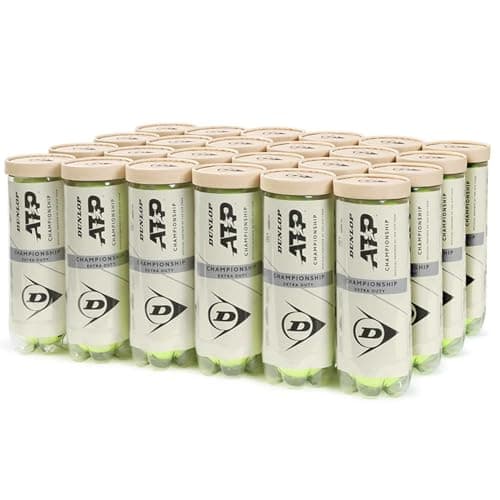
You want a slightly better ball by the case → Dunlop ATP Championship extra duty, 24 cans. An ATP-series ball at case pricing.

Your complaint about cheap balls is how they feel → Wilson US Open 12-can case. A tournament ball at a per-ball price close to a single can of a club ball. This is the best-value pick rather than the cheapest.

You play once or twice a month → Penn Championship 12-can pack. A case would go dead before you got through it.

The balls are for a hopper or a machine → GAMMA pressureless, 75 balls, or see the practice-ball page for the full ranking.
The short answer

Quick picks

#Racquet / gearBest forScorePrice
01
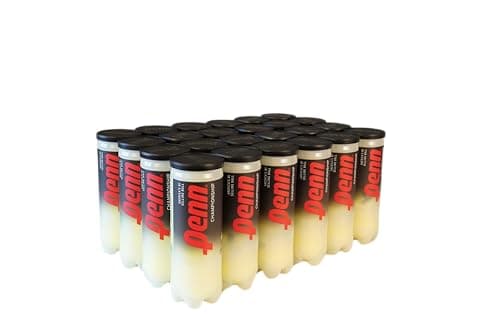
Penn Penn Championship Extra Duty (24 cans, 72 balls)
Penn Championship Extra Duty (24 cans, 72 balls)

The cheapest way to buy a ball you would actually play a match with. Penn Championship is the default US club ball, and the 24-can case is where its cost per ball drops to a level a single can cannot touch. If you play weekly, this is the purchase that stops you buying balls.

The lowest cost per good ball
8.6
$94.17Amazon
02
Tourna Tourna Pressureless Balls, Mesh Bag of 18
Tourna Pressureless Balls, Mesh Bag of 18

The lowest price per ball on this page by a wide margin, and the honest answer to cheapest tennis balls if what you want is simply something to hit. These are pressureless practice balls in a mesh bag, not match balls — they feel heavier and duller off the strings, and they do not go dead.

The outright cheapest ball
8.6
$19.50Amazon
03
Dunlop Dunlop ATP Championship Extra Duty (24-can case)
Dunlop ATP Championship Extra Duty (24-can case)

The ATP tour's ball supplier, in extra duty felt, by the case. The middle option on price between buying Penn by the dozen and Wilson US Open by the case.

Hard-court value by the case
8.2
$99.99Amazon
04
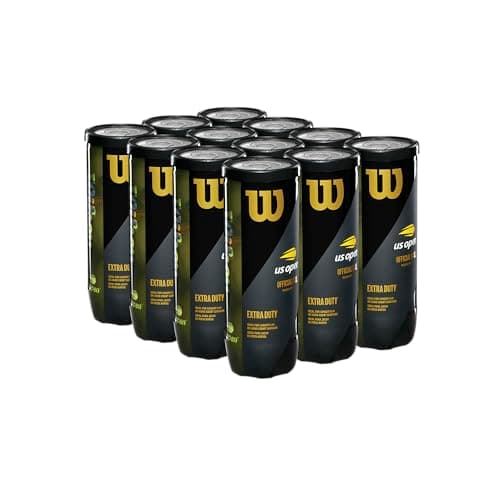
Wilson Wilson US Open Extra Duty (12-can case, 36 balls)
Wilson US Open Extra Duty (12-can case, 36 balls)

The cheap way to buy a premium ball rather than a cheap ball. The US Open ball is the one used at the tournament it is named after, and the 12-can case brings its cost per ball down close to a single can of Championship. The right pick if your complaint about cheap balls is how they feel, not what they cost.

A premium ball, bought cheaply
8.6
$76.43Amazon
05
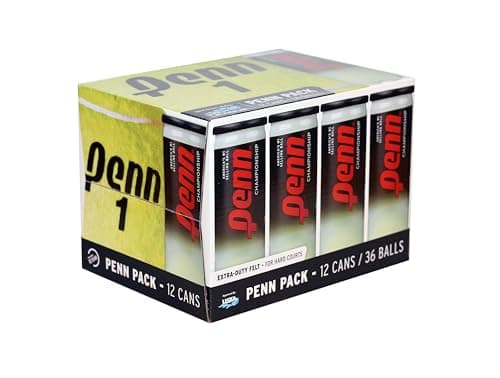
Penn Penn Championship Extra Duty (12 cans)
Penn Championship Extra Duty (12 cans)

The most-played ball in America, bought the way you should buy balls — by the case. Extra duty felt for hard courts.

Hard-court club play
8.2
$34.97Amazon
06
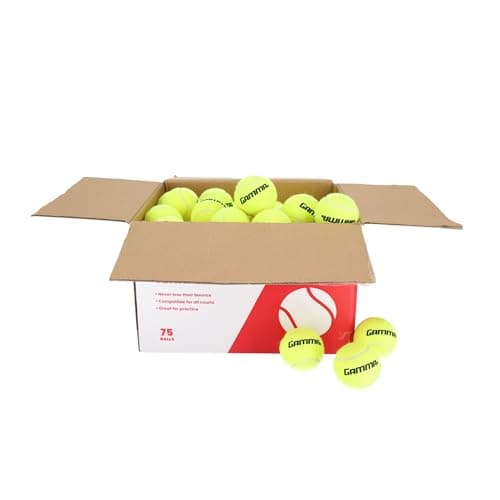
GAMMA GAMMA Pressureless Practice Balls (75)
GAMMA Pressureless Practice Balls (75)

The answer to the durability question if what you actually want is a hopper that never needs refreshing. A pressureless ball has no internal pressure to lose, so it does not go dead — it only wears its felt down, over years rather than weeks.

Ball machines and hoppers
8.6
$79.99Amazon

#ad · Live prices from the Amazon Product API, as of October 20, 2026. Where we have no verified live price, we show none — we would rather leave a gap than print a number that has rotted.

In detail

The picks, in full

01
Penn Penn Championship Extra Duty (24 cans, 72 balls)

The lowest cost per good ball

Penn Championship Extra Duty (24 cans, 72 balls)

Extra duty felt24 cans / 72 ballsPressurizedHard court
8.6/10

The cheapest way to buy a ball you would actually play a match with. Penn Championship is the default US club ball, and the 24-can case is where its cost per ball drops to a level a single can cannot touch. If you play weekly, this is the purchase that stops you buying balls.

Cost per ball
10
Consistency
8
Ball life
7
Visibility
8
Value
10

Pros

  • Buying by the case is the only reliable way to lower cost per ball; brand choice barely moves it by comparison
  • Extra duty felt is the right felt for the abrasive hard courts most US club tennis is played on
  • A ball everyone at your club already recognizes, which removes an argument before a match

Cons

  • A real outlay at once — the saving is per ball, not per transaction
  • Pressurized balls start losing pressure in the can, so a case is a purchase to work through rather than store for two years

Don't buy this if…

…you play on clay or indoor carpet. Extra duty felt fluffs up on clay; buy the regular duty version instead.

$94.17View on Amazon

Price as of October 20, 2026. Prices change — Amazon's is the one that counts.

#ad · we may earn a commission from this link to Penn Championship Extra Duty (24 cans, 72 balls)

02
Tourna Tourna Pressureless Balls, Mesh Bag of 18

The outright cheapest ball

Tourna Pressureless Balls, Mesh Bag of 18

18 ballsPressurelessMesh carry bagPractice ball
8.6/10

The lowest price per ball on this page by a wide margin, and the honest answer to cheapest tennis balls if what you want is simply something to hit. These are pressureless practice balls in a mesh bag, not match balls — they feel heavier and duller off the strings, and they do not go dead.

Cost per ball
10
Consistency
7
Ball life
9
Visibility
7
Value
10

Pros

  • Nothing else here comes close on cost per ball
  • Pressureless construction means there is no pressure to leak, so these do not go flat between sessions
  • A mesh bag is a better container than a bucket for throwing in a car

Cons

  • Pressureless balls play dead and heavy next to a fresh pressurized ball — this is a drilling ball, not a match ball
  • Heavier balls are harder on an elbow over a long session

Don't buy this if…

…you are buying balls for matches or social sets. Buy a Penn Championship case and keep these for the wall.

$19.50View on Amazon

Price as of October 20, 2026. Prices change — Amazon's is the one that counts.

#ad · we may earn a commission from this link to Tourna Pressureless Balls, Mesh Bag of 18

03
Dunlop Dunlop ATP Championship Extra Duty (24-can case)

Hard-court value by the case

Dunlop ATP Championship Extra Duty (24-can case)

Extra duty felt24 cans / 72 ballsPressurizedATP-series ball
8.2/10

The ATP tour's ball supplier, in extra duty felt, by the case. The middle option on price between buying Penn by the dozen and Wilson US Open by the case.

Durability
8
Consistency
8
Feel
8
Visibility
8
Value
9

Pros

  • Extra duty felt is the correct choice on an abrasive hard court — regular duty fluffs up and goes dead inside a set
  • Case pricing sits between the Penn 12-can and the Wilson US Open 24-can, so it is the cheapest 72-ball option here
  • Dunlop supplies the ATP tour, so this is a genuine performance ball specification rather than a club-only product

Cons

  • A 24-can case is a lot of balls to store, and pressurized balls age in the cupboard whether you open them or not
  • Not the default club ball in the US, so you may play league matches with something else

Don't buy this if…

…you play on clay or indoor carpet. Extra duty felt picks up and holds those surfaces; buy regular duty instead.

$99.99View on Amazon

Price as of October 20, 2026. Prices change — Amazon's is the one that counts.

#ad · we may earn a commission from this link to Dunlop ATP Championship Extra Duty (24-can case)

04
Wilson Wilson US Open Extra Duty (12-can case, 36 balls)

A premium ball, bought cheaply

Wilson US Open Extra Duty (12-can case, 36 balls)

Extra duty felt12 cans / 36 ballsOfficial US Open ballPressurized
8.6/10

The cheap way to buy a premium ball rather than a cheap ball. The US Open ball is the one used at the tournament it is named after, and the 12-can case brings its cost per ball down close to a single can of Championship. The right pick if your complaint about cheap balls is how they feel, not what they cost.

Cost per ball
8
Consistency
10
Ball life
8
Visibility
9
Value
8

Pros

  • A tournament-grade ball at a per-ball price in the same neighborhood as club balls bought by the can
  • 12 cans is a more realistic quantity than 24 for a player who plays once or twice a week
  • Consistent can to can, which is the practical benefit of a premium ball over a budget one

Cons

  • Still clearly more per ball than a Championship case
  • Extra duty only in this pack, so clay players would be buying the wrong felt

Don't buy this if…

…cost per ball is the whole point. The Penn Championship case wins that comparison and it is not close.

$76.43View on Amazon

Price as of October 20, 2026. Prices change — Amazon's is the one that counts.

#ad · we may earn a commission from this link to Wilson US Open Extra Duty (12-can case, 36 balls)

05
Penn Penn Championship Extra Duty (12 cans)

Hard-court club play

Penn Championship Extra Duty (12 cans)

Extra duty felt12 cans / 36 ballsPressurizedUSTA approved
8.2/10

The most-played ball in America, bought the way you should buy balls — by the case. Extra duty felt for hard courts.

Durability
8
Consistency
8
Feel
7
Visibility
8
Value
10

Pros

  • Extra duty felt is woven thicker specifically for abrasive hard courts — a regular duty ball fluffs up and dies in a set
  • Buying by the case is substantially cheaper per can than singles
  • The default club ball in the US, so it is the ball you will play matches with anyway

Cons

  • Pressurized balls go dead whether you use them or not once the can is open
  • Extra duty felt is the wrong choice on clay, where it picks up and holds the surface

Don't buy this if…

…you play on clay or indoor carpet. Buy regular duty felt instead.

$34.97View on Amazon

Price as of October 20, 2026. Prices change — Amazon's is the one that counts.

#ad · we may earn a commission from this link to Penn Championship Extra Duty (12 cans)

06
GAMMA GAMMA Pressureless Practice Balls (75)

Ball machines and hoppers

GAMMA Pressureless Practice Balls (75)

75 ballsPressurelessHigh-visibility feltMachine compatible
8.6/10

The answer to the durability question if what you actually want is a hopper that never needs refreshing. A pressureless ball has no internal pressure to lose, so it does not go dead — it only wears its felt down, over years rather than weeks.

Ball life
10
Consistency
9
Feel
5
Visibility
9
Value
10

Pros

  • Pressureless construction removes the failure mode entirely: there is no pressure inside to escape, so these do not go flat sitting in a hopper between sessions
  • The listing states machine compatibility, which matters — a ball machine is unforgiving of soft or inconsistent balls and these feed consistently
  • 75 balls fills a 75-ball hopper exactly once, which is a neater piece of arithmetic than it sounds when you are loading a basket

Cons

  • A pressureless ball feels heavier and harder off the strings than a pressurized one, and plays dead by comparison. These are practice balls, not match balls
  • Heavier balls are harder on an elbow over a long feeding session
  • The felt still wears, and worn felt on a pressureless ball flies strangely

Don't buy this if…

…you want these for matches or social sets. Pressureless balls are for drilling, feeding and machine work; play your matches with a pressurized ball.

$79.99View on Amazon

Price as of October 20, 2026. Prices change — Amazon's is the one that counts.

#ad · we may earn a commission from this link to GAMMA Pressureless Practice Balls (75)

How we picked

We have not physically tested this gear

Everyone in this category says they tested twenty racquets. We have not tested any — and we say so. What we did instead: compiled the manufacturer-published specifications (head size, strung weight, string pattern, stiffness, outsole compound), normalized them, and scored each product against a published rubric weighted for the NTRP tier this page serves. The scores are judgments from documented research, not measurements we took, because we do not have a lab and are not going to pretend we do.

Questions

Frequently asked

What are the cheapest tennis balls?
Pressureless practice balls bought in a bulk bag — the Tourna mesh bag of 18 is the cheapest per ball here by a wide margin. They do not go dead, because there is no internal pressure to lose, but they feel heavier and duller than a fresh pressurized ball, so they are for drilling rather than for matches.
What are the best value tennis balls?
A 24-can case of Penn Championship if you want the lowest cost per ball you would play a match with, or a 12-can case of Wilson US Open if you want a tournament-grade ball at close to club-ball pricing. Pack size moves cost per ball far more than brand choice does.
Where can you buy cheap tennis balls?
By the case, online, from whoever is cheapest that week. Club pro shops charge the most per ball because they sell convenience; big-box stores sit in the middle; case quantities online are the cheapest. Prices in the table above are re-verified daily and disappear if they go stale.
Are cheap tennis balls worth it?
For practice, yes, clearly. For matches, buy the cheapest pressurizedball rather than the cheapest ball — a pressureless practice ball plays dead and heavy, and the few dollars saved change how the game feels. The real saving is in pack size, not in dropping a grade.
How long do tennis balls last?
A pressurized ball loses pressure from the day it is made, in the can as well as on court, so a case is a season's purchase rather than a two-year store. Pressureless balls do not go flat at all and only wear their felt down. If balls going dead is your actual complaint, the durability page is the one to read.

Keep reading

Receipts

Sources

We do not run a testing lab, and we do not pretend to. Our specs come from manufacturer listings and spec sheets; our rules and dimensions come from the official rulebook. Where we could not verify something, we say so on the page rather than quietly leaving it out. Read our full method.