Skip to content
Four Oh Club

Court footwear · Shoes

The Best Tennis Shoes for Women With Bunions

A bunion is a pressure problem, not a width problem. The shoe that fixes it is wide in one specific place — across the big-toe joint — and soft where it sits over the bump.

By Stephen V.Updated How we score
#ad

We earn a commission when you buy through our Amazon links, at no extra cost to you. It never changes our rankings, and we say so when the cheaper racquet is the better buy. How this works.

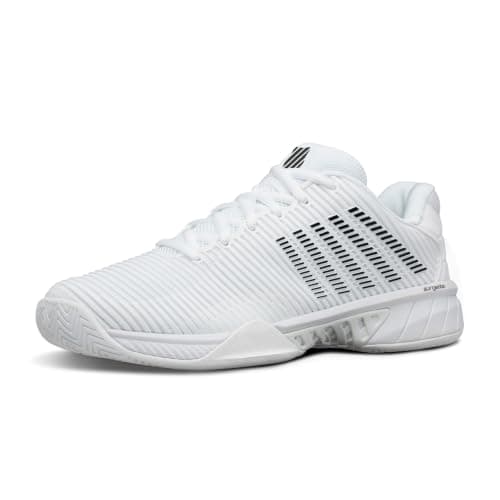
Buy the K-Swiss Hypercourt Express 2 in the women's fit. It has the roomiest toe box of any women's court shoe we list, it is comfortable from the first wear with no break-in to survive, and a bunion does not get a vote on break-in. If a single width does not solve it, the New Balance 796 v3 is the only women's court shoe here sold in two widths (B and D), and if you can wear a men's last the FuelCell 996 comes in D, 2E and 4E — which is the widest option on this entire site. The adidas Gamecourt 2.0 is the soft-upper budget pick.

The American Academy of Orthopaedic Surgeons describes a bunion as "a painful bony bump that develops on the inside of the foot at the big toe joint," and lists footwear among its causes — specifically "shoes with a narrow, pointed toe box that forces the toes into an unnatural position." It is also clear about the limits: "nonsurgical treatment cannot actually reverse a bunion," though it can reduce pain and slow progression.

That is the frame for this page. The right shoe will not fix the joint. It will decide whether you can play two hours of tennis without thinking about your foot.

What the AAOS actually asks for in a shoe

The published footwear advice is to choose shoes with a "wide or open toe box that does not squeeze your toes," and more fully: wide insteps, broad toe boxes, soft soles and good stability, while avoiding shoes that are short, tight, sharply pointed or heeled more than a couple of inches. It also mentions protective silicone pads worn inside the shoe to cushion the bump, with the caveat to test them briefly first because a badly sized pad increases pressure.

Translated into court shoes, four things matter and they are not the same four as on the wide-feet page.

1. Toe box width at the big-toe joint specifically. A bunion needs room in one place. A shoe can be wide across the midfoot and still press exactly where it hurts, which is why "wide" on a box is not the same as "works."

2. A soft upper with no seam over the bump. A stitched overlay or a stiff synthetic panel sitting across the joint is a pressure line, and it will be the thing you notice at minute forty. Soft, seam-free material over the medial forefoot is worth more than a half-size.

3. No break-in requirement. "It will stretch out" is how a bunion becomes a blister. The shoe has to be comfortable on the first wear. This single criterion is why the K-Swiss wins this page over shoes with better outsoles.

4. Enough stability to still be a tennis shoe. The AAOS asks for good stability alongside the width, and tennis asks for more: every pick here is a court shoe with a court outsole. A roomy walking sneaker is not an answer, for the same reason running shoes are not — lateral cuts need a lateral wall.

Bunions versus wide feet: not the same page

We have a page for wide feet, and the picks overlap, but the problems are different and buying for the wrong one is why people end up with three pairs of shoes that do not work.

A wide foot is uniformly broad and needs a bigger last everywhere. A bunion foot may be a normal width with one prominent joint, and what it needs is shape and softness in that one place. Going up a full width on a normal-width foot creates a different problem: the foot slides inside the shoe, and a sliding foot on a lateral cut is an unstable foot. That is why the shoes listed here are ranked by toe-box shape and upper softness first, and by width options second.

How to tell whether a court shoe will work before you play in it

Stand in it, in your tennis socks, and press your thumb across the medial forefoot where the bunion sits. If you can feel the seam or the overlay through your thumb, you will feel it through your foot at minute forty. Then do a slow lateral step in each direction on a hard floor: the forefoot should stay put inside the shoe without the joint pressing into the upper. If it presses standing still, nothing about playing will improve it.

One more check that catches a lot of bad purchases: take the insole out and stand on it on the floor. Your foot should sit inside its outline, including at the big-toe joint. If the joint overhangs the insole, the shoe is the wrong shape for your foot at that size no matter how it feels on the carpet of a store.

Three things to do beyond the shoe

Lace around the problem. Skipping the first eyelet on the medial side takes tension off the forefoot while keeping the heel locked. It costs nothing, it takes thirty seconds, and it solves a surprising share of this.

Fit at the end of the day, in your tennis socks. Feet swell, and a shoe fitted barefoot at 10 a.m. is a shoe that hurts at 6 p.m. Published fitting advice is consistent on this: try shoes on with the socks and any insole you actually use. Our tennis socks page is relevant here for a different reason — a thick cushioned sock takes up real volume and changes the fit.

Consider a silicone pad, carefully. The AAOS mentions them, and so does every podiatrist, with the same caveat: test it briefly, because a pad that is too thick raises pressure rather than lowering it.

The limits of this page, plainly: we have not fitted anyone's foot and we are not clinicians. The guidance above is published by the AAOS and attributed to them. The shoe picks are judgments from manufacturer-published construction against our rubric, weighted here toward toe-box room, upper softness and the absence of a break-in period. If a bunion is painful rather than simply inconvenient, see a podiatrist — a shoe is not a treatment.
The short answer

Quick picks

#Racquet / gearBest forScorePrice
01
K-Swiss K-Swiss Hypercourt Express 2 (Women's)
K-Swiss Hypercourt Express 2 (Women's)

The roomiest women's court shoe here, and the comfort choice — wearable straight out of the box with no break-in.

Women, wide feet
8.4
$130.00Amazon
02
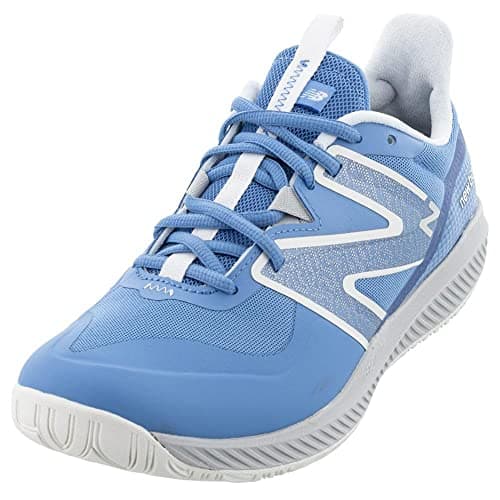
New Balance New Balance 796 v3 (Women's)
New Balance 796 v3 (Women's)

The only women's tennis shoe sold in real widths. If standard-width court shoes hurt, this is the answer.

Women, width options
8.2
$108.89Amazon
03
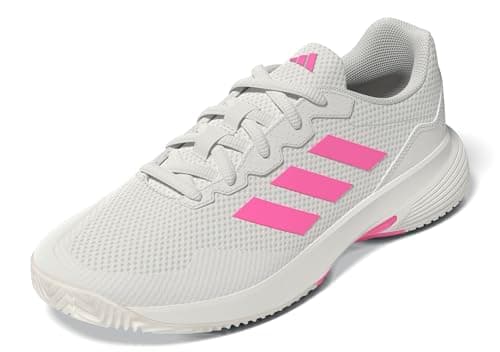
adidas adidas Gamecourt 2.0 (Women's)
adidas Gamecourt 2.0 (Women's)

adidas' entry women's court shoe — soft, light and cheap, for a player getting off running shoes and onto a real outsole.

Women, casual play
7.2
$70.00Amazon
04
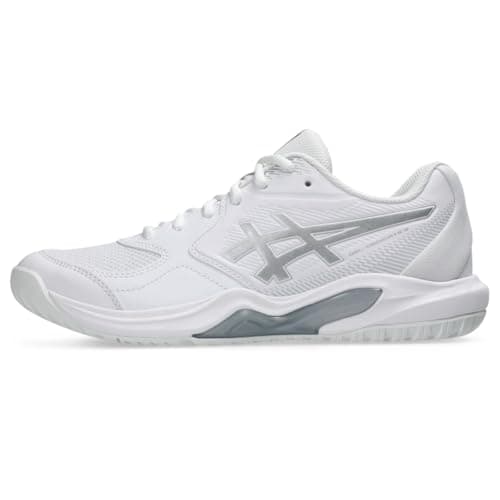
ASICS ASICS Gel-Dedicate 9 (Women's)
ASICS Gel-Dedicate 9 (Women's)

The budget women's pick. A real court outsole and a stable platform at a price that makes a first pair of tennis shoes an easy decision.

Women, budget
7.4
$79.95Amazon
05
New Balance FuelCell 996 v6 (Men's)

The cushioning pick, and the one to buy if your feet hurt. New Balance is the only tennis brand that sells real width options.

Foot pain and wide feet
8.6
Check price →

#ad · Live prices from the Amazon Product API, as of October 19, 2026. Where we have no verified live price, we show none — we would rather leave a gap than print a number that has rotted.

In detail

The picks, in full

01
K-Swiss K-Swiss Hypercourt Express 2 (Women's)

Women, wide feet

K-Swiss Hypercourt Express 2 (Women's)

Aösta 7.0 rubberDragGuard toeRoomy toe boxAll court
8.4/10

The roomiest women's court shoe here, and the comfort choice — wearable straight out of the box with no break-in.

Stability
8
Cushioning
8
Durability
8
Comfort
10
Value
8

Pros

  • The widest women's toe box of the shoes we list — the pick for anyone whose toes go numb in ASICS
  • Zero break-in; comfortable on the first wear
  • Durable Aösta 7.0 outsole compound despite the comfort focus

Cons

  • The roomy fit allows a little more in-shoe movement on hard cuts
  • Less lateral containment than the Gel-Resolution

Don't buy this if…

…your feet are narrow. A loose shoe is an unstable shoe.

$130.00View on Amazon

Price as of October 19, 2026. Prices change — Amazon's is the one that counts.

#ad · we may earn a commission from this link to K-Swiss Hypercourt Express 2 (Women's)

02
New Balance New Balance 796 v3 (Women's)

Women, width options

New Balance 796 v3 (Women's)

Sold in B and D widthsNDurance outsolePROBANK stabilityHard court
8.2/10

The only women's tennis shoe sold in real widths. If standard-width court shoes hurt, this is the answer.

Stability
9
Cushioning
7
Durability
8
Comfort
9
Value
8

Pros

  • Genuine width options (standard B and wide D) rather than one last for everyone
  • PROBANK midsole technology adds lateral stability without a heavy support cage
  • NDurance rubber in the high-wear zones holds up through a season of weekly play

Cons

  • Firmer underfoot than the FuelCell models
  • Styling is conservative compared with ASICS or adidas

Don't buy this if…

…you want maximum cushioning for foot pain — the men's FuelCell 996 platform is softer, if the sizing works for you.

$108.89View on Amazon

Price as of October 19, 2026. Prices change — Amazon's is the one that counts.

#ad · we may earn a commission from this link to New Balance 796 v3 (Women's)

03
adidas adidas Gamecourt 2.0 (Women's)

Women, casual play

adidas Gamecourt 2.0 (Women's)

Adiwear outsoleCloudfoam midsoleSynthetic upperAll court
7.2/10

adidas' entry women's court shoe — soft, light and cheap, for a player getting off running shoes and onto a real outsole.

Stability
6
Cushioning
7
Durability
6
Comfort
8
Value
9

Pros

  • Cloudfoam is the softest-feeling midsole at this price point
  • Adiwear outsole is a real court compound despite the entry-level position
  • Light enough that a casual player will not notice them

Cons

  • Very little lateral support structure
  • Soft foam packs out faster than a firmer midsole

Don't buy this if…

…you play competitively. This is a recreational shoe and does not pretend otherwise.

$70.00View on Amazon

Price as of October 19, 2026. Prices change — Amazon's is the one that counts.

#ad · we may earn a commission from this link to adidas Gamecourt 2.0 (Women's)

04
ASICS ASICS Gel-Dedicate 9 (Women's)

Women, budget

ASICS Gel-Dedicate 9 (Women's)

Herringbone outsoleWrapped midsoleSynthetic upperHard court
7.4/10

The budget women's pick. A real court outsole and a stable platform at a price that makes a first pair of tennis shoes an easy decision.

Stability
7
Cushioning
6
Durability
6
Comfort
8
Value
10

Pros

  • Proper herringbone court tread rather than the running-shoe outsole on a cheap sneaker
  • Light and immediately comfortable with no break-in
  • The clearest upgrade a beginner can make from playing in running shoes

Cons

  • Thin cushioning; two hours on concrete is felt
  • Entry-level support structure

Don't buy this if…

…you play league tennis weekly. Go to the Gel-Resolution X and it will outlast three of these.

$79.95View on Amazon

$90.0011% off

Price as of October 19, 2026. Prices change — Amazon's is the one that counts.

#ad · we may earn a commission from this link to ASICS Gel-Dedicate 9 (Women's)

05

Foot pain and wide feet

New Balance FuelCell 996 v6 (Men's)

FuelCell foamNDurance outsoleMultiple widths (D/2E/4E)Hard court
8.6/10

The cushioning pick, and the one to buy if your feet hurt. New Balance is the only tennis brand that sells real width options.

Stability
8
Cushioning
10
Durability
8
Comfort
9
Value
8

Pros

  • Sold in genuine 2E and 4E widths — not a 'roomy standard', an actual last change, which is why it is our plantar-fasciitis and wide-foot pick
  • FuelCell is the most cushioned midfoot platform here, which takes load off the plantar fascia
  • NDurance outsole rubber in the high-wear zones holds up well

Cons

  • The soft FuelCell ride costs some court feel and some lateral firmness
  • Heavier than a speed shoe

Don't buy this if…

…you want maximum ground feel and a locked-down fit. Softness and precision trade against each other.

Check price on Amazon →

We don't have a verified live price for this right now, so we aren't showing one.

#ad · we may earn a commission from this link to New Balance FuelCell 996 v6 (Men's)

How we picked

We have not physically tested this gear

Everyone in this category says they tested twenty racquets. We have not tested any — and we say so. What we did instead: compiled the manufacturer-published specifications (head size, strung weight, string pattern, stiffness, outsole compound), normalized them, and scored each product against a published rubric weighted for the NTRP tier this page serves. The scores are judgments from documented research, not measurements we took, because we do not have a lab and are not going to pretend we do.

Questions

Frequently asked

What are the best tennis shoes for women with bunions?
The K-Swiss Hypercourt Express 2 women's, which has the roomiest toe box of the women's court shoes we list and needs no break-in. The New Balance 796 v3 is the pick if you need a width choice (B and D), and the men's FuelCell 996 in D, 2E or 4E is the widest option on the site if a men's last works for you.
What shoes does the AAOS recommend for bunions?
A "wide or open toe box that does not squeeze your toes," plus wide insteps, broad toe boxes, soft soles and good stability — and avoiding shoes that are short, tight or sharply pointed. The AAOS is also explicit that nonsurgical measures cannot reverse a bunion, only reduce pain and slow progression.
Can tennis make a bunion worse?
Tennis itself is not the cause — the AAOS lists narrow pointed footwear, heredity (up to 70% of people with bunions have a family history) and certain medical conditions. But a tight court shoe loaded with hundreds of lateral pushes an hour is a lot of pressure on that joint, so the fit matters more in tennis than in walking.
Should I buy a wider tennis shoe for a bunion?
Only if your foot is genuinely wide. A bunion foot may be a normal width with one prominent joint, and a full width up means the foot slides inside the shoe — which is unstable on a lateral cut. Prioritize toe-box shape and a soft, seam-free upper over the joint first, and width second.
Do bunion pads work in tennis shoes?
The AAOS mentions protective silicone pads as a way to cushion the bump, with the caveat to test them briefly first because a poorly sized pad can increase pressure. In a court shoe that caveat matters more, because the shoe is already close-fitting and a pad eats volume.

Keep reading

Receipts

Sources

We do not run a testing lab, and we do not pretend to. Our specs come from manufacturer listings and spec sheets; our rules and dimensions come from the official rulebook. Where we could not verify something, we say so on the page rather than quietly leaving it out. Read our full method.