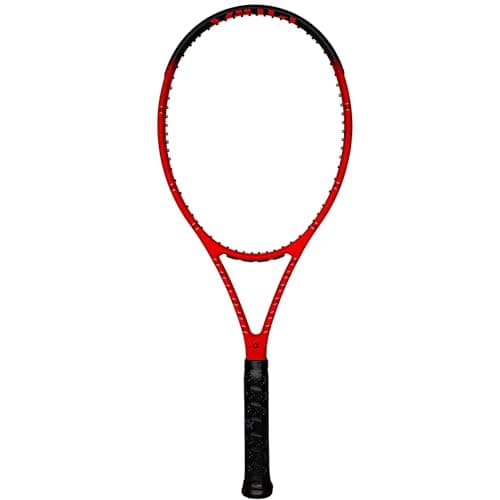
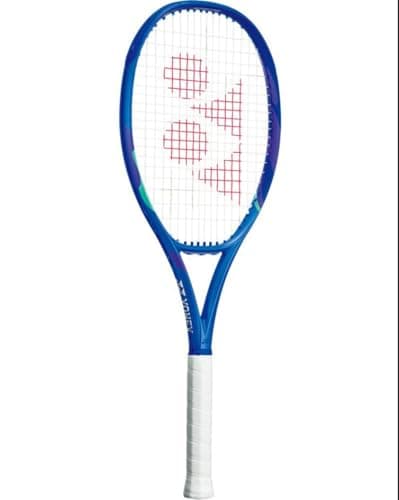
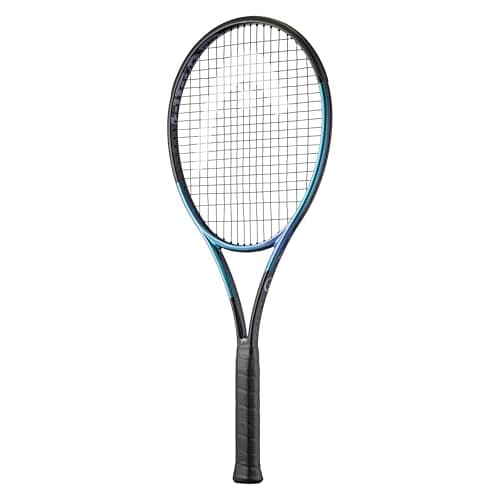
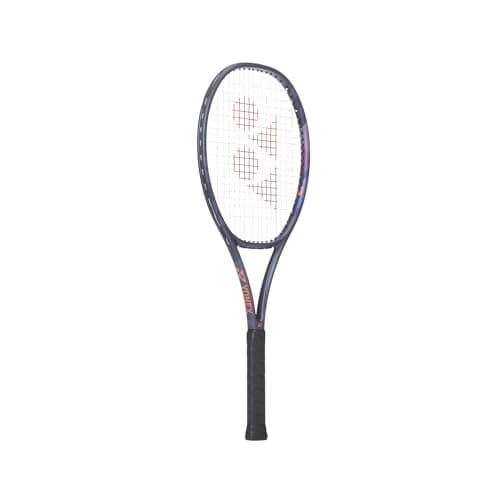
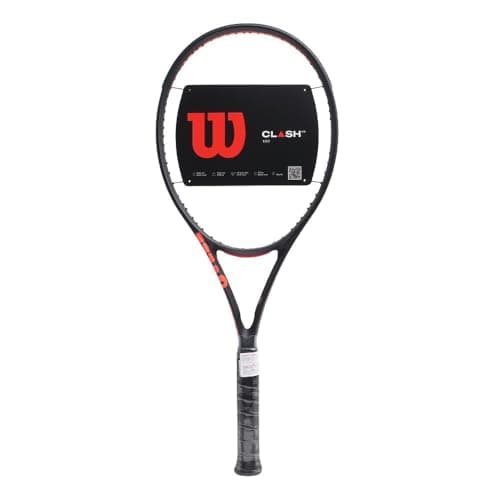
The Wilson Clash 100 v3 is the best racket for tennis elbow: Tennis Warehouse publishes it at RA 54, which is roughly fifteen points softer than a Pure Drive at the same head size and string pattern. If you want it softer still, the Volkl Vostra V8 300 adds dedicated dampening in the handle. But read the next section first, because the racket is usually not the thing to change first.
Change these three things before you buy a racket
A new frame is the most expensive intervention and rarely the most effective one. In order of cost-effectiveness:
1. Your string. This is the big one. If you are playing a full polyester bed and your elbow hurts, that is very likely your answer. Switch to a multifilament, or at minimum hybrid poly mains with a multifilament cross. Our strings for tennis elbow page covers the specific options.
2. Your tension.Dropping four to six pounds softens the string bed measurably and costs the price of a restring. Lower tension gives you a little more power and a little less control — a trade worth making to keep playing.
3. Your grip size. A grip that is too small forces you to squeeze, and sustained gripping is a direct contributor to the tendon load that causes the problem. Check it against our grip size guide; building a grip up costs almost nothing.
If you have done all three and it still hurts, then the frame is the next variable.
What makes a frame arm-friendly
Low stiffness (RA).The single most useful published number. Under RA 62 is soft, RA 62–67 is mid, above RA 67 is stiff. The Clash 100 v3 at RA 54 is unusually soft for a modern frame with real power.
Dedicated dampening.Some brands build shock absorption into the handle rather than relying on flex alone — Yonex's Vibration Dampening Mesh and Volkl's REVA and RED Cell systems are both this. It is a genuine construction difference, not a sticker.
Adequate mass. Counterintuitive but important: very light frames are harder on the arm, not easier. A light racket is deflected more violently by an incoming ball, and that deflection goes somewhere. Frames under about 10 oz strung are a poor choice for a sore elbow despite feeling easier to swing.
What does not help: a vibration dampener in the strings. It changes the sound and the string-bed buzz, but it does not meaningfully reduce the frame vibration that loads the tendon. Buy one if you dislike the ping; do not buy one expecting treatment.
This is not medical advice
We are a gear site. We can tell you which frames are published as softer and which construction features are designed to absorb shock. We cannot diagnose you, and persistent elbow pain is worth a physiotherapist rather than a shopping list. A counterforce brace manages the symptom while you address the cause; it is not the cause being addressed.
Arm-friendly frames, by mechanism
| Racket | Head | Weight | How it protects the arm |
|---|
| Wilson Clash 100 v3 | 100 sq in | 11.0 oz strung | RA 54 flex — softest modern power frame |
| Volkl Vostra V8 300 | Standard | 300 g unstrung | REVA + RED Cell handle dampening |
| Yonex EZONE 100 | 100 sq in isometric | 11.2 oz strung | VDM mesh in the handle, isometric face |
| HEAD Gravity MP | 100 sq in | 11.3 oz strung | Low stiffness for a control frame |
| Yonex Percept 97 | 97 sq in isometric | 11.6 oz strung | Flexible layup, long dwell time |
The full arm-friendly setup
If your elbow is the constraint, buy the whole system rather than one piece of it:
Frame:RA under about 62, 11–11.5 oz strung, with handle dampening if you can get it. String: a multifilament such as Wilson NXT or HEAD Velocity MLT, or natural gut if the budget allows. Tension:toward the bottom of the frame's published range. Grip: correctly sized, possibly a half-size up from what you think. Overgrip: a cushioned one rather than the thinnest available.
That combination is a genuinely different experience from a stiff frame with a tight poly bed, and most players who make all five changes at once find the problem recedes.
Why light rackets are a trap here
The intuition is obvious: lighter racket, less strain. The mechanics disagree. When a ball hits a light frame, the frame is deflected and decelerated much more sharply than a heavy one — and your wrist, forearm and elbow absorb the difference. Heavier frames carry more of the impact themselves.
This is why the two oversize frames on our power page— stiff and very light — are explicitly not recommended for anyone with arm trouble, despite being the easiest frames on this site to swing.
Give the change time
Tendon problems resolve slowly, and a new frame will not produce an immediate difference. Expect weeks, and expect to also need rest, load management and probably some forearm strengthening. What the right frame does is stop you re-injuring yourself every Tuesday night, which is the thing that turns a six-week problem into a two-year one.