Skip to content
Four Oh Club

The flagship · Racquets

The Best Tennis Rackets Under $200

This is the most interesting price band in tennis, for one unglamorous reason: it is where last year's tour frames land after the new generation ships. Same layup, same mold, no badge value.

By Stephen V.Updated How we score
#ad

We earn a commission when you buy through our Amazon links, at no extra cost to you. It never changes our rankings, and we say so when the cheaper racquet is the better buy. How this works.

The best tennis racket under $200 is the HEAD Speed MP (2024): a genuine tour-line frame, 100 sq in with control-frame weight, at a live price well inside the band. If you want feel rather than speed, the Wilson Blade 100L v9 is the pick — and the reason it fits under $200 at all is the most useful thing on this page. Wilson launched the Blade v10 in April 2026 at a published $289 - $299, which is what pushed the v9 into this band. The frame did not get worse. The badge got older.

That is the mechanism behind almost every pick here, and it is worth understanding before you spend anything. A flagship frame launches somewhere around three hundred dollars. Eighteen months later the brand ships the next generation at the same price, and the outgoing model — identical mold, identical layup, a different paint job — falls to between a half and two-thirds of that. Under $200 is not a quality tier. It is a calendar.

So this page is deliberately not a list of cheap racquets. If your budget is tighter than this, we have a separate ranking of real frames under about $100, which is a genuinely different set of products: entry graphite and aluminum, built to a price rather than discounted into one. The frames below are performance racquets that were sold to 4.0 players at full price last season.

A note on the number in the title. Every price on this site renders live from the retailer and carries an “as of” date, and the only dollar figures typed into this page's text are the $200 band itself and Wilson's published launch price for the Blade v10. Each of the frames below was at or under $200 when this page was written. Discounts move, and a frame can step back over the line for a week — the table shows today's number, which is the one that matters. Where a frame crosses the band on the day you read this, treat it as the band's upper edge rather than a page that lied to you.

How we picked, and what a frame had to do to get on this page

Four criteria, applied in this order. They are deliberately boring, because the interesting criteria in this category are usually the dishonest ones.

1. It had to be a real performance frame. A full graphite racquet from a racquet company, sold in a line that also has a tour version. That rules out the department-store aluminum that dominates search results for this query, and it rules out frames whose only claim is a low price.

2. It had to be priceable and purchasable on the day. We check every listing against the retailer API daily. A frame whose listing had no live price was not ranked, however good it is — which cost the HEAD Boom MP its place here, because its listing came back image-only on the day this page was written and the only live-priced Boom the API returned was a different, more expensive model. Publishing a buy button we cannot price is how you end up recommending something that no longer exists.

3. It had to be different from the frame above it. Six near-identical 100 sq in power frames would be a longer page and a worse one. The list below runs control, feel, spin, small-head control, ultra-light and oversize-power, so the choice you make is between jobs rather than between paint jobs.

4. The specs had to be published. Head size, strung or unstrung weight and string pattern, from the manufacturer or a specialist retailer's spec sheet. We have not measured a frame. Where a listing publishes no swingweight or stiffness — which is the case for the Ultra 100UL — we say so rather than filling the gap with a number from somewhere else.

The strung-versus-unstrung trap

The one thing that genuinely catches people out in this band. Two of the frames below — the Dunlop CX 200 LS and the Wilson Ultra 100UL v4 — are sold unstrung. A string job is not optional on an unstrung frame, so the real cost of those two is the listed price plus labor and string, which moves them meaningfully up the table. Our page on what restringing actually costs has the current numbers.

That is not a reason to avoid unstrung frames. It is often an advantage: you choose the string and the tension from the first ball rather than playing on whatever generic synthetic the factory fitted, and for a control frame like the CX 200 LS that matters more than for a power frame. But compare like with like. A strung frame at the top of the band can be cheaper to get on court than an unstrung frame in the middle of it.

What you give up against a $300 frame

Honestly: less than the price gap suggests, and more than nothing.

You do not give up construction. A previous-generation tour frame is the same graphite layup in the same mold. The Blade 100L v9 on this page is published at 100 sq in, 10.6 oz / 301 g strung, swingweight 308, stiffness 69, 16x19 — those are not budget-frame numbers, they are last season's numbers.

You do give up the newest technology claim, which may or may not be worth anything. Wilson's v10 press material credits a new TurboTaper construction with a power increase and StableFeel+ with more stability. Those are manufacturer claims about a frame we have not hit. They might be real improvements; they are not a reason to pay fifty percent more if your limiting factor is your own swing.

You do give up choice. Discounted generations sell out in the popular grip sizes first. If you need a 4 5/8 grip you will find less in this band than at full price, although a smaller grip plus an overgrip is a legitimate fix — see the grip size guide.

You may give up resale value, which matters if you churn frames. A current-generation racquet holds its price better than one the brand has already replaced.

Which of the six is for you

The short version, before the full write-ups below.

If you are a 3.5 to 4.0 all-court player buying one racquet to play with for the next three years, the HEAD Speed MP (2024)is the pick: a 100 sq in head with control-frame weight, published at 11.3 oz strung, which is forgiving without being loose. It is the frame on this page that asks the fewest questions about your game. It is also crisper than the alternatives, which is the trade — if your elbow is a concern, read the next paragraph instead.

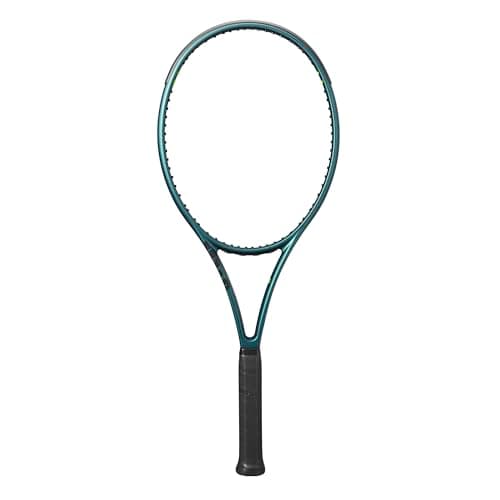
If you want feel and a softer ride, the Wilson Blade 100L v9 is the Blade line made available to a 3.5, at nearly an ounce less than the standard 98. Note the published stiffness of 69, which is not a soft frame despite the Blade's reputation — the Blade's feel comes from a thin beam, not from flex, and we go into that at length on Clash vs Blade.

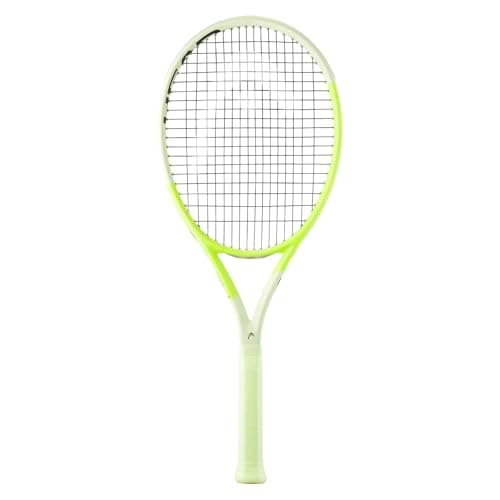
If your game is built on topspin, the HEAD Extreme MP (2024) is the spin frame of the group and the best value on the page: Aero-style spin access at well under Babolat money, with a softer Auxetic 2.0 layup than HEAD's previous generation.

If you redirect pace and want a smaller face, the Dunlop CX 200 LS (2024) is the cheapest route into a genuine player's frame on this site — 98 sq in, thin beam, real tour lineage — as long as you accept that it arrives unstrung and that a 98 punishes an inconsistent contact point.

If you need the lightest possible performance frame, because you are returning from injury, playing through shoulder trouble or just have a short, late swing, the Wilson Ultra 100UL v4 is published at 9.7 oz and is marketed as the lightest frame in Ultra v4 series for arm-friendly swings. The honest limit: at that weight there is very little mass to absorb incoming pace, so it loses the argument against heavy hitters.

If you have lost racquet-head speed, the Wilson Hyper Hammer 5.3 is the oversize, head-heavy answer that turns a gentle swing into a deep ball. It is on this page because it does a job none of the others do, not because it is a modern frame — and it carries a real warning, below, for anyone with a history of elbow pain. Our senior racquet ranking has more in this shape.

If none of those descriptions sounds like you, the honest answer is that you should read how to choose a tennis racket before you shop a price band at all. And if you are willing to go above the band, the Yonex pair on EZONE vs VCORE is where the next step up leads.

The short answer

Quick picks

#Racquet / gearBest forScorePrice
01
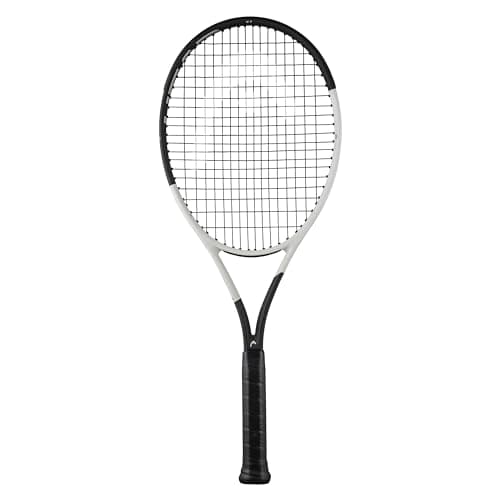
HEAD HEAD Speed MP (2024)
HEAD Speed MP (2024)

The fast, modern all-court frame — a 100 sq in head with a dense-enough pattern to control it. Djokovic's family of racquet, in a club-playable spec.

Fast-swinging all-courters
7.8
$169.00Amazon
02
Wilson Wilson Blade 100L v9
Wilson Blade 100L v9

A Blade you can actually swing all match. The light version of the control benchmark, which makes a player's frame available to a 3.5.

3.5s who want feel
7.8
Check price →
03
HEAD HEAD Extreme MP (2024)
HEAD Extreme MP (2024)

HEAD's spin frame, and the best-value one here: Aero-style spin access at well under Babolat money.

Spin on a budget
8.0
$199.00Amazon
04
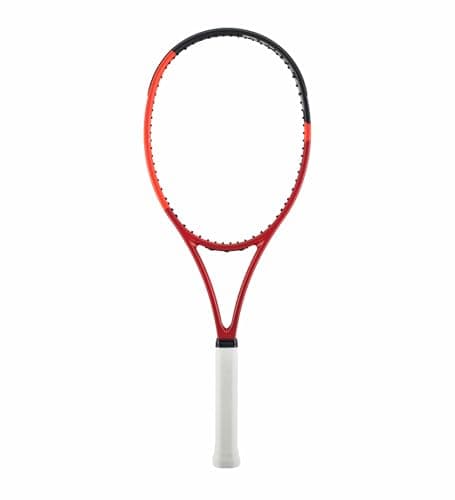
Dunlop Dunlop CX 200 LS (2024)
Dunlop CX 200 LS (2024)

A control frame at an intermediate price — the cheapest way into a genuine player's racquet, if you are willing to string it yourself.

Control on a budget
7.6
$129.99Amazon
05
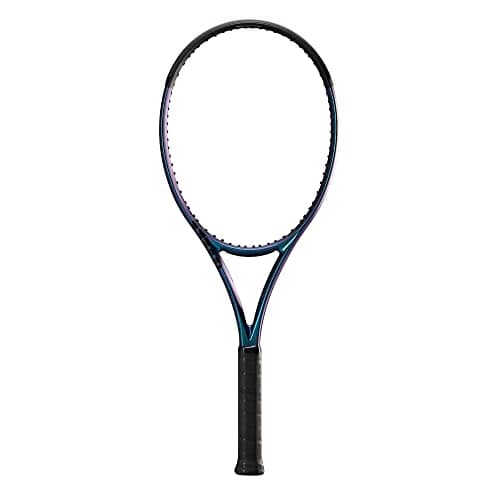
Wilson Wilson Ultra 100UL v4
Wilson Ultra 100UL v4

An ultra-light Ultra: free power in a frame light enough for a developing swing or a player coming back from injury.

Light frames with power
7.2
$189.00Amazon
06
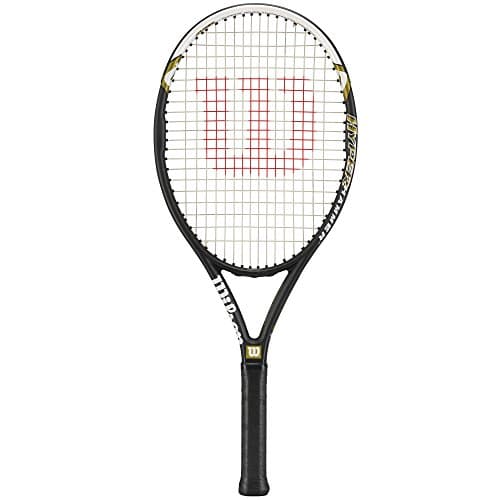
Wilson Wilson Hyper Hammer 5.3
Wilson Hyper Hammer 5.3

A head-heavy oversize that turns a short, slow swing into a deep ball — still the classic answer for a senior player who has lost racquet-head speed.

Seniors and slow swings
6.2
$138.98Amazon

#ad · Live prices from the Amazon Product API, as of November 22, 2026. Where we have no verified live price, we show none — we would rather leave a gap than print a number that has rotted.

In detail

The picks, in full

01
HEAD HEAD Speed MP (2024)

Fast-swinging all-courters

HEAD Speed MP (2024)

100 sq in head11.3 oz strung16x19 patternAuxetic 2.0
7.8/10

The fast, modern all-court frame — a 100 sq in head with a dense-enough pattern to control it. Djokovic's family of racquet, in a club-playable spec.

Control
9
Power
7
Spin
8
Comfort
7
Value
8

Pros

  • Combines a 100 sq in head with control-frame weight, so it is forgiving without being loose
  • Auxetic 2.0 gives crisp, precise feedback — you know exactly where on the face you hit it
  • Very quick through the air for its weight, which suits a serve-and-first-strike game

Cons

  • Crisper and stiffer-feeling than the Clash or Boom — less forgiving on the arm
  • Falls between stools for some: not as controlled as a 98, not as powerful as a Pure Drive
  • HEAD replaced the 2024 Speed with the Speed 2026 line, so this is now the previous generation

Don't buy this if…

…you are prone to elbow pain. The Speed's crisp feel comes from a frame that transmits rather than absorbs.

$169.00View on Amazon

Price as of November 22, 2026. Prices change — Amazon's is the one that counts.

#ad · we may earn a commission from this link to HEAD Speed MP (2024)

02
Wilson Wilson Blade 100L v9

3.5s who want feel

Wilson Blade 100L v9

100 sq in head10.6 oz strung16x19 patternFORTYFIVE flex
7.8/10

A Blade you can actually swing all match. The light version of the control benchmark, which makes a player's frame available to a 3.5.

Control
9
Power
6
Spin
8
Comfort
8
Value
8

Pros

  • Blade feel and flex at nearly an ounce less than the standard 98 — the control frame that does not need an advanced swing
  • Ships strung with Sensation 16 multifilament at mid tension, a genuinely comfortable factory setup
  • 100 sq in gives the forgiveness a 3.5 needs without turning it into a power frame

Cons

  • The lighter mass means it gets bullied by heavy pace — the trade you make for swinging it easily
  • Less free depth than a Pure Drive; you have to generate your own
  • Wilson shipped the Blade v10 in April 2026, so this is now the previous generation of the line

Don't buy this if…

…you are a strong 4.5 hitting against pace. Go to the Blade 98 and accept the extra weight.

Check price on Amazon →

No buyable offer at the last price check (November 22, 2026). We show nothing rather than a stale number.

#ad · we may earn a commission from this link to Wilson Blade 100L v9

03
HEAD HEAD Extreme MP (2024)

Spin on a budget

HEAD Extreme MP (2024)

100 sq in head11.1 oz strung16x19 patternAuxetic 2.0
8.0/10

HEAD's spin frame, and the best-value one here: Aero-style spin access at well under Babolat money.

Control
7
Power
8
Spin
9
Comfort
7
Value
9

Pros

  • Spin-oriented string spacing and a fast-swinging beam, at roughly two-thirds the price of the Pure Aero
  • Auxetic 2.0 layup is noticeably softer than HEAD's previous generation
  • Balanced enough to volley with, which most dedicated spin frames are not

Cons

  • Lower brand resale value than the Babolat equivalents
  • Spin ceiling is high but not quite Pure Aero high
  • HEAD replaced the 2024 Extreme with the Extreme 2026 line in July 2026, so this is now the previous generation

Don't buy this if…

…you need maximum control for flat redirection. This is a swing-fast, brush-up frame.

$199.00View on Amazon

Price as of November 22, 2026. Prices change — Amazon's is the one that counts.

#ad · we may earn a commission from this link to HEAD Extreme MP (2024)

04
Dunlop Dunlop CX 200 LS (2024)

Control on a budget

Dunlop CX 200 LS (2024)

98 sq in head10.4 oz unstrung16x19 patternUnstrung
7.6/10

A control frame at an intermediate price — the cheapest way into a genuine player's racquet, if you are willing to string it yourself.

Control
9
Power
6
Spin
7
Comfort
7
Value
9

Pros

  • Real control-frame geometry (98 sq in, thin beam) at roughly half the price of the Blade or Prestige
  • The LS spec is lighter than the standard CX 200, which makes it usable for a 3.5 who wants a smaller head
  • Dunlop's CX line is a genuine tour frame family, not a recreational one wearing the name

Cons

  • Unstrung, and this frame really wants a thoughtful string setup rather than whatever is on the machine
  • Smaller 98 sq in head is unforgiving if your contact point is not consistent yet

Don't buy this if…

…you are still mishitting regularly. A 98 punishes that in a way a 100 does not.

$129.99View on Amazon

Price as of November 22, 2026. Prices change — Amazon's is the one that counts.

#ad · we may earn a commission from this link to Dunlop CX 200 LS (2024)

05
Wilson Wilson Ultra 100UL v4

Light frames with power

Wilson Ultra 100UL v4

100 sq in head9.5 oz unstrung16x19 patternUnstrung
7.2/10

An ultra-light Ultra: free power in a frame light enough for a developing swing or a player coming back from injury.

Control
6
Power
9
Spin
7
Comfort
7
Value
7

Pros

  • Very light for a 100 sq in performance frame, so late preparation still gets the racquet through the ball
  • Power-oriented layup means depth comes easily even at low swing speeds
  • Sold unstrung, so you pick the string and tension from the start

Cons

  • Sold unstrung — add the cost of a string job before you compare prices
  • At 9.5 oz unstrung it has very little mass to absorb incoming pace

Don't buy this if…

…you play against heavy hitters weekly. Light frames lose that argument every time.

$189.00View on Amazon

Price as of November 22, 2026. Prices change — Amazon's is the one that counts.

#ad · we may earn a commission from this link to Wilson Ultra 100UL v4

06
Wilson Wilson Hyper Hammer 5.3

Seniors and slow swings

Wilson Hyper Hammer 5.3

110 sq in head9.2 oz strungHead-heavy balanceHyper Carbon
6.2/10

A head-heavy oversize that turns a short, slow swing into a deep ball — still the classic answer for a senior player who has lost racquet-head speed.

Control
5
Power
9
Spin
5
Comfort
5
Value
7

Pros

  • Head-heavy balance puts mass where the ball is, so a gentle swing still produces a deep ball
  • Light overall weight keeps it maneuverable despite the balance
  • Long production history means replacement grips and grommets are easy to find

Cons

  • Head-heavy balance is slow to change direction at the net and tiring on long volleys
  • Stiff frame plus light weight is the classic recipe for shock through the elbow

Don't buy this if…

…you have any history of tennis elbow. Head-light and flexible is the opposite prescription — see our arm-friendly picks.

$138.98View on Amazon

$169.0018% off

Price as of November 22, 2026. Prices change — Amazon's is the one that counts.

#ad · we may earn a commission from this link to Wilson Hyper Hammer 5.3

The six, on published specs

FrameHeadWeightPatternStrung?Best at
HEAD Speed MP (2024)100 sq in11.3 oz strung16x19StrungAll-court control
Wilson Blade 100L v9100 sq in10.6 oz strung16x19StrungFeel at 3.5
HEAD Extreme MP (2024)100 sq in11.1 oz strung16x19StrungTopspin
Dunlop CX 200 LS (2024)98 sq in10.4 oz unstrung16x19UnstrungControl on a budget
Wilson Ultra 100UL v4100 sq in9.7 oz16x19UnstrungLight and powerful
Wilson Hyper Hammer 5.3110 sq in9.2 oz strungHead-heavyStrungSlow swings

Every figure in that table is published by the manufacturer or the specialist-retailer spec sheet cited at the foot of this page. We did not weigh a racquet. Note that the two unstrung weights are not comparable with the four strung ones — a string job adds roughly 15 to 20 g depending on the string, which is the single most common mistake made when comparing racquet weights across listings.

The three specs that decide this, in plain language

Weight is the comfort spec, and it cuts both ways. Heavier frames absorb incoming pace and transmit less shock to your arm; lighter frames are easier to swing and easier to be late with. The classic injury recipe is a very light, very stiff frame, which is exactly why the Hyper Hammer carries a warning on this page while also being the right answer for the player it suits.

Head size is the forgiveness spec. 100 sq in is the club-player default for a reason; 98 asks for a repeatable contact point; 110 gives you a huge target and a frame that is slow to redirect. Full reasoning on the head size guide.

Pattern is the spin and durability spec. Every modern frame on this page is 16x19, which is the standard open pattern: more spin, more string movement, shorter string life. If you break strings fast, that is a cost to factor in, and shaped polys are where to spend.

What to budget beyond the frame

A racquet is not the whole purchase, and a $200 frame with no string budget is a worse buy than a $150 frame that gets restrung on time.

String. Mandatory on the two unstrung frames, and a good idea on the strung ones within a few months — factory string beds are built to a cost. A cheap multifilament restrung on schedule beats a premium poly left in for a year. How to choose a string is the starting point, and a hybrid setup is the cheapest way to make a comfortable string bed last.

Overgrips. A few dollars, and the difference between a slipping handle and a confident one. See the overgrip ranking.

Nothing else, for now. Not a dampener, not lead tape, not a second frame. The order of spending that actually improves tennis is: shoes that fit, a frame that suits your swing, strings restrung on time, then everything else. Our cost-of-tennis-gear guide lays out the whole budget.

Buying a discounted generation without getting burned

Three checks before you click, all of them taking a minute.

Confirm the generation in the title. A frame line can run four or five generations with the same name. The listings we link to are the ones the retailer API returned for the model we name, and we check them daily — but if you shop elsewhere, read the title rather than the picture. “Blade 100L” without a v-number could be any of several frames.

Confirm strung or unstrung in the listing, not in the photo. Unstrung frames are routinely photographed with strings in them.

Confirm the grip size. It is in the title or the variant selector, and it is the one spec you cannot change after the fact — you can build a grip up with an overgrip, but you cannot make it smaller.

What we did not do

We have not hit with these six frames, and nothing on this page is presented as a play test. What we did: read the published spec sheets, verified each listing was live and priced on the day, scored each frame against the published rubric on methodology weighted for the club player this page serves, and ranked them. The scores are judgments from documented research, not measurements, because we do not have a lab and are not going to pretend otherwise.
How we picked

We have not physically tested this gear

Everyone in this category says they tested twenty racquets. We have not tested any — and we say so. What we did instead: compiled the manufacturer-published specifications (head size, strung weight, string pattern, stiffness, outsole compound), normalized them, and scored each product against a published rubric weighted for the NTRP tier this page serves. The scores are judgments from documented research, not measurements we took, because we do not have a lab and are not going to pretend we do.

Questions

Frequently asked

What is the best tennis racket under $200?
The HEAD Speed MP (2024), for most club players. It is a genuine tour-line frame published at 100 sq in and 11.3 oz strung, which combines a forgiving head size with control-frame weight, and its live price sits inside the band. If feel matters more to you than speed through the air, the Wilson Blade 100L v9 is the alternative, and if you play topspin the HEAD Extreme MP is the best value of the six.
Why are good tennis rackets under $200 at all?
Because flagship frames launch at around three hundred dollars and get replaced every 18 to 24 months. When the new generation ships, the outgoing model — same mold, same layup, different paint — falls to roughly half to two-thirds of the launch price. Wilson launched the Blade v10 in April 2026 at a published $289-$299, which is exactly why the v9 is now in this band.
Is a $200 racket good enough for a 4.0 player?
Yes. Several of the frames on this page were sold to 4.0 and 4.5 players at full price last season. The things that genuinely limit a 4.0 are string age, shoes and footwork, not whether the frame is this year's model. Spend what you save on restringing more often.
Does the price include strings?
Not always, and this is the trap in the band. The Dunlop CX 200 LS and the Wilson Ultra 100UL v4 are sold unstrung, so you must add string and labor before comparing them with a strung frame. The other four frames on this page ship strung, usually with a factory synthetic that is fine to start with and worth replacing within a few months.
Should I buy last year's model or this year's budget frame?
Last year's model, almost always. A previous-generation performance frame is built to a performance spec and discounted by the calendar; a current-year budget frame is built to a budget. The exception is grip size and availability — if the discounted generation does not come in your grip, a current entry frame that fits your hand beats a bargain that does not.
Why is the HEAD Boom MP not on this list?
Because we could not verify a live price for it on the day this page was written. Its listing returned an image but no price, and the only priced Boom listing available was a different model above the band. We do not rank a frame we cannot price, and we would rather leave a good frame off the page and explain why than ship a dead buy button.
Are oversize rackets like the Hyper Hammer a good idea?
For a specific player, yes: if you have lost racquet-head speed, a light head-heavy oversize turns a gentle swing into a deep ball, and nothing else on this page does that. The honest warning is that a light, stiff frame is the classic recipe for shock through the elbow, so if you have any history of tennis elbow this is the wrong direction — head-light and flexible is the prescription instead.

Keep reading

Receipts

Sources

We do not run a testing lab, and we do not pretend to. Our specs come from manufacturer listings and spec sheets; our rules and dimensions come from the official rulebook. Where we could not verify something, we say so on the page rather than quietly leaving it out. Read our full method.