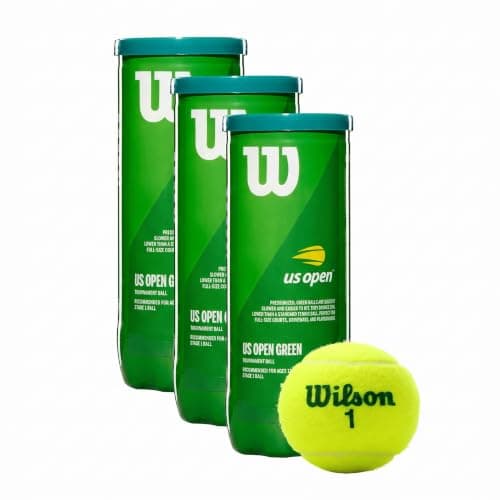
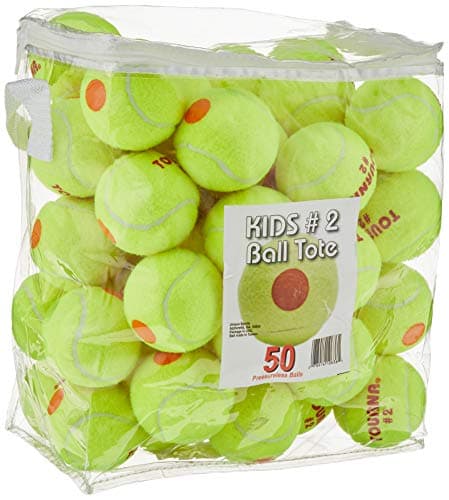
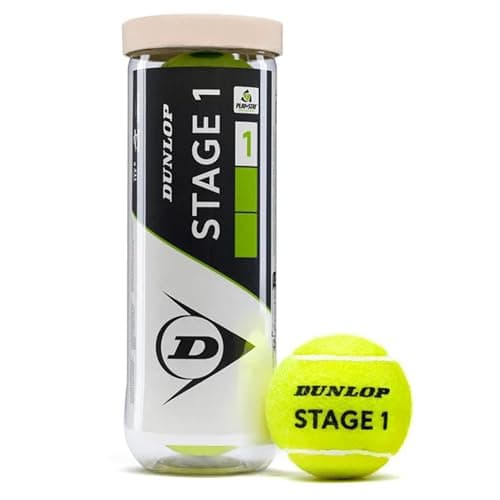
Buy green dot balls. A Stage 1 green ball is full size and plays on a full court, at a published 75% of standard compression — which means it travels slower and bounces lower, and that gives you the half-second you need to get your racquet back and your feet set. It is the single most effective purchase a beginner can make and it costs less than a lesson. The Dunlop green dot is the pick; the Wilson US Open Green is the same idea in cans. If a green ball still feels fast, drop to an orange Stage 2 at a published 50% of standard compression. Standard yellow balls are what you graduate to, not what you learn on.
That advice sounds like it is for children, and it is not. Low-compression balls were designed for the 10-and-under game, which is why they are sold in bright colors, and adult beginners have quietly been the biggest beneficiaries ever since. There is nothing childish about using a ball you can actually hit.
Why a slower ball is the right call
The hardest thing about learning tennis is not technique, it is time. A standard pressurized ball arrives fast and bounces high. A beginner spends the entire flight of the ball deciding what to do, arrives late, and hits a shot with their arm because their body never got there. Then they conclude they are bad at tennis.
A low-compression ball changes the one variable that fixes all of it. TennisCompanion publishes the governing-body figures for the 10-and-under balls: green is 75% of standard compression, orange is 50%, and red is 25% (and 15% larger than standard). Less compression means less energy returned, which means a slower ball and a lower bounce. The result is that the same rally happens at a speed where you can actually prepare.
The green dot is the adult answer because it is the only one of the three that is full size and plays on a full court. Orange and red balls are designed for shortened courts, which makes them excellent for drills and awkward for a normal hit with a friend.
The ladder, with the published figures
| Ball | Compression | Size / court | Who it is for |
|---|
| Green dot (Stage 1) | 75% of standard | Full size, full court | Adult beginners, and the default here |
| Orange dot (Stage 2) | 50% of standard | Full size, shorter court | First weeks, or anyone the green still rushes |
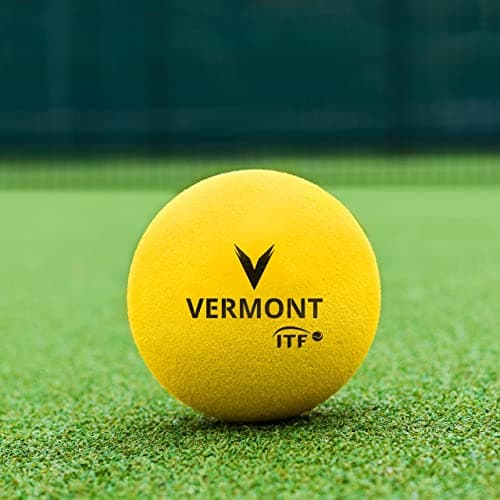
| Red / foam (Stage 3) | 25% of standard | 15% larger, mini court | Small children, indoor hitting, hand-feeding |
| Standard yellow | Standard | Full size, full court | Once a green ball rally is comfortable |
Foam balls deserve a note of their own: at 90 mm and Stage 3, they are the softest thing you can hit with a real racquet, and they are the only ball on this page that is genuinely safe indoors in a hallway or a garage. For a complete beginner practicing a swing path at home, a bag of foam balls is better value than any other item in this category.
When you move to standard balls, buy the durable ones
The economics of standard balls punish beginners specifically, and nobody warns them. A pressurized ball starts losing its internal pressure the moment the can opens, whether you hit it or not — a couple of weeks and it is noticeably dead. A beginner plays once a week and does not hit hard enough to wear the felt out, so they are throwing away balls that look perfect and feel flat.
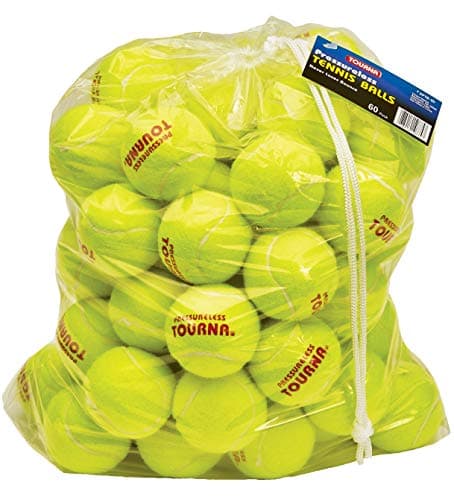
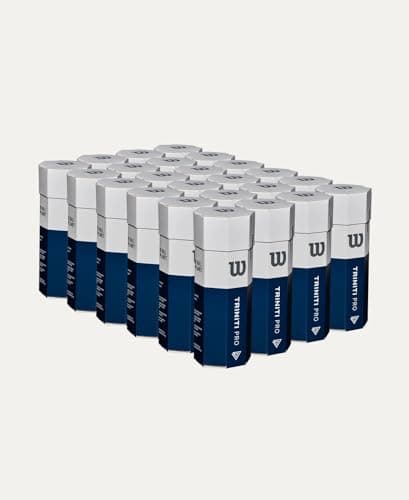
Two ways out, both in the picks above. Pressureless balls have no internal pressure to lose, so a bag of 60 lasts a season; they feel slightly heavier and less lively, which matters in a match and not at all in practice. Or a plastomer-core ball like the Wilson Triniti, which Wilson states maintains its liveliness four times longer than a traditional ball (footnoted to its own 2018 lab testing) and needs no pressurized can.
One more point about felt, since beginners buy the wrong one constantly. Extra duty felt is thicker and is for abrasive hard courts; regular duty is thinner, softer and is for clay, carpet and turf. On a hard court, extra duty lasts longer; on clay, regular duty picks up less of the surface. Our main balls page has the full field and the cheap balls page has the bulk options.
What else to get right first
Balls are the cheapest lever a beginner has, and there are two more that are cheaper than anything else:
A forgiving racquet. A large head and a light frame give a beginner the same gift a slow ball does — margin for error. The beginner racquets page has the field.
Court shoes. Not optional, and the only equipment decision with a real injury consequence. A running sole has no lateral grip and no lateral support, and tennis is a side-to-side game. Start at entry-level court shoes.
And if you are starting from nothing, the whole sequence is laid out in our beginner's guide. Note that this page is about learning speed; if you are here because your arm or shoulder hurts rather than because you are new, the same balls are ranked for that in the softest tennis balls.