Skip to content
Four Oh Club

The flagship · Racquets

The Best Control Tennis Racquets

A control frame does not add anything. It subtracts — power, launch angle, unpredictability — until the ball goes exactly where you sent it. These five do that best.

By Stephen V.Updated How we score
#ad

We earn a commission when you buy through our Amazon links, at no extra cost to you. It never changes our rankings, and we say so when the cheaper racquet is the better buy. How this works.

The best control racquet for most players who want one is the HEAD Gravity MP — an 18x20 pattern on a 100 sq in head, which is the rare combination that gives you absolute depth control without the brutal off-centre penalty of a small, dense frame. If you want the classic answer, the Wilson Blade 98 is the control frame the club game is built on. If you want the most extreme version, the Prestige MP L.

What “control” means, mechanically

Control is not a quality a frame has. It is three measurable properties that together reduce how much the racquet contributes to where the ball goes.

Low power. A frame that returns less energy means you can swing fully and the ball still lands inside the baseline. That freedom to swing out is most of what players mean when they say a racquet feels controllable.

A dense or tightly-strung bed. More string intersections means less string movement, which means a lower, flatter and more repeatable launch angle. An 18x20 pattern is the structural version of this.

Mass. A heavier frame twists less when the ball lands off-centre, so a slightly missed shot still goes roughly where you aimed. Stability is control that you only notice when it is missing.

Control costs you spin, and you should know the price

There is no free control. The 18x20 patterns on this page genuinely reduce the topspin you can generate, because spin comes from the main strings sliding sideways and snapping back, and a dense pattern restricts exactly that movement.

For a flat hitter who takes the ball early, that is an unambiguous win. For a modern baseline player who relies on topspin to create margin over the net, it is a real loss — and the reason the Blade 98 and Percept 97, both 16x19, are on a “control” list at all. They get their control from flex and mass rather than from pattern density, which keeps the spin available.

Who should not buy a control frame

Anyone below about 4.0. The honest failure mode is specific and common: you buy a control racquet, your balls start landing short, you compensate by swinging harder, your technique degrades, and you conclude you need a different racquet. A control frame only helps a player who already produces more pace than they can keep in the court.

If you are not sure whether that is you, the test from our 4.0 pageapplies: are your errors long, or are they short? Only “long” justifies a control frame.

The short answer

Quick picks

#Racquet / gearBest forScorePrice
01
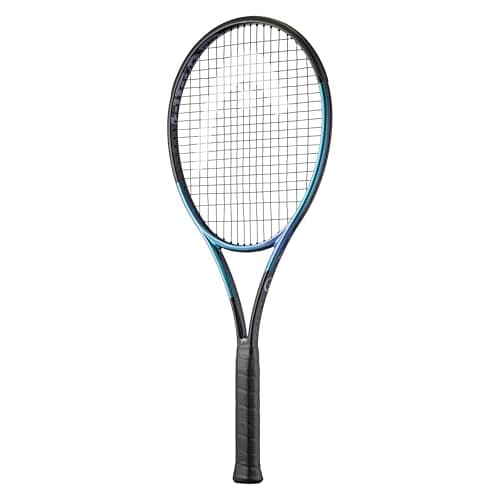
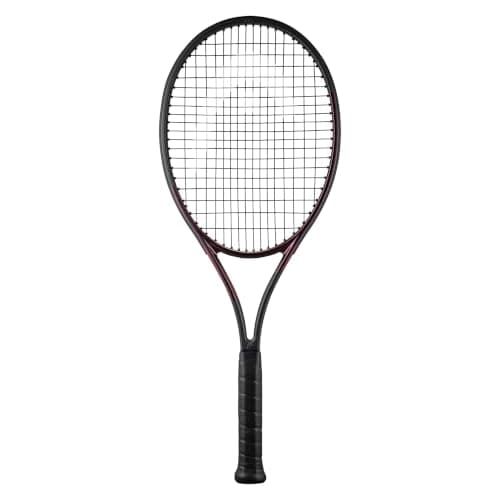
HEAD HEAD Gravity MP (2025)
HEAD Gravity MP (2025)

The most comfortable advanced frame here. A big 100 sq in head on a soft, low-powered layup — control without the harshness.

Advanced, arm-conscious
7.6
$219.00Amazon
02
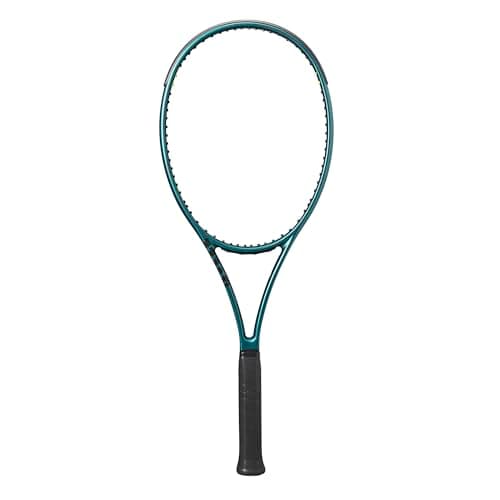
Wilson Wilson Blade 98 (16x19) v9
Wilson Blade 98 (16x19) v9

The control benchmark that still hits a heavy ball — the most-used frame in competitive club tennis, and deservedly.

Advanced all-courters
7.8
$199.00Amazon
03
HEAD HEAD Prestige MP L (2023)
HEAD Prestige MP L (2023)

The classic 18x20 control frame, in its lighter L spec. Nothing goes long with this racquet — which is the entire point.

Precision ball-strikers
7.0
$259.00Amazon
04
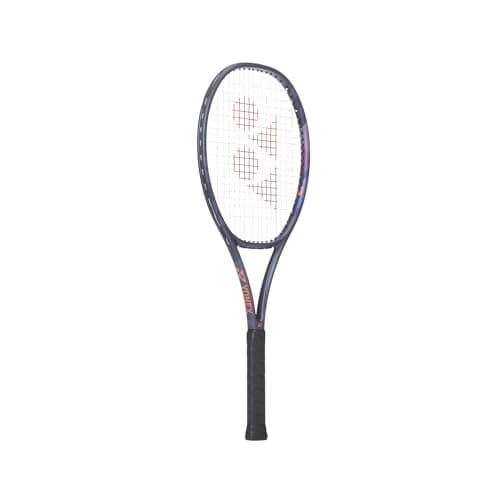
Yonex Yonex Percept 97
Yonex Percept 97

Yonex's flexible control frame — the one for a 4.5 who wants feel and comfort rather than a stiff, loud string bed.

Feel players
7.6
$305.00Amazon
05
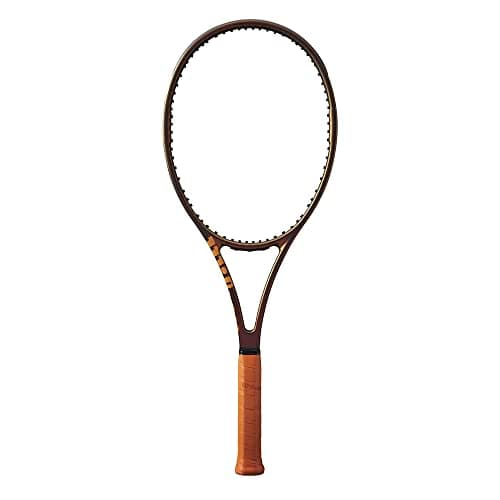
Wilson Wilson Pro Staff 97 v14
Wilson Pro Staff 97 v14

The purist's frame. Dense pattern, low power, total control — it gives you nothing and lets you do anything.

Advanced flat hitters
7.0
$319.55Amazon

#ad · Live prices from the Amazon Product API, as of October 7, 2026. Where we have no verified live price, we show none — we would rather leave a gap than print a number that has rotted.

In detail

The picks, in full

01
HEAD HEAD Gravity MP (2025)

Advanced, arm-conscious

HEAD Gravity MP (2025)

100 sq in head11.3 oz strung18x20 patternAuxetic 2.0
7.6/10

The most comfortable advanced frame here. A big 100 sq in head on a soft, low-powered layup — control without the harshness.

Control
10
Power
6
Spin
6
Comfort
9
Value
7

Pros

  • 18x20 dense pattern on a 100 sq in head is rare and brilliant: the forgiveness of a big face with the control of a tight string bed
  • One of the lowest stiffness ratings in HEAD's performance range, so it is genuinely kind to the arm
  • Ships strung at mid tension, which for an 18x20 is the right call

Cons

  • The dense 18x20 pattern cuts spin potential compared with a 16x19
  • Low power means you supply all of it

Don't buy this if…

…spin is the core of your game. An 18x20 pattern fights you on it; buy the VCORE or Extreme.

$219.00View on Amazon

Price as of October 7, 2026. Prices change — Amazon's is the one that counts.

#ad · we may earn a commission from this link to HEAD Gravity MP (2025)

02
Wilson Wilson Blade 98 (16x19) v9

Advanced all-courters

Wilson Blade 98 (16x19) v9

98 sq in head11.4 oz strung16x19 patternFORTYFIVE flex
7.8/10

The control benchmark that still hits a heavy ball — the most-used frame in competitive club tennis, and deservedly.

Control
9
Power
7
Spin
8
Comfort
8
Value
7

Pros

  • FORTYFIVE construction gives it a flex profile that is comfortable without going soft — the reason it is the default 4.5 recommendation
  • 16x19 on a 98 is the sweet spot of the whole racquet market: control, but with real spin access
  • Ships strung with Sensation 16, a comfortable multifilament, so the factory setup is actually usable

Cons

  • Needs a full swing to produce depth; it does not help a short stroke
  • The v9's muted feel divides opinion against the crisper v7

Don't buy this if…

…you need help generating pace. The Blade rewards the swing you bring; it adds nothing.

$199.00View on Amazon

Price as of October 7, 2026. Prices change — Amazon's is the one that counts.

#ad · we may earn a commission from this link to Wilson Blade 98 (16x19) v9

03
HEAD HEAD Prestige MP L (2023)

Precision ball-strikers

HEAD Prestige MP L (2023)

98 sq in head11.0 oz strung18x20 patternAuxetic
7.0/10

The classic 18x20 control frame, in its lighter L spec. Nothing goes long with this racquet — which is the entire point.

Control
10
Power
5
Spin
6
Comfort
7
Value
7

Pros

  • 18x20 on a 98 is the tightest commonly available string bed — depth control is absolute
  • The L spec drops weight from the standard Prestige, which makes an unforgiving frame playable for a club player
  • Thirty-year lineage; stringers and coaches know exactly how to set it up

Cons

  • Lowest power and lowest spin on this list — you must generate everything
  • A dense pattern eats strings more slowly but transmits more shock

Don't buy this if…

…you are not consistently hitting the middle of the string bed. The Prestige is merciless about that.

$259.00View on Amazon

Price as of October 7, 2026. Prices change — Amazon's is the one that counts.

#ad · we may earn a commission from this link to HEAD Prestige MP L (2023)

04
Yonex Yonex Percept 97

Feel players

Yonex Percept 97

97 sq in isometric head11.6 oz strung16x19 patternFlexible layup
7.6/10

Yonex's flexible control frame — the one for a 4.5 who wants feel and comfort rather than a stiff, loud string bed.

Control
10
Power
5
Spin
8
Comfort
9
Value
6

Pros

  • Flexible by design, which gives a long ball-pocketing dwell time and exceptional touch at the net
  • Isometric head keeps a 97 usable on off-centre contact
  • Comfort and control together, which usually means choosing one

Cons

  • Lowest raw power of the advanced frames here — a pusher will test your patience
  • Yonex premium pricing again

Don't buy this if…

…you need help with depth. The Percept is for players who already hit through the court.

$305.00View on Amazon

Price as of October 7, 2026. Prices change — Amazon's is the one that counts.

#ad · we may earn a commission from this link to Yonex Percept 97

05
Wilson Wilson Pro Staff 97 v14

Advanced flat hitters

Wilson Pro Staff 97 v14

97 sq in head11.7 oz strung16x19 patternBraided graphite/Kevlar
7.0/10

The purist's frame. Dense pattern, low power, total control — it gives you nothing and lets you do anything.

Control
10
Power
5
Spin
7
Comfort
7
Value
6

Pros

  • Braided graphite and Kevlar layup delivers the most connected, informative feel of any frame on this list
  • Low-powered by design, which means you can swing out fully and the ball still lands in
  • Heavy enough (11.7 oz strung) to absorb pace rather than be deflected by it

Cons

  • Demands a long, complete swing — an incomplete stroke produces a short ball every time
  • Almost no free power; a 3.5 will spend the whole match pushing

Don't buy this if…

…you are below 4.5 or your swing is still developing. This frame is a diagnosis, not a cure.

$319.55View on Amazon

Price as of October 7, 2026. Prices change — Amazon's is the one that counts.

#ad · we may earn a commission from this link to Wilson Pro Staff 97 v14

The five, by how they get their control

RacquetHeadPatternControl comes from
HEAD Gravity MP100 sq in18x20Dense pattern, big face, soft layup
Wilson Blade 98 v998 sq in16x19Flex and mass, spin retained
HEAD Prestige MP L98 sq in18x20Dense pattern on a small face — maximum
Yonex Percept 9797 sq in16x19Flexible layup, long dwell time
Wilson Pro Staff 97 v1497 sq in16x19Low power and 11.7 oz of mass

Read the right-hand column before the left. Two of these frames control the ball by restricting the string bed; three do it by being heavy and flexible. Those are genuinely different playing experiences, and which one suits you has nothing to do with which is better.

Tension is half the control equation

You can turn a neutral frame into a control frame with string, and it is far cheaper than buying a racquet. Going up four or five pounds in tension flattens the launch angle noticeably. Switching from a multifilament to a control-oriented polyester does the same thing and adds spin potential.

The catch is comfort: both changes make the string bed stiffer, and stiffness is what hurts arms. If you are chasing control and your elbow is already grumbling, change the frame rather than the tension — see arm-friendly racquets.

Control frames and the serve

One underrated upside: control frames make a big serve more usable. If you have pace on the first serve but no reliable second, a low-powered frame lets you hit the second serve with genuine racquet-head speed — which is what produces kick — without it flying long. Players who switch down in power often find their second serve improves before anything else does.

Give it six weeks

A control racquet feels worse for the first two or three sessions. Every ball lands shorter than you expect and the frame feels dead. That is the frame doing its job, and your swing has not adapted yet. The adaptation — swinging fuller, accelerating through the ball — takes a few weeks. Judge a control frame after six sessions, not one.
How we picked

We have not physically tested this gear

Everyone in this category says they tested twenty racquets. We have not tested any — and we say so. What we did instead: compiled the manufacturer-published specifications (head size, strung weight, string pattern, stiffness, outsole compound), normalized them, and scored each product against a published rubric weighted for the NTRP tier this page serves. The scores are judgments from documented research, not measurements we took, because we do not have a lab and are not going to pretend we do.

Questions

Frequently asked

What makes a tennis racquet a control racquet?
Low power, usually from a thin beam and a flexible layup; a dense string pattern or small head that limits launch angle; and enough mass to stay stable on off-centre contact. A frame needs at least two of the three to deserve the label.
Do control racquets reduce spin?
18x20 patterns do, measurably — the dense bed restricts the main-string movement that generates rotation. Control frames with 16x19 patterns, like the Blade 98 and Percept 97, keep the spin and get their control from flex and weight instead.
Is a control racquet good for a 3.5 player?
Usually not. A 3.5 does not yet generate enough pace for a low-powered frame to help, and the result is short balls and a harder swing. Stay at 100 sq in with a 16x19 pattern until your errors are consistently long rather than short.

Keep reading

Receipts

Sources

We do not run a testing lab, and we do not pretend to. Our specs come from manufacturer listings and spec sheets; our rules and dimensions come from the official rulebook. Where we could not verify something, we say so on the page rather than quietly leaving it out. Read our full method.