The best tennis hat for most club players is the HEAD Pro Player Tennis Cap: a cap from a tennis company, cut deep enough to stay on through a serve, with a sweatband that does the job. If you sweat heavily, the Nike Dri-FIT Club cap handles it better than anything else here. If sun protection is the actual reason you are shopping, the adidas Victory Bucket Hat is the only pick on this page whose listing states a UPF rating — UPF 50 — and that is a gap worth knowing about before you buy anything.
Let us deal with the uncomfortable part first, because it changes how you should read every review below. Tennis brands do not publish sun-protection ratings on caps.Of the seven picks here, six state no UPF figure at all: not HEAD, not Wilson, not Babolat, not Nike, not either adidas visor. That is not a criticism of the products — a cap is sold as kit, not as sunscreen — but it means that if you came here looking for UV protection, most of what is marketed as a tennis hat is offering you shade from a brim and nothing it is willing to quantify.
What published guidance actually asks for is more demanding than any cap delivers. The Skin Cancer Foundation's rule is that a hat should “have a brim of at least three inches to shade the face, scalp, neck, shoulders and upper back” and should cover “easily overlooked places like the tops of the ears and back of the neck”. A baseball-cap peak does none of the ears-and-neck part. On fabric, “A UPF of 30 to 49 offers very good protection, while UPF 50+ rates as excellent”, with a UPF 50 fabric blocking 98 percent of the sun's rays.
So the honest framing for this page is two separate jobs that one hat rarely does well. Job one is playing: a hat that stays put, keeps sweat out of your eyes and does not block your sight line on a toss. Job two is protection: fabric with a rating and a brim wide enough to cover what a peak misses. Six of the picks below are job one. One is job two. Plenty of players should own both.
The criteria, and why “tennis cap” is not marketing
- Will it stay on through a serve? This is the one thing that separates a tennis cap from a golf or lifestyle cap, and it is why brand matters more here than in most accessory categories. A full serve motion takes your head back and then snaps it forward; a shallow crown lifts. Caps sold as tennis caps are cut deeper. It is not a published spec and nobody measures it, but it is the difference between wearing a cap and carrying it.
- Sweat.A cap that soaks through gets heavy, cold and drippy by the third set. A stated moisture-wicking treatment is the thing to look for — Nike's Dri-FIT and adidas's Superlite line both state one; a plain cotton cap does not.
- Heat. Two independent levers, and they fight. A light fabric runs cooler; a light coloralso runs cooler, but published guidance notes that “Dark or bright colors keep UV rays from reaching your skin” by absorbing them. So the coolest cap on court is usually the weakest one for UV, and vice versa.
- Sight line. Underrated until you have played in the wrong hat. A long or all-round brim that shades your neck also sits in your field of view on a high ball, which is exactly where you need to see on a toss and an overhead.
- A stated UPF, or honesty about not having one. Where a listing states a rating, we quote it. Where it does not, we say so. We have not tested a single UV figure.
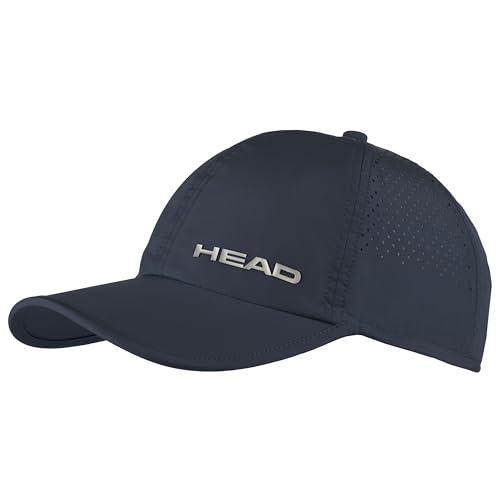
1. HEAD Pro Player Tennis Cap — the default
If you want one answer and no decisions, this is it. It is a tennis cap from a tennis company, with a six-panel crown and an adjustable closure, and it is the pick because it does the first job without fuss: it stays on, and the sweatband is where a tennis cap's sweatband should be. The styling is plain navy with a small logo, which means it does not fight whatever else you own.
The adjustable closure is worth more than it sounds. A fitted cap that is half a size out is a cap you stop wearing; a closure means you set it once for your head and forget about it.
The honest cons:the listing states no UPF, so treat the protection as brim shade only. And a solid six-panel crown runs warmer than a mesh-backed cap on a genuinely hot afternoon — if your courts are 95 degrees in July, the Wilson below is the better call.
2. Nike Dri-FIT Club cap — for heavy sweaters
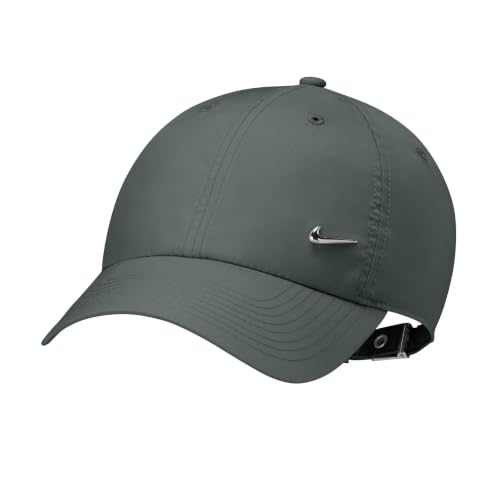
Dri-FIT is the fabric technology most club players already own in a shirt, and this is the cap version: an unstructured crown with the moisture-wicking treatment stated on the listing. If your current cap is heavy and cold by the changeover, this is the specific fix.
The unstructured build has a second real benefit that structured caps do not: it folds into a racquet-bag pocket and comes out wearable. A stiff six-panel cap creased in a bag stays creased.
The honest cons: an unstructured crown sits lower and softer than a tennis-specific cut, so it can shift on a hard overhead until you snug the closure properly. And like the rest of the caps here, Nike states no UPF on this listing.
3. adidas Victory Bucket Hat — the only one with a number on it
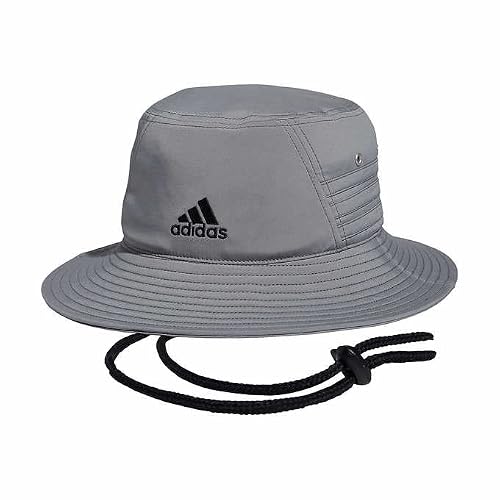
This is the sun-protection pick, and the reason is simple: it is the one product on this page whose listing states a UV rating, at UPF 50 — the band published guidance rates as excellent. It is also a bucket brim, which runs all the way round and therefore shades the tops of the ears and the back of the neck, the two places the Skin Cancer Foundation specifically names as the ones a cap misses. Moisture-wicking is stated too, and it is an adidas line rather than an anonymous listing.
We went looking for a tennis-brand cap with a stated UPF and did not find one in this catalog, which is why a bucket hat from the training side of adidas is here instead of a fifth cap. If you have had something taken off your face or scalp by a dermatologist, this is the pick, and the trade below is one you should simply accept.
The honest cons: a bucket brim is in your sight line on a high ball in a way a cap peak is not, and a good number of players will find it unwearable for actual match play. The realistic pattern is this hat for warm-ups, drills, feeding and sitting between matches, and a cap for points. It is also listed for fishing and camping as well as sport, so the cut is general-outdoor rather than tennis.
4. WILSON Ultralight Tennis Cap — for hot courts
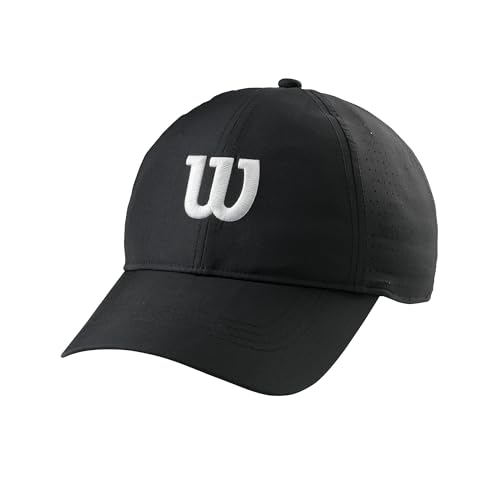
Named for the only thing that decides whether you keep a cap on in high summer. This is Wilson's lightweight tennis cap, cut as a tennis cap, and it is the pick if your problem is heat rather than sun. Black also hides sweat salt far better than white, which is a real appearance-durability point on a cap you wear twice a week for a season.
The honest cons:light fabric is thin fabric, and with no stated UPF a thin dark cap shades your face and does very little for your scalp. And black absorbs heat — so this is the cooler cap by weight and the warmer one by color, which is the contradiction at the heart of every hot-weather hat decision.
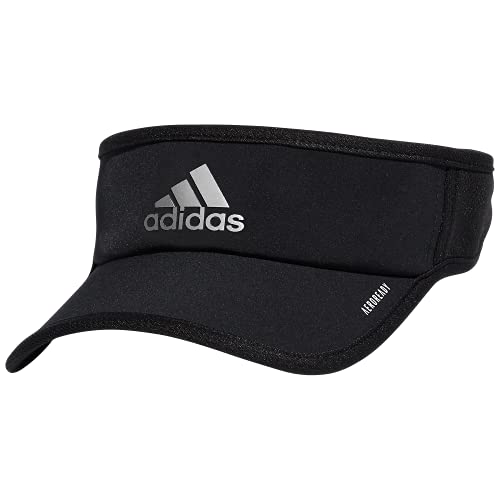
5 and 6. The two visors — adidas Superlite, women's and men's
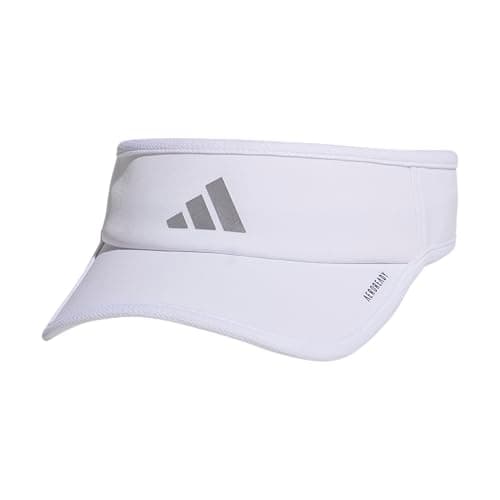
A visor is a different product solving a different problem, and it is worth understanding why some players will never go back to a cap. A brim at eye level with no crown over your head is the coolest headwear that still shades the ball at the top of a toss. That is a performance argument, not a comfort one: tracking a high toss into the sun versus guessing at it changes how you serve.
Both picks are the adidas Superlite line, which is the lightweight, moisture-wicking family, in the women's and men's versions. The women's Superlite visor is already ranked on this site's women's tennis outfit page as one accessory among many; here it is one of two visor options for anyone who wants an open top. The men's version states a reflective detail, which is a small genuine benefit if you walk to a court at dusk.
The honest cons, and they are the same for both: an open top means no scalp protection at all. This is the worst sun-coverage option here and it is not close. A visor also sits on sweat rather than absorbing much of it, so it needs tightening more often mid-match than a cap does. If you part your hair, are thinning on top, or burn on the scalp, wear a cap and accept the hotter head.
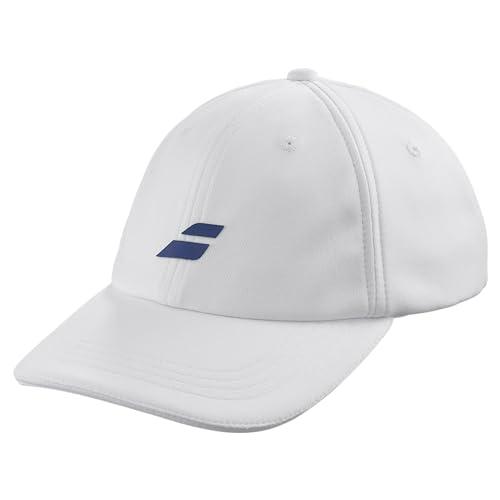
7. Babolat Pure Logo Hat — the budget pick
Usually the cheapest cap here, and notable for being a racquet brand's own line rather than a licensed novelty at that price. It is white, which is the coolest color in direct sun and still the only color some clubs allow on court — worth checking before you buy anything if you play somewhere with a dress code.
The honest cons:white shows sweat salt and clay dust immediately, and a tennis cap collects both. And a light color is the weaker choice for UV absorption even though it is the cooler one — with no stated UPF on the listing, this is the pick that offers the least protection of the four caps.
Cap, visor or bucket: pick by what is going wrong
| Your problem | What to wear | Why |
|---|
| Sweat in my eyes | Cap with a stated wicking fabric | A sweatband plus a treatment that moves moisture rather than holding it |
| Cannot see my toss | Visor | Brim at eye level, nothing above it to trap heat |
| Scalp burns | Cap, or a bucket hat with a stated UPF | A visor leaves the scalp fully exposed |
| Ears and neck burn | Wide or bucket brim | Published guidance asks for a brim that shades ears and neck; a peak does not |
| Overheating in summer | Visor, or a lightweight cap in a light color | Open top vents; light fabric and light color both run cooler |
| Cap flies off on serves | A cap sold as a tennis cap | Deeper crown than a golf or lifestyle cut |
What a hat does not do, however much you spend
Three limits, because headwear is oversold as sun protection and the gaps are predictable.
It does not protect what it does not cover. A cap peak shades your forehead, nose and eye sockets. Your ears, the back of your neck and both cheeks in profile are uncovered at most times of day, and those are common places for sun damage precisely because people assume a hat handled it. Sunscreen is not optional because you own a cap.
It gets worse when it is wet.This is the one most players have never heard. Published guidance is blunt about fabric: if clothing “gets stretched or wet, it will lose some of its protective ability and become more transparent”, and the worked example is stark — a white T-shirt rates about UPF 7 dry and “When that T-shirt gets wet, it provides a UPF of only 3!”. A tennis hat is wet for most of a summer match. Whatever protection a thin unrated cap offers dry, assume less of it in the third set.
It does not help your eyes. A brim reduces glare from above and does nothing about light coming off the court surface. If squinting rather than burning is your problem, headwear is the wrong product and tennis sunglasses are the right one — a cap and lenses together, in practice, which is what most players who have solved this wear.
Sizing, fit and the one thing to check
Nearly everything here is one-size with an adjustable closure, which works for most heads and not all of them. If you have a large head and have been defeated by one-size caps before, pick a product with a closure strap rather than a fitted size, and favor tennis brands — the adjustment range tends to be longer on a cap designed to be cranked down before a serve.
The check that actually matters takes ten seconds and no equipment: put the hat on, tighten it, then throw your head back as if you were tossing a ball and snap it forward. If the hat moves, it will move on court, and you will spend the match resetting it. That is the test a published spec sheet cannot give you, because nobody publishes one for headwear.
One more practical note: a hat is the cheapest item in a kit bag and it is also the one most often left on a bench. Two cheap caps in rotation — one drying, one in the bag — works better than one expensive cap you keep forgetting to wash.
Where a hat sits in the rest of your kit
Headwear is the last thing most players buy and one of the cheapest things that changes a hot match. For context on what else is worth the money, the tennis socks ranking covers the other small item with a disproportionate effect on comfort, the best tennis towels covers the cheapest one of all — including the cooling towel that does for your neck what a brim does for your scalp — and the clothing-brand overview explains which brands publish what. If you are assembling a bag from scratch, the gear checklist puts headwear in order against everything else.
And if you are shopping for someone else, headwear is the safest size-free gift in tennis — one-size closures mean you cannot get it wrong, which is more than can be said for shoes or a racquet. Gifts for him and gifts for her both lean on that.