Skip to content
Four Oh Club

Bags, machines & training · Gear

The Best Tennis Rebounders

Two completely different products hide behind this one search, and they differ by a factor of ten in price. The first job of this page is telling you which one you are looking for.

By Stephen V.Updated How we score
#ad

We earn a commission when you buy through our Amazon links, at no extra cost to you. It never changes our rankings, and we say so when the cheaper racquet is the better buy. How this works.

The best tennis rebounder for genuine solo practice is the 12 by 6 ft Tennis Rebound Practice Wall — the widest published target here, and target width is the spec that decides whether a session is rallying or walking after the ball. The Ksports Tennis Rebounder Net is the sturdier multi-sport alternative at a higher bracket, and the 9.4 by 7.4 ft net is the pick if you hit heavy topspin, because height is what returns a high-bouncing ball. If what you actually want is a ball on an elastic string over a weighted base — a different product at a tenth of the price — the TENIX Tennis Trainer Set is the one to buy, because its base is stainless steel rather than something you fill with water, and the Teloon rebound ball is the budget option for a child or an outright beginner.

First: two products, one search

“Tennis rebounder” returns two things that have almost nothing in common, and buying the wrong one is the most expensive mistake on this page.

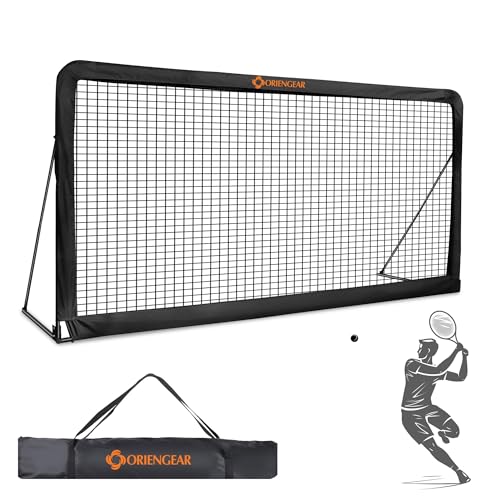
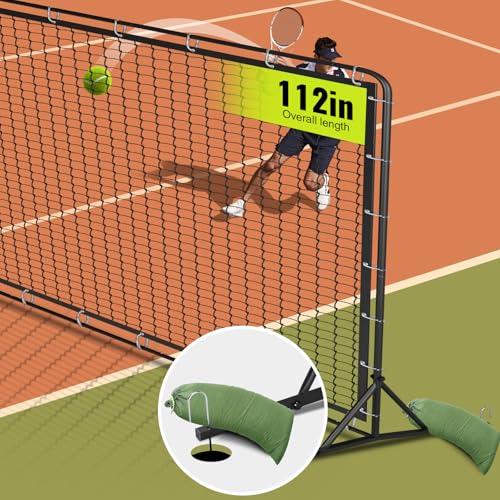
A rebound net is a free-standing frame with a tensioned net or backboard, typically 9 to 12 feet wide and 6 to 7 feet high. You hit a real ball at it from a real distance and it sends the ball back across the court. It costs roughly what a performance racquet costs, it lives in a garage, and it is the only thing here that lets you rally.

A tethered trainer is a ball on an elastic cord anchored to a weighted base. You hit the ball, the cord stops it and brings it back to the same point. It costs roughly what a can of balls costs, it fits in a bag, and it trains contact and timing but not rallying.

Both are legitimate. They are just answers to different questions, and a page that ranked them against each other on one scale would be useless. So this page ranks the nets first, by size, then the tethered trainers.

For rebound nets, size is the whole decision

Published dimensions are the one real spec in this category, and they are the spec that predicts whether you will still be using the thing in a month.

Width decides how often the rally ends.Every slightly mishit ball goes sideways, and every ball that misses the target is a walk. Twelve feet of published width — the widest here — forgives a lot more than nine. If you are a 3.0 still finding the middle of the string bed, width is worth more to you than anything else on the spec sheet.

Height decides whether topspin comes back.A brushed-up ball arrives high. The 9.4 by 7.4 ft net is the tallest target here at a published 7.4 feet, and that is genuinely the better shape for a modern topspin groundstroke — you give up nearly three feet of width to get it, which is the trade.

Nothing else is published.No rebound coefficient, no frame gauge, no net tension, no wind rating. So the honest comparison between these nets is dimensions, bracket and brand, and anyone telling you how one of these nets “plays” against another without owning both is guessing. We do not own any of them, and we say so.

What a net returns, versus what a wall returns

Worth being clear about, because it changes who should buy one. A tensioned net absorbs energy. The ball comes back slower and softer than it arrived, with much of its spin gone.

That is a feature for a developing player: a slow, predictable return is exactly what you want when the goal is a hundred clean forehands in a row. It is a limitation for a 4.0, who needs a ball with pace and shape on it to practice against. If your club has a real concrete backboard or a hittable wall, that returns a faster and truer ball than any net here, for free — and the honest advice is to use it.

The case for owning a net is availability, not quality. It is in your garden, at seven in the morning, with nobody to book it with.

The failure mode of tethered trainers: the base

Almost every tethered trainer on the market anchors its elastic to a hollow base you fill with water or sand. This is where the category disappoints, and it is worth knowing before you buy rather than after.

A water-filled base leaks, has to be emptied before it goes in a car, and — the real problem — slides across a hard court the moment you hit the ball properly. You end up hitting at half pace to keep the base still, which defeats the purpose.

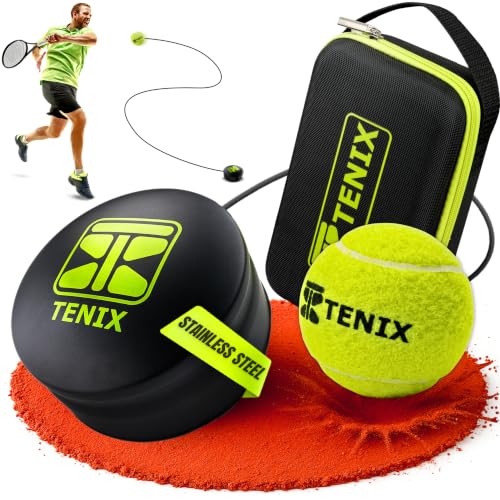
The TENIX trainer's answer is a stainless steel base and no water, which is why it ranks above the cheaper Teloon despite doing the same thing. If you are buying a tethered trainer for an adult who swings hard, pay the small premium for a base that stays put. If you are buying one for a seven-year-old learning to make contact, the cheap one is fine and the elastic will outlast their interest.

What a rebounder will not fix

It will not give you an opponent. A net returns the ball to roughly where you hit it from. Nothing about it moves you side to side, disguises anything or hits to your backhand when you are expecting a forehand.

It will not teach you a serve. Serving at a rebound net is not serving practice; it is a way to collect balls from an odd angle. A hopper and an empty court is the answer there.

It will not survive being left out all winter. These are fabric nets on light frames. Published dimensions, yes; published weather ratings, no.

It will not replace a ball machine, and this is the comparison most buyers are really making. A machine feeds you a fresh ball to a chosen place at a chosen speed; a rebounder gives you back the ball you just hit, slower. A machine costs between five and twenty times as much. If the budget is there, ball machines under $1,000 is the page to read next, and are ball machines worth it is the honest arithmetic on whether it is.

Which pick, by what you are trying to do

You want to rally solo and you have space → the 12 by 6 ft Rebound Practice Wall. Widest published target, fewest interruptions, best bracket-to-size ratio here.

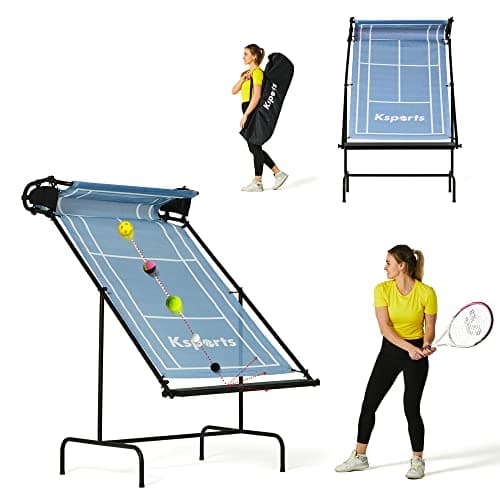
You want the sturdier, multi-sport net → the Ksports Tennis Rebounder Net, which is the established pick in this category and the one already ranked on best tennis training aids.

You hit heavy topspin → the 9.4 by 7.4 ft net. Tallest published target, which is what brings a high ball back.

You want solo practice that fits in a bag → the TENIX Tennis Trainer Set. Steel base, no water, and it genuinely travels.

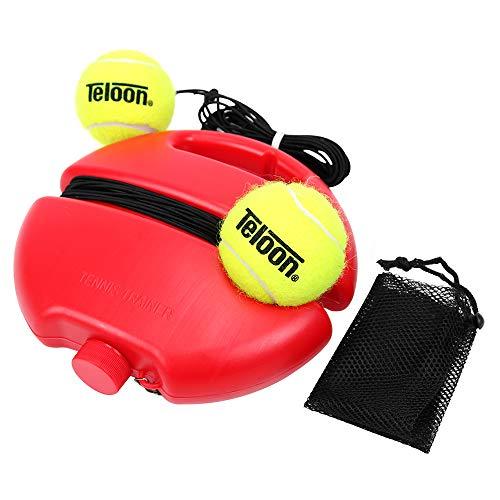
It is for a child, or you are testing the idea → the Teloon rebound ball. Two string balls, a mesh bag, and it costs less than a can of balls and a coffee.

One more honest note on the tethered pair: if your goal is a repeatable topspin contact point rather than a rally, the TopspinPro Training Aid on the training aids page is built for exactly that and does it better than a ball on a string.

The short answer

Quick picks

#Racquet / gearBest forScorePrice
01
Generic Tennis Rebound Practice Wall (12 x 6 ft)
Tennis Rebound Practice Wall (12 x 6 ft)

The biggest published target here, and size is the spec that decides whether a rebounder is practice or ball-collection: 12 feet wide by 6 feet high.

The largest target — fewest missed returns
7.0
$119.99Amazon
02
Ksports Ksports Tennis Rebounder Net
Ksports Tennis Rebounder Net

A real hitting wall you can put up anywhere. The closest thing to a practice partner that fits in a carry bag.

Solo rally practice
7.8
$189.00Amazon
03
Generic Tennis Rebounder Trainer Net (9.4 x 7.4 ft)
Tennis Rebounder Trainer Net (9.4 x 7.4 ft)

Taller than it is wide, which is the shape that suits a high-bouncing topspin rally rather than a flat drive.

High topspin returns and multi-sport use
6.6
$149.99Amazon
04
TENIX TENIX Tennis Trainer Set (stainless steel base)
TENIX Tennis Trainer Set (stainless steel base)

The tethered trainer done properly: a steel base you do not have to fill with water, which is the single thing that goes wrong with this product category.

Tethered practice without a water-filled base
6.4
$44.90Amazon
05
Teloon Teloon Solo Tennis Trainer Rebound Ball (2 string balls)
Teloon Solo Tennis Trainer Rebound Ball (2 string balls)

The cheapest thing on this page by an order of magnitude, and the right first purchase for a child or a complete beginner learning to make contact at all.

Budget — beginners and kids
5.6
$16.89Amazon

#ad · Live prices from the Amazon Product API, as of November 22, 2026. Where we have no verified live price, we show none — we would rather leave a gap than print a number that has rotted.

In detail

The picks, in full

01
Generic Tennis Rebound Practice Wall (12 x 6 ft)

The largest target — fewest missed returns

Tennis Rebound Practice Wall (12 x 6 ft)

12 x 6 ft publishedFree-standing netMulti-sport (tennis, pickleball)Indoor or outdoor
7.0/10

The biggest published target here, and size is the spec that decides whether a rebounder is practice or ball-collection: 12 feet wide by 6 feet high.

Target size
10
Return quality
7
Portability
4
Build
6
Value
8

Pros

  • 12 feet of width is the widest published target on this page, and width is what stops a slightly mishit ball ending the rally and starting a walk
  • 6 feet of height covers a real groundstroke bounce rather than only a flat drive, so you can rally rather than just drill
  • Free-standing, so it works on a court, a driveway or a lawn without needing a wall you are allowed to hit

Cons

  • A 12 x 6 ft frame is a large thing to assemble, store and move — this is garage equipment, not bag equipment
  • No published frame gauge, net tension or wind rating, so how it behaves in a breeze is unknown until you own it
  • A net returns a softer, slower ball than a solid wall. It is a rally partner, not a pace trainer

Don't buy this if…

…you have a real backboard or a hittable wall at your club. A wall returns a faster, truer ball for free.

$119.99View on Amazon

$149.9920% off

Price as of November 22, 2026. Prices change — Amazon's is the one that counts.

#ad · we may earn a commission from this link to Tennis Rebound Practice Wall (12 x 6 ft)

02
Ksports Ksports Tennis Rebounder Net

Solo rally practice

Ksports Tennis Rebounder Net

Portable rebound netQuick assemblyCarry bag includedMulti-sport
7.8/10

A real hitting wall you can put up anywhere. The closest thing to a practice partner that fits in a carry bag.

Effectiveness
8
Build
7
Ease of use
8
Portability
8
Value
8

Pros

  • Returns a live ball you have to move to, which is the thing a tethered trainer cannot do
  • Assembles in minutes and packs into a carry bag, so it works in a driveway or a park
  • Adjustable tension changes how fast the ball comes back

Cons

  • Needs a flat surface and space behind you — not a small-garden item
  • The rebound is flatter and faster than a real rally ball

Don't buy this if…

…you have a real wall at your club. A brick wall is better and free.

$189.00View on Amazon

Price as of November 22, 2026. Prices change — Amazon's is the one that counts.

#ad · we may earn a commission from this link to Ksports Tennis Rebounder Net

03
Generic Tennis Rebounder Trainer Net (9.4 x 7.4 ft)

High topspin returns and multi-sport use

Tennis Rebounder Trainer Net (9.4 x 7.4 ft)

9.4 x 7.4 ft publishedFree-standing netMulti-sport bounce-backIndoor or outdoor
6.6/10

Taller than it is wide, which is the shape that suits a high-bouncing topspin rally rather than a flat drive.

Target size
8
Return quality
7
Portability
5
Build
6
Value
7

Pros

  • 7.4 feet of published height is the tallest target here — the one that still returns the ball when you brush up and it comes back high
  • Nearly square proportions make it usable for other sports in the household, which is how a rebounder survives the first month of boredom
  • Smaller footprint than the 12-foot wall, so it fits on a driveway or in a garage

Cons

  • Nearly three feet narrower than the 12 x 6 ft wall, which you notice on any ball that is not struck cleanly
  • Sold as a multi-sport net rather than a tennis-specific one, so nothing about the net tension is tuned to a tennis ball
  • No published frame or net specification beyond the overall dimensions

Don't buy this if…

…you hit flat and low. Height is this net's advantage and you will not use it; the 12-foot wall is the better shape.

$149.99View on Amazon

$179.9917% off

Price as of November 22, 2026. Prices change — Amazon's is the one that counts.

#ad · we may earn a commission from this link to Tennis Rebounder Trainer Net (9.4 x 7.4 ft)

04
TENIX TENIX Tennis Trainer Set (stainless steel base)

Tethered practice without a water-filled base

TENIX Tennis Trainer Set (stainless steel base)

Stainless steel baseNo water neededRebound ball on stringSolo practice
6.4/10

The tethered trainer done properly: a steel base you do not have to fill with water, which is the single thing that goes wrong with this product category.

Target size
3
Return quality
4
Portability
9
Build
8
Value
8

Pros

  • A steel base means no filling, no draining, no leaking and no base that slides across a hard court the moment you hit the ball properly — the failure mode of every water-filled version
  • A fraction of the price and a fraction of the bulk of any rebound net; this genuinely fits in a car boot
  • Fixed return point is actually useful for one specific thing: grooving a repeatable contact point without chasing the ball

Cons

  • A ball on a string is not a rally. The flight is wrong, the bounce is wrong and the ball comes back from the same place every time
  • The elastic is the consumable and it is the part that fails; no published life expectancy
  • Most expensive of the two tethered trainers here, for the base rather than for the practice

Don't buy this if…

…you want to practice actual groundstroke rallying. Buy a net, or hit against a wall. This trains a swing, not a rally.

$44.90View on Amazon

Price as of November 22, 2026. Prices change — Amazon's is the one that counts.

#ad · we may earn a commission from this link to TENIX Tennis Trainer Set (stainless steel base)

05
Teloon Teloon Solo Tennis Trainer Rebound Ball (2 string balls)

Budget — beginners and kids

Teloon Solo Tennis Trainer Rebound Ball (2 string balls)

2 elastic string ballsPortable mesh bagSolo practiceAdults or kids
5.6/10

The cheapest thing on this page by an order of magnitude, and the right first purchase for a child or a complete beginner learning to make contact at all.

Target size
2
Return quality
3
Portability
10
Build
4
Value
9

Pros

  • Costs less than a can of balls and a sandwich, which makes it the only item here you can buy on a guess
  • Ships with two string balls, so the first snapped elastic is not the end of the product
  • Genuinely portable — it goes in a mesh bag, not a garage, which is the difference between equipment you use and equipment you store

Cons

  • The base needs weighting or filling to stay put, and that is exactly where this category disappoints
  • A tethered ball teaches contact and timing and nothing else — no depth, no real bounce, no footwork
  • The lightest-duty item on the page; treat the elastics as consumables

Don't buy this if…

…you are a club player at 3.5 or above. This will not challenge you for one session, let alone a season.

$16.89View on Amazon

Price as of November 22, 2026. Prices change — Amazon's is the one that counts.

#ad · we may earn a commission from this link to Teloon Solo Tennis Trainer Rebound Ball (2 string balls)

How to actually practice with a rebound net

Stand closer than you think, then move back. A net returns a slower ball than a wall, so the distance that produces a rally is shorter than a baseline rally. Start around the service line, find the rhythm, then step back until the ball stops coming back cleanly. That distance is your working distance.

Count repetitions, not minutes. The entire value of a rebounder is volume: two hundred forehands with the same shape is a session no hitting partner will give you, because they want to practice too. Set a number and hit it.

Alternate wings every ten balls. Solo practice drifts to your favorite shot. If you only ever hit forehands at the net, you have bought a forehand machine.

Use dead balls. A rebound net is hard on felt, and old pressureless or practice balls are perfect for it. Save your match balls for matches and keep a mesh bag of retired ones next to the net.

Where to put it

On a hard, flat surface. A net on grass sinks unevenly and the return angle changes shot to shot, which teaches you nothing. A driveway, a garage floor or a court is the right surface.

Out of the wind if you can. None of these publishes a wind rating and all of them are large fabric sails on light frames. A gusty day is the day the frame bends.

With run-off behind you. You will miss. Siting a net so every missed ball goes into a hedge or a road turns a practice session into a scavenger hunt, and that is the single most common reason a rebounder stops getting used.

Indoors, honestly, mostly not. Several of these are sold as indoor-capable and the dimensions make that optimistic for a domestic room. Twelve feet of width needs a garage, not a lounge.

Rebounder, ball machine, or a hitting partner?

A hitting partner is better than both, and free. Said first because it is true. The reason to own either of these is that the partner is not available at the time you want to hit.

A rebounder wins on price and setup. It costs a fraction of a machine, needs no charging, has no battery to degrade and no balls to load. For grooving a groundstroke shape, it is remarkable value.

A machine wins on everything else.It chooses where the ball goes, how fast and how often, and it feeds a fresh ball rather than returning a tired one. If you are choosing between a top-bracket rebound net and the bottom of the machine band, the machine is the better purchase — the under-$1,000 band page starts well below what a serious rebound net costs, and the portable machines are the ones you can carry as easily as a net.
How we picked

We have not physically tested this gear

Everyone in this category says they tested twenty racquets. We have not tested any — and we say so. What we did instead: compiled the manufacturer-published specifications (head size, strung weight, string pattern, stiffness, outsole compound), normalized them, and scored each product against a published rubric weighted for the NTRP tier this page serves. The scores are judgments from documented research, not measurements we took, because we do not have a lab and are not going to pretend we do.

Questions

Frequently asked

Are tennis rebounders worth it?
For grooving a groundstroke, yes — they are the cheapest way to hit a few hundred balls with nobody else on the court. What they do not give you is an opponent: a tensioned net returns a slower, flatter ball to roughly where you hit it from, so they build technique and volume rather than reactions. If your club has a real hittable wall, that returns a better ball for free.
What size tennis rebounder should I buy?
As wide as your space allows. Width is what forgives a mishit, and every ball that misses the target is a walk — the nets here run from a published 9.4 feet to 12 feet wide. Choose height over width only if you hit heavy topspin, because a high-bouncing ball needs a tall target; the 9.4 by 7.4 ft net is the one built that way.
What is the difference between a rebound net and a tennis trainer with a string?
They are different products. A rebound net is a free-standing 9-to-12-foot frame that sends a real ball back across real distance, and it costs about what a performance racquet costs. A tethered trainer is a ball on an elastic cord over a weighted base that returns the ball to one fixed point, and it costs about what a can of balls costs. The net lets you rally; the tethered trainer trains contact and timing only.
Do tennis trainer bases need to be filled with water?
Most do, and it is the weak point of the category — a water-filled base leaks, has to be emptied to travel, and slides across a hard court as soon as you hit the ball properly. The TENIX set here uses a stainless steel base and states that no water is needed, which is why it ranks above the cheaper tethered option despite doing the same job.
Can you use a rebounder to practice serves?
Not usefully. A serve needs height, distance and a target box, and a rebound net gives you a ball back at an odd angle from close range. Serve practice is a hopper of balls and an empty court; a rebounder is for groundstrokes and volleys.

Keep reading

Receipts

Sources

We do not run a testing lab, and we do not pretend to. Our specs come from manufacturer listings and spec sheets; our rules and dimensions come from the official rulebook. Where we could not verify something, we say so on the page rather than quietly leaving it out. Read our full method.