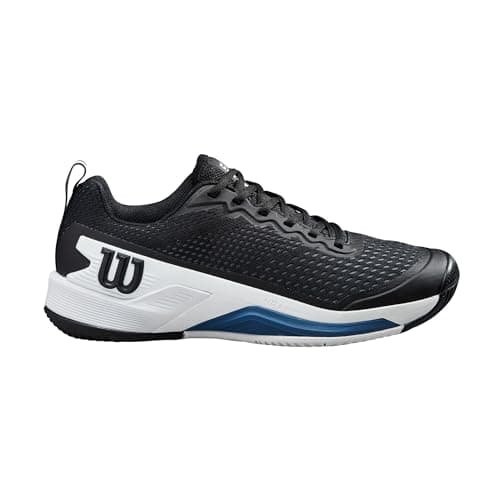
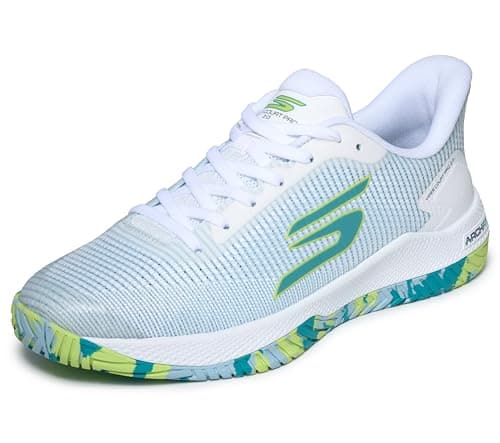
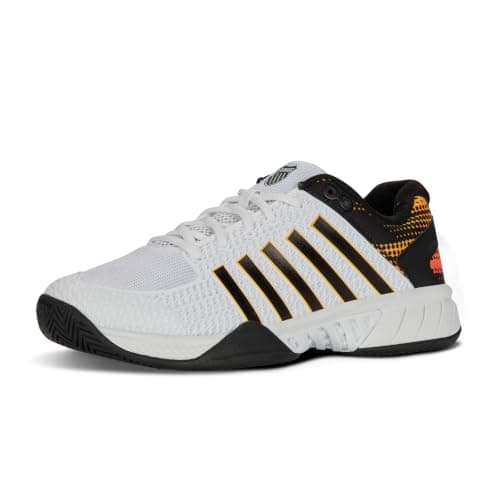
For a first pair, the K-Swiss Express Light is our top pick — a proper court outsole and real lateral support at a price that does not assume you are already committed. The Wilson Rush Pro is the cheapest pick here that still does the job, and the Skechers Viper Court is the most comfortable straight out of the box.
This is the first gear purchase that actually matters
New players spend weeks agonizing over paddles and then walk onto a hard court in running shoes. That is backwards. A beginner paddle and an expensive paddle will both get the ball over the net while you are learning; running shoes and court shoes will not both keep your ankle under you when you push off sideways for a wide dink.
Running shoes are built to roll you forward through a gait cycle. They have soft, tall, cushioned midsoles and deliberately narrow, rounded outsoles — excellent for moving in a straight line, actively dangerous when the force arrives from the side. Pickleball is a lateral game: split-step, push off, stop, change direction. A running shoe under that load tips, and the ankle goes with it. Our court shoes vs running shoes guide covers the mechanics in full, and pickleball vs tennis shoes explains why a tennis shoe is a perfectly good substitute while a running shoe is not.
What a first pair needs
Four things, and no more than four. A flat, non-marking court outsole with a herringbone or similar pattern, which grips laterally instead of rolling. Lateral support — reinforced sides and a supportive upper that hold your foot on the footbed when you push off. A durable toe, because dragging your toe on serves and lunges is how beginners destroy shoes fastest. And a low, stable ride: the closer your foot sits to the ground, the less leverage there is to roll an ankle.
Things you can safely ignore for now: marketing about specific foam compounds, weight differences measured in grams, and anything described as tour-level. Those distinctions are real, but they matter to a player who already knows how they move. They will not make you better at 3.0.
How to choose between these four
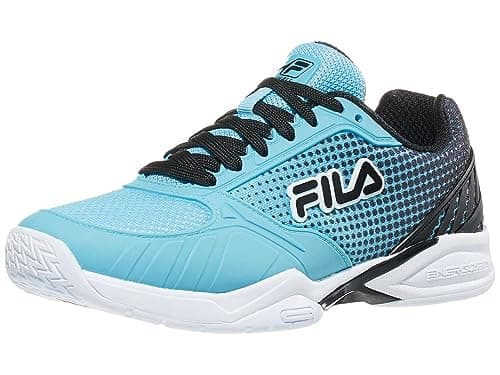
Start with the K-Swiss Express Light if you want one recommendation and no further thinking — it is the best-balanced all-round court shoe on this list and it is what we suggest for most new players. Take the Wilson Rush Pro if the budget is genuinely tight; it is frequently discounted and gives up less than the price gap suggests. Take the Skechers Viper Court if comfort is your priority or you have had trouble breaking shoes in, because it is the plushest of the group. And the FILA Volley Zone is a strong value option built on a women's last.
If you already know your feet are wide or flat, buy for that first — fit beats every other consideration. We have dedicated lists for wide feet and flat feet, and a plantar fasciitis list if heel pain is already part of your life.
Indoor or outdoor?
Where you play changes how fast you will wear these out. Outdoor courts are asphalt or concrete and they grind an outsole down quickly; indoor gym floors are far gentler but demand a non-marking sole. If you play mostly outdoors, expect to replace shoes sooner and prioritize a durable outsole over a plush midsole. Our indoor vs outdoor shoes guide covers the difference, and how long pickleball shoes last sets realistic expectations before you are surprised by it.
How much should a first pair cost?
Less than your paddle, and less than people expect. A competent court shoe is one of the better value purchases in the sport, because the gap between a cheap court shoe and an expensive one is much smaller than the gap between a court shoe and no court shoe. Buy at the affordable end, play for a season, and let your own feet tell you what to upgrade. If you want to see where the whole budget goes, our pickleball gear cost breakdown puts shoes in context against the paddle, balls and a bag.
Can I just use my tennis shoes?
Yes. Tennis shoes are court shoes — same flat outsole, same lateral reinforcement, built for the same kind of movement. If you already own a pair, play in them and spend the money somewhere else. What you cannot substitute is a running shoe, a cross-trainer with a soft rounded sole, or a casual sneaker.
Fit rules that matter more than the model
Try them on at the end of the day when your feet are at their largest. Leave about a thumb's width at the toe, because lunging drives your foot forward and a shoe that fits perfectly standing still will bruise your toenails on court. Your heel should not lift. And if one foot is larger — most people's are — fit the larger one.
Socks are not an afterthought
A cheap cotton sock in a good court shoe will still give you blisters, because cotton holds moisture against the skin. A synthetic or wool-blend athletic sock is a couple of dollars and removes most first-month blister problems. This is the least glamorous advice on the page and one of the most useful.
When to replace them
Sooner than feels reasonable. A court shoe is finished when the outsole tread goes smooth, long before the shoe looks worn out — and a smooth outsole slipping on a lateral cut is exactly how ankles roll. See common pickleball injuries for what that actually costs you.