Skip to content
Four Oh Club

Balls, bags & sets · Gear

The Best Pickleball Ball Machines

A ball machine is the most expensive thing most pickleball players will ever buy, and the only one that practises with you at 6am. Here is the field, ranked — and an honest look at whether you need one.

By Stephen V.Updated How we score
#ad

We earn a commission when you buy through our Amazon links, at no extra cost to you. It never changes our rankings, and we say so when the cheaper paddle is the better buy. How this works.

The Lobster Sports Pickle is our top pick — it is the machine on Amazon whose listing actually states everything that matters: topspin and backspin, a horizontal sweep, and a 125-ball hopper. The Pickleball Tutor Mini is the one to buy if you have to carry it, and the Bonvoisin is the cheapest thing here that still earns the word machine.

Read this before you shop: the listings are thin

We have to start with a warning that applies to this category and almost no other on this site. Ball machine listings on Amazon are unusually vague. Several state a brand and a model name and nothing else — no hopper capacity, no speed range, no confirmation of whether the machine oscillates. We rank on what the seller publishes, and where a listing publishes nothing, we say so on the product card rather than filling the gap with a plausible-sounding number.

Practically, that means you should treat unstated specs as unknown and ask the seller before spending four figures. The three specs worth confirming in writing are ball capacity, whether it oscillates, and run time per charge. Everything else is preference.

What actually separates a machine from a launcher

Oscillation is the dividing line. A machine that fires every ball to the same spot trains you to hit one shot from one place, which is not how pickleball works. A machine that sweeps horizontally makes you move, and moving to the ball is most of the skill. If you buy one feature, buy this one.

Spin control comes next. Topspin dips into the court and backspin floats; being able to feed yourself both is the difference between practising a drive and practising a third shot drop. Machines without spin control feed a flat ball, which limits what you can rehearse.

Capacity decides how much of your session is practice and how much is picking balls up. A 125-ball hopper is roughly a full drilling block. A small hopper means you stop every few minutes, and that interruption is the reason cheap machines end up in garages.

Remote control sounds like a luxury and is not. Without it, every adjustment means walking the length of the court and back.

Who should buy one

Be honest about frequency. A ball machine is worth it if you will drill alone at least weekly and you have reliable access to a court where you can set it up and leave it running. Players in that situation improve fast, because a machine gives you hundreds of identical repetitions of a shot in an hour and no human partner will ever feed you that patiently.

It is a bad purchase if you play only social doubles, if your local courts are busy enough that occupying one alone is antisocial, or if you would use it once a month. At that frequency the cost per session is absurd and a wall gives you most of the benefit for nothing. A machine also does not teach you anything about the part of the game that decides most points — reading an opponent, holding position, choosing shots. Our how to improve guide is blunt about where practice time actually pays.

How to choose from this list

Buy the Lobster if you want a machine you will not replace: it states spin, sweep, capacity and a remote, and it comes from a company that has built ball machines for decades, which matters when you need a part in year four.

Buy the Pickleball Tutor Mini if the machine has to live in a car boot and get carried to a public court. It is compact and light and it still oscillates, which is the feature we would not give up.

Buy the JP02 if you want the most adjustability per dollar — it names speed, elevation and feed rate, which are the three things that shape a drill — and you can accept a less established brand.

Buy the Bonvoisin if you want to find out whether you will actually use a machine before committing to one. It costs a fraction of the others and has a remote and adjustable settings; it is the low-risk way to test the habit.

What a machine cannot replace

Drilling with a partner, and playing games. A machine is excellent at grooving a stroke and useless at teaching you when to hit it. The players who get the most from one use it for mechanics and then take those mechanics into real games — and use structured drills rather than just hitting balls until the hopper is empty.

You will also need a lot of balls, and a way to pick them up. Budget for a multipack and a ball hopper alongside the machine itself; our outdoor ball picks cover which ones survive repeated machine feeding outdoors.

The short answer

Quick picks

#Paddle / gearBest forScorePrice
01
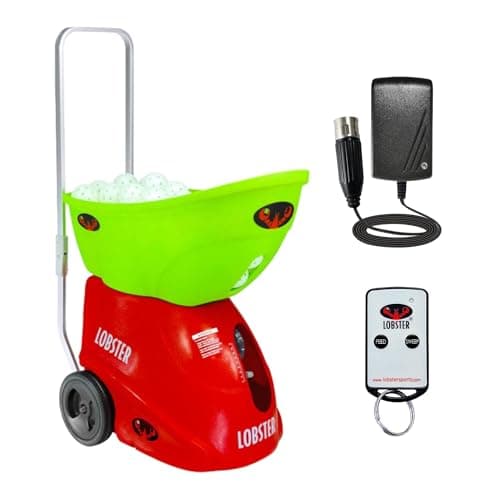
Lobster Sports Lobster Sports Pickle Pickleball Machine
Lobster Sports Pickle Pickleball Machine

The most completely specified machine on Amazon — topspin, backspin, lobs, a horizontal sweep and a 125-ball hopper, from the best-known name in ball machines.

Best overall machine
7.8
$1,139.00Amazon
02
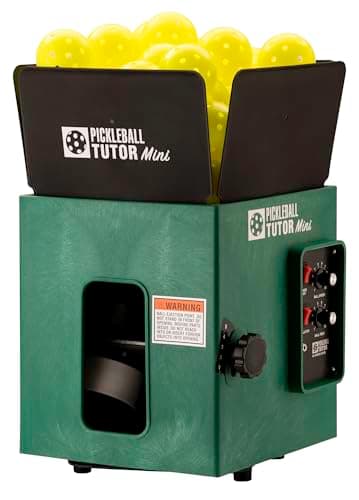
Sports Tutor Pickleball Tutor Mini with Oscillator
Pickleball Tutor Mini with Oscillator

The one to buy if you have to carry it. Compact, light, US-built, and it still oscillates so the ball does not land in the same square all session.

Carrying it to the court
7.4
$979.00Amazon
03
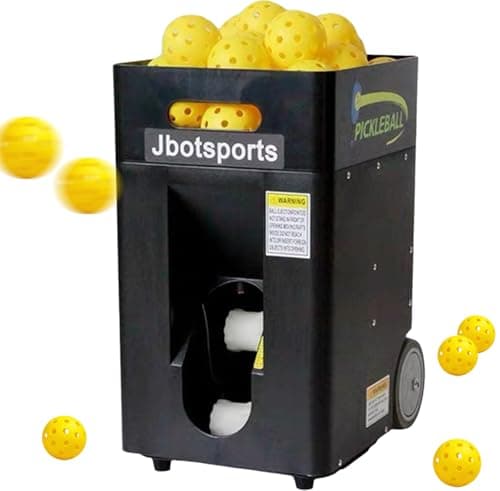
JP02 JP02 Portable Pickleball Machine
JP02 Portable Pickleball Machine

The mid-price pick: adjustable speed, elevation and feed rate with multiple serve modes, for roughly half what the established brands charge.

Most machine per dollar
7.2
$589.99Amazon
04
Bonvoisin Bonvoisin Pickleball Ball Thrower
Bonvoisin Pickleball Ball Thrower

The cheapest thing here that still earns the word machine — remote control and adjustable launch and swing, for about the price of two decent paddles.

The cheapest way in
6.6
$249.00Amazon

#ad · Live prices from the Amazon Product API, as of Aug 19, 2026. Where we have no verified live price, we show none — we would rather leave a gap than print a number that has rotted.

In detail

The picks, in full

01
Lobster Sports Lobster Sports Pickle Pickleball Machine

Best overall machine

Lobster Sports Pickle Pickleball Machine

Holds 125 ballsTopspin, backspin & lobsHorizontal sweepBattery powered
7.8/10

The most completely specified machine on Amazon — topspin, backspin, lobs, a horizontal sweep and a 125-ball hopper, from the best-known name in ball machines.

Ball control
9
Capacity
9
Portability
7
Durability
8
Value
6

Pros

  • The only pick here whose listing states all three of spin control, oscillation and remote operation
  • A 125-ball hopper is roughly a full drilling block before you stop to collect balls
  • Lobster has built ball machines for decades, which matters for parts and service

Cons

  • Over a thousand dollars — a serious purchase, not an impulse buy
  • Battery powered, so there is a charge cycle to plan around

Don't buy this if…

you drill once a month. The value of a machine is in frequency; occasional users get more from a practice wall.

$1,139.00View on Amazon

Price as of Aug 19, 2026. Prices change — Amazon's is the one that counts.

#ad · we may earn a commission from this link to Lobster Sports Pickle Pickleball Machine

02
Sports Tutor Pickleball Tutor Mini with Oscillator

Carrying it to the court

Pickleball Tutor Mini with Oscillator

Built-in oscillatorLightweight and compactMade in USA
7.4/10

The one to buy if you have to carry it. Compact, light, US-built, and it still oscillates so the ball does not land in the same square all session.

Ball control
7
Capacity
6
Portability
9
Durability
8
Value
7

Pros

  • Small and light enough that taking it to a public court is realistic, not theoretical
  • Still oscillates, which is the feature that separates practice from a feeding drill
  • Built in the US by a company that only makes ball machines

Cons

  • The listing states no hopper capacity, speed range or spin control
  • Compact machines hold fewer balls, so you collect more often

Don't buy this if…

you want programmable spin and a big hopper. Size and simplicity are the trade you are making.

$979.00View on Amazon

Price as of Aug 19, 2026. Prices change — Amazon's is the one that counts.

#ad · we may earn a commission from this link to Pickleball Tutor Mini with Oscillator

03
JP02 JP02 Portable Pickleball Machine

Most machine per dollar

JP02 Portable Pickleball Machine

Adjustable speedAdjustable elevationAdjustable feed rateMultiple serve modes
7.2/10

The mid-price pick: adjustable speed, elevation and feed rate with multiple serve modes, for roughly half what the established brands charge.

Ball control
8
Capacity
6
Portability
8
Durability
6
Value
8

Pros

  • Names the three adjustments that actually shape a drill: speed, height and how often it feeds
  • Multiple serve modes give you more than one shot to practise against
  • Sits in the price gap between a toy launcher and a thousand-dollar machine

Cons

  • A newer, less established name than Lobster or Sports Tutor — less track record on service
  • The listing states no ball capacity

Don't buy this if…

you need a machine that will still be serviceable in a decade. Buy the established brand and pay for the parts channel.

$589.99View on Amazon

$698.9916% off

Price as of Aug 19, 2026. Prices change — Amazon's is the one that counts.

#ad · we may earn a commission from this link to JP02 Portable Pickleball Machine

04
Bonvoisin Bonvoisin Pickleball Ball Thrower

The cheapest way in

Bonvoisin Pickleball Ball Thrower

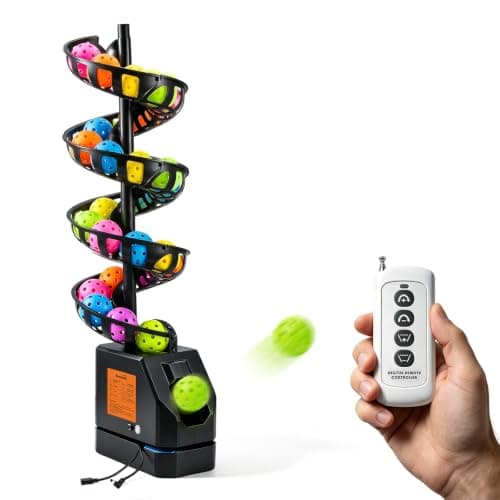
Remote control4 launch settings3 swing settingsIndoor & outdoor
6.6/10

The cheapest thing here that still earns the word machine — remote control and adjustable launch and swing, for about the price of two decent paddles.

Ball control
6
Capacity
5
Portability
8
Durability
5
Value
9

Pros

  • A quarter the price of the full-size machines, which changes who can justify one at all
  • Remote control means you are not walking back to the machine between drills
  • Adjustable launch and swing settings, so it is not a one-note feeder

Cons

  • Budget build at a budget price — expect less of it than of a Lobster
  • Listed for tennis as well as pickleball, so it is not a purpose-built pickleball machine

Don't buy this if…

you drill several times a week. At that frequency the cheap machine becomes the expensive one.

$249.00View on Amazon

Price as of Aug 19, 2026. Prices change — Amazon's is the one that counts.

#ad · we may earn a commission from this link to Bonvoisin Pickleball Ball Thrower

Court access is the real constraint

Before you spend anything, work out where the machine will run. Many public courts are too busy for one person to occupy alone, and some clubs prohibit machines outright or restrict them to off-peak hours. This is the most common reason an expensive machine goes unused, and it costs nothing to check first.

Battery life and charging

Every machine here is portable, which means battery powered, which means a charge cycle you have to plan around. Ask the seller for run time per charge before buying — a machine that lasts 45 minutes changes how you schedule practice compared with one that lasts three hours.

Weight matters more than you expect

A full-size machine plus a hopper of balls is a genuinely heavy thing to move from a car to a court, and the weight is what decides whether it gets used. If there are stairs or a long walk between your parking and your court, prioritise portability over features.

Buy indoor and outdoor balls to match

Machines feed whatever you load, and the wrong ball ruins the drill. Match the ball to the surface as normal — see indoor vs outdoor balls. Expect faster ball wear than in normal play, because a machine hits a ball harder and more often than you do.

The cheaper alternatives

A practice wall costs nothing and drills your hands and your reset. A portable net plus a bucket of balls and a partner costs a small fraction of a machine and gives you live-ball practice a machine cannot. Consider both before you spend four figures.
How we picked

We have not physically tested this gear

Everyone in this category says they tested twenty paddles. We have not tested any — and we say so. What we did instead: compiled the manufacturer-published specifications (face material, core thickness, grip size, USAPA approval), normalized them, and scored each product against a published rubric weighted for the skill tier this page serves. The scores are judgments from documented research, not measurements we took, because we do not have a lab and are not going to pretend we do.

Questions

Frequently asked

Are pickleball ball machines worth it?
If you will drill alone at least weekly and have reliable court access, yes — nothing else gives you hundreds of identical repetitions in an hour. For monthly use, a practice wall gives most of the benefit for nothing.
What features matter most on a pickleball machine?
Oscillation first, because a machine that feeds the same spot every time trains one shot from one place. Then spin control, ball capacity, and a remote.
How many balls should a pickleball machine hold?
More is better, because capacity decides how much of your session is practice rather than ball collection. A 125-ball hopper is roughly a full drilling block.
Can I use a tennis ball machine for pickleball?
Not reliably. Pickleballs are lighter, hollow and perforated, and feed mechanisms built for pressurised tennis balls do not handle them consistently. Buy a machine that lists pickleball.
Why do the specs on these listings vary so much?
Because many sellers publish very little. We list only what the listing states and flag what it omits — confirm capacity, oscillation and run time with the seller before buying.

Keep reading

Receipts

Sources

We do not run a testing lab, and we do not pretend to. Our specs come from manufacturer listings and spec sheets; our rules and dimensions come from the official rulebook. Where we could not verify something, we say so on the page rather than quietly leaving it out. Read our full method.