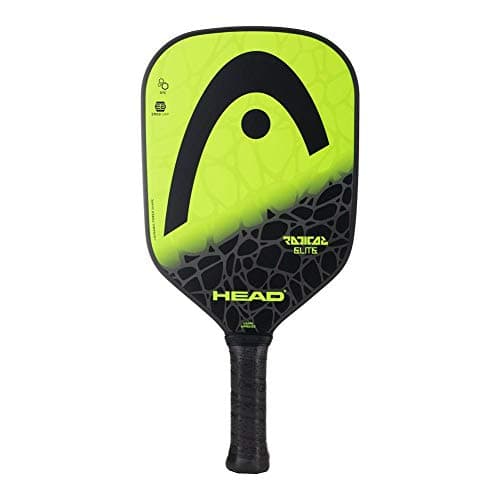
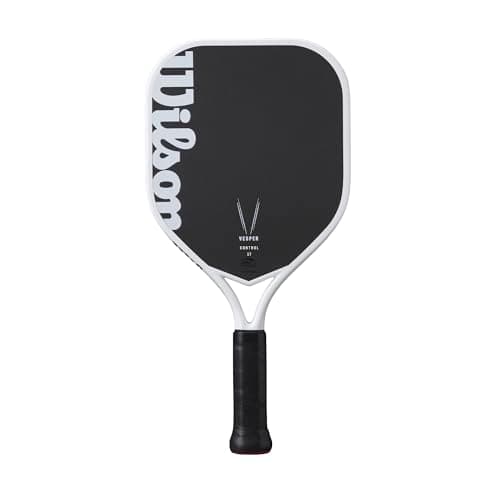
If your elbow or forearm flares up after pickleball, the softest, thickest-core paddle here is the Wilson Vesper Control 17 — a 17mm core absorbs more shock than almost anything else on the market. On a tighter budget, the HEAD Radical Elite pairs a soft polymer core with a genuinely cushioned comfort grip for far less money.
Why your paddle can cause elbow pain
“Pickleball elbow” is the same overuse injury tennis players call tennis elbow (lateral epicondylitis): the tendons that attach your forearm muscles to the outside of the elbow get irritated by thousands of small, repeated shocks. Every off-center hit sends a jolt of vibration up the handle into your arm, and the stiffer and harder the paddle, the more of that shock reaches your tendons. Technique and volume matter most, but the paddle you hold either cushions those jolts or amplifies them — so if your arm already hurts, the paddle is the easiest single thing to change.
What actually reduces vibration
Three paddle properties matter for a sore arm. First, a thicker core— 16mm and up — flexes more on contact and soaks up shock, where a thin 14mm core is hotter and harsher. Second, a softer, more forgiving face and a larger sweet spot, because clean center contact vibrates far less than a mishit off the tip. Third, a cushioned grip (and a grip that is not too small), which dampens what does reach your hand. Weight is a balancing act: a very light paddle is easy on the joints to swing but transmits more shock on impact, while a slightly heavier, well-balanced paddle plows through the ball and vibrates less. The picks below are ranked on those factors, not on raw performance.
The paddles to avoid if your arm hurts
Counterintuitively, several of the most sought-after enthusiast paddles are the worst choice for a bad elbow. Thermoformed, foam-injected paddles— the stiff, powerful builds enthusiasts love, like the ones on our carbon fiber and spinlists — are rigid by design, and that rigidity is exactly what punishes a sore tendon on off-center contact. If your elbow is flaring, this is the wrong month to chase a hot thermoformed paddle; prioritize a softer, thicker, more forgiving build until the pain settles.
The paddle is only part of the fix
No paddle cures an injury. The biggest levers are technique — leading with a bent elbow, using your legs and shoulder instead of muscling shots with the forearm, and not gripping the handle in a death clench — plus rest, load management and, for persistent pain, a physiotherapist. A fresh grip that fits your hand, a counterforce elbow strap and simple forearm stretches all help too. Think of the right paddle as removing one avoidable source of shock while you address the rest. This page is buying advice, not medical advice: see a clinician for pain that does not improve.
How to choose a paddle for a sore arm
Go thick, not thin
Core thickness is the single most important spec here. A 16mm or 17mm core is soft and absorbent; it takes pace off the ball and, just as usefully, takes shock out of the impact. The thinner, hotter cores that add put-away power do the opposite. If you are choosing between two otherwise similar paddles, pick the thicker one — the same logic runs through our 14mm vs 16mm comparison.
Chase the sweet spot
A larger, more forgiving sweet spot means fewer jarring off-center hits, which is where most of the painful vibration comes from. Wide-body and standard shapes are more forgiving than elongated ones; a beginner-friendly, forgiving paddle is often kinder to your elbow than a harsh “better” one. See how to choose a paddle for how shape trades off against reach.
Mind the grip and the overgrip
A grip that is too small makes you squeeze harder, and squeezing transmits more shock into the forearm. If anything, size up slightly and add a cushioned overgrip. Our grip size guide walks through measuring your hand; the goal is a relaxed hold, not a clamp.
All of these are tournament-legal
Every paddle here is USA Pickleball approved, so choosing a comfortable one costs you nothing in eligibility — see the equipment standards. Approval is a dimensional and surface check, not a comfort rating, so a legal paddle can still be harsh; that is what this list sorts out.