A regulation pickleball net is 36 inches high at the sidelines and 34 inches high at the center. That is 3 feet at the posts and 2 feet 10 inches in the middle, or 91.4 cm and 86.4 cm. USA Pickleball publishes the figure alongside the court size — 20 feet wide by 44 feet long — and the 7-foot non-volley zone on each side. The rest of this page is what that number means in practice.
The number, in every unit
| Position | Inches | Feet | Centimeters |
|---|
| At the sidelines (posts) | 36 in | 3 ft 0 in | 91.4 cm |
| At the center | 34 in | 2 ft 10 in | 86.4 cm |
The metric conversions are ours; the rulebook is written in inches. If you are setting up a net with a metric tape, 91 and 86 are close enough that nobody will notice, and a portable net that lists its height in centimeters is aiming at those two figures.
Why the net is lower in the middle
A net strung between two posts sags under its own weight, and the rules build that sag in rather than fighting it: the sideline height is the post height, and the center height is what a properly tensioned net settles to. On a permanent court a center strap pulls the net down to 34 inches and holds it there. On a portable net there is usually no strap, and the center height depends on how tight the tension cord is — which is why the most common problem with a portable net is not the height at the posts but a droop in the middle that turns 34 inches into 32. Our guide to setting up a portable net covers getting the tension right.
The two-inch dip also changes the game. The lowest point of the net is the middle of the court, which is one reason a cross-court dink is the safer shot and a down-the-line dink the riskier one — a ball over the sideline has two more inches of net to clear. Our dinking guide and doubles strategy both come back to that geometry.
Pickleball vs tennis net height
A tennis net is 3 feet 6 inches (42 inches, 1.07 m) at the posts and 3 feet (36 inches, 0.914 m) at the center, per the ITF Rules of Tennis. So a tennis net at its lowest point is as high as a pickleball net at its highest, and at the posts it is six inches higher. That is why you cannot simply play pickleball over a tennis net at its normal height: every ball has to clear two to six extra inches, and the soft game that defines pickleball stops working. Players who set up on a tennis court either lower the tennis net — some center straps allow it, though the posts will still be too high at the sides — or, far more often, bring a portable net and set it across one half of the court. Our pickleball vs tennis comparison and court dimensions guide cover how the two courts overlap.
Pickleball vs badminton net height
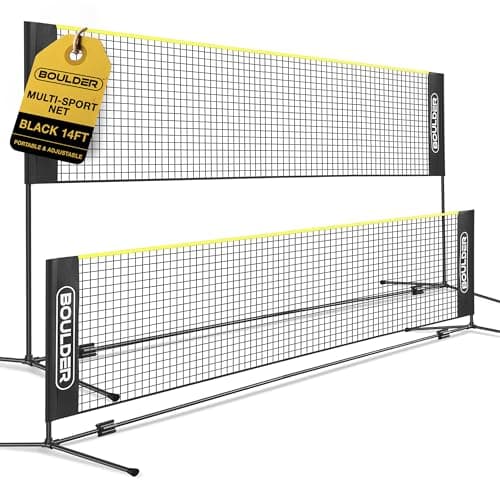
A badminton net is 1.55 m (5 feet 1 inch) at the edges and 1.524 m (5 feet) at the center — nearly two feet higher than pickleball's. The comparison matters because pickleball was invented on a badminton court, and the court itself is the same 20 by 44 feet for doubles; what the founders changed was the net, which they lowered to the height it is now. Our history of pickleball tells that story, and pickleball vs badminton covers the rest of the differences. Multi-sport portable nets sold for both games are height-adjustable for exactly this reason; check that the pickleball setting actually reaches 36 inches at the posts rather than a rounded 3 feet 3 inches.
How other net sports compare
| Sport | Net height at center | Net height at posts / edges |
|---|
| Pickleball | 34 in (86.4 cm) | 36 in (91.4 cm) |
| Tennis | 36 in (0.914 m) | 42 in (1.07 m) |
| Badminton | 60 in (1.524 m) | 61 in (1.55 m) |
Two sports pickleball is often compared with do not fit the table: racquetballhas no net at all — nor do paddleball or wiffle ball, the two other games it gets confused with — and table tennis plays over a low net on a table.
How to check a net's height
- Measure from the court surface to the top of the net tape at one post: 36 inches.
- Measure at the other post: 36 inches. If the posts differ, the net is not level.
- Measure at the exact middle: 34 inches. If it reads lower, tighten the tension cord or the center strap; if it reads higher, loosen.
- Re-check the middle after ten minutes of play. Portable nets settle, and a ball that clips the tape and drops in is live — our line calls guidecovers the net-cord rulings — so a net that has sagged an inch changes real points.
What to look for in a net that hits the number
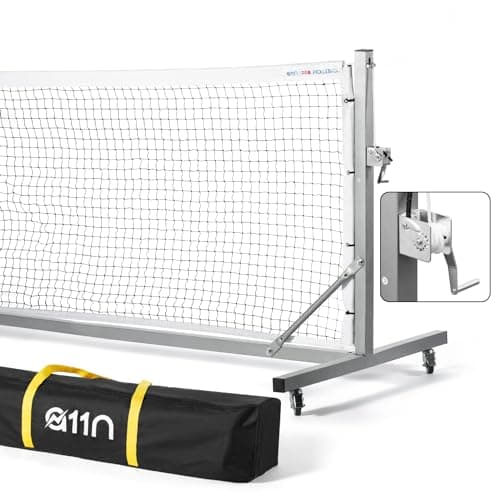
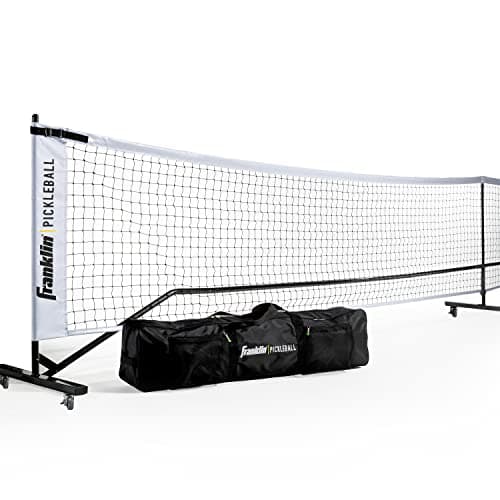
If you are buying a portable net, the height is the easy part — every net sold as regulation lists 36 inches at the posts. The things that decide whether it stays at the right height are the ones the listings bury: a tension system that can pull the center to 34 inches and hold it (a hand winch is the tournament-style answer, a tension cord the common one), a frame that does not bow inward when tensioned, and a width of 22 feet so the net actually spans the court rather than stopping short of the sidelines. Our portable vs permanent nets guide goes through the trade-offs. The three below are the regulation-size portable net we rank first overall, the winch-tensioned one that gets closest to a tournament net, and the adjustable multi-sport option for a backyard that also plays badminton; the full ranking is on our best pickleball nets page.
Does an inch matter?
More than you would think. The whole soft game — the dink, the drop, the reset — is built around clearing a 34-inch net by a few inches and landing in a 7-foot box. A net that sits at 32 in the middle makes those shots easier and the game faster; one at 36 makes them harder and pushes players toward driving. Neither is wrong for a backyard game, but if you are practicing for league or tournament play, practice at the real height.
Driveway and temporary setups
The net height does not change because the court is a driveway. What changes is the surface and the space: our guide to a backyard pickleball court covers how much room a 20-by-44 court plus run-off actually needs, and setting up a portable net covers getting it taut on an uneven surface.
Indoor gyms
Many gyms run pickleball over a badminton or volleyball net dropped on adjustable posts. Check the height before you play; a badminton post lowered “to about three feet” is often three feet at the center rather than at the sides, which leaves the middle two inches high. A tape measure fits in a paddle bag.