Under $100 buys a paddle that will not hold your game back. The Franklin Signature Series Pro is the best all-round value; the Vatic Pro Prism brings flagship thermoformed carbon construction in just under the line.
Where the money stops mattering
Pro paddles cost $200 or more, but the honest truth is that most of what separates a $90 carbon paddle from a $220 one is marginal — a slightly different balance, a marginally hotter face, a name. Those differences are real to a 4.5 player who can feel them and irrelevant to almost everyone else. For the vast majority of players, a well-chosen paddle under $100 delivers around 95% of the performance, and the last 5% is not what is capping your game.
A pick for every level, under $100
- Just starting?The niupipo fiberglass paddle at the bottom of this budget is all you need — see the full beginner list.
- Improving? The Franklin Signature Pro and Onix Z5 give you a textured face and a 16mm-class core for control and spin.
- An enthusiast on a budget?The Vatic Pro Prism is thermoformed raw carbon — the construction expensive paddles use — for just under $100.
What under $100 does not cost you
Not the face material: every carbon paddle here grips the ball for real spin. Not USA Pickleball approval: all of these are tournament-legal. What a higher price buys is refinement and brand, not a fundamentally better paddle. If you want to understand the specs behind these picks, start with how to choose a paddle.
The short answer
Quick picks
#ad · Live prices from the Amazon Product API, as of Aug 5, 2026. Where we have no verified live price, we show none — we would rather leave a gap than print a number that has rotted.
In detail
The picks, in full
Best value overall
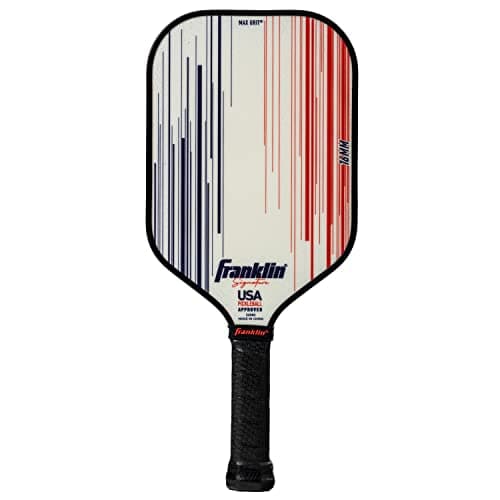
Franklin Signature Series Pro Paddle
MaxGrit surface16mm PP coreUSAPA approvedTournament legal
The value pick that punches above its price: a 16mm polypropylene core and a gritty MaxGrit face on a USAPA-approved, tournament-legal paddle.
- Control
- 8
- Power
- 7
- Spin
- 8
- Forgiveness
- 8
- Value
- 9
Pros
- +16mm core is the thick, control-oriented spec most improving players end up wanting
- +MaxGrit textured face grips the ball for real, usable spin
- +Franklin makes the official US Open ball, and that credibility shows in the build
Cons
- −The elongated pros favor a longer handle; this is a standard shape
- −Graphics are loud if you like an understated paddle
Don't buy this if…
…you want a thin, poppy power paddle — the 16mm core is tuned for control, not raw put-away speed.
Enthusiast value
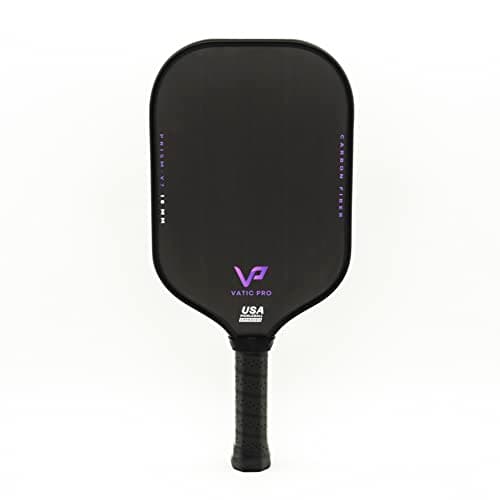
Vatic Pro Prism V7 Carbon Paddle
Raw carbon face16mm coreFoam-injected wallsThermoformed
The enthusiast's value paddle: a thermoformed, foam-injected 16mm carbon build that mimics paddles costing twice as much, from a direct-to-player brand.
- Control
- 9
- Power
- 8
- Spin
- 9
- Forgiveness
- 6
- Value
- 8
Pros
- +Thermoformed build with foam-injected walls is the construction expensive paddles use
- +Raw carbon face grips the ball hard for spin without a gritty coating that wears off
- +A cult favorite in enthusiast circles for delivering flagship specs at a mid price
Cons
- −Thermoformed paddles are stiff and unforgiving on off-center hits
- −A smaller brand — you are trusting the community's word, not a household name
Don't buy this if…
…you are a beginner — a stiff, thermoformed paddle punishes the mishits you are still making.
Widest sweet spot
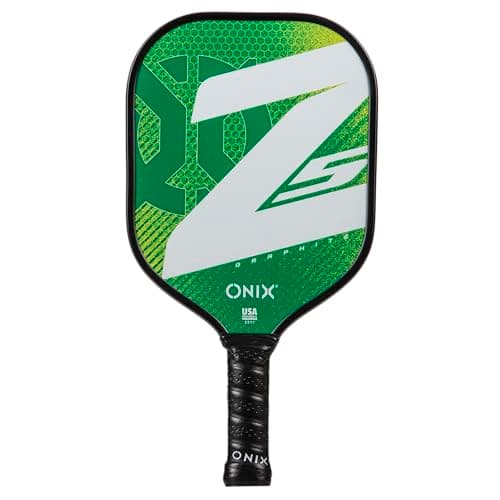
Onix Graphite MOD Z5 Paddle
Carbon fiber faceWide-body shapeHoneycomb coreCushion grip
The famous wide-body Z5 shape, updated with a carbon face — a huge sweet spot that flatters an intermediate rally without feeling like a beginner club.
- Control
- 8
- Power
- 7
- Spin
- 7
- Forgiveness
- 9
- Value
- 8
Pros
- +Wide-body shape gives one of the most forgiving sweet spots in the category
- +Carbon face adds bite and a crisper response than the original fiberglass Z5
- +A genuinely iconic shape — it has been a default recommendation for years
Cons
- −The wide body trades a little reach and maneuverability for its forgiveness
- −Not the highest-spin face if grip is your single priority
Don't buy this if…
…you play a fast hands-battle at the net and want maximum maneuverability — a standard or elongated shape moves quicker.
Brand-name value
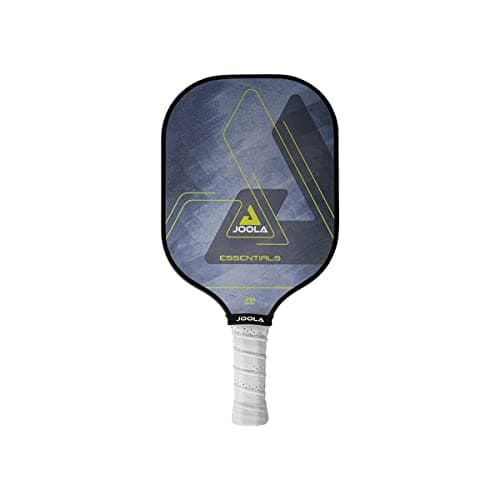
JOOLA Essentials Performance Paddle
Reinforced fiberglassPP honeycomb coreStandard shapeMid-weight
JOOLA's entry paddle brings the brand that sponsors the sport's biggest names down to a first-paddle price — reinforced fiberglass, honeycomb core, no gimmicks.
- Control
- 8
- Power
- 7
- Spin
- 6
- Forgiveness
- 8
- Value
- 8
Pros
- +JOOLA is the paddle brand of the sport's top pros, and the quality control carries down
- +Reinforced fiberglass edge holds up better than bargain paddles that crack at the tip
- +Neutral balance makes it easy to transition onto from a beginner paddle
Cons
- −It is the Essentials line for a reason — the premium feel lives in JOOLA's carbon paddles
- −Spin is fine, not remarkable
Don't buy this if…
…you are chasing the carbon-face spin JOOLA is known for — that is the Hyperion, not this.
Beginners who want a brand name
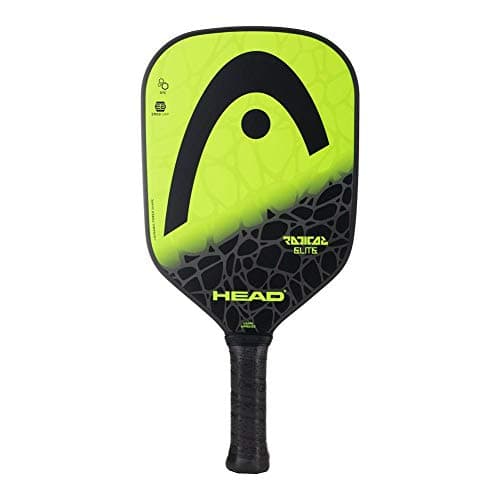
HEAD Radical Elite Pickleball Paddle
Fiberglass facePolymer honeycomb coreComfort gripMid-weight
A real brand's beginner paddle: a fiberglass face and comfort grip from a company that has made rackets for decades, at a price a first-timer can justify.
- Control
- 8
- Power
- 6
- Spin
- 5
- Forgiveness
- 8
- Value
- 8
Pros
- +HEAD's racket-sports pedigree shows in a balanced, predictable feel
- +Polymer honeycomb core is quieter and softer than the aluminum cores on older cheap paddles
- +Comfort grip is genuinely comfortable for long first sessions
Cons
- −No standout attribute — it is competent everywhere rather than excellent anywhere
- −Fiberglass face limits spin ceiling compared with a textured carbon paddle
Don't buy this if…
…you want the most spin or the most power for the money — this is a safe all-rounder, not a specialist.
Beginners ready to invest a little
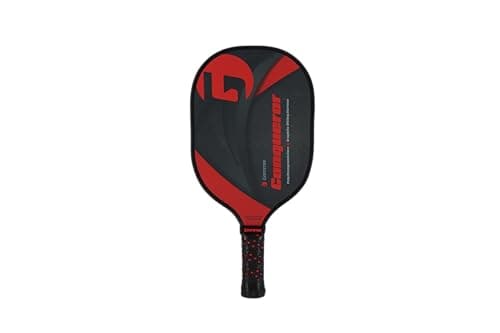
GAMMA Conqueror Pickleball Paddle
Graphite composite faceHoneycomb coreCushioned gripMid-weight
A graphite-faced paddle at a fiberglass price — a sensible half-step up for a beginner who already knows they are staying.
- Control
- 8
- Power
- 7
- Spin
- 6
- Forgiveness
- 7
- Value
- 8
Pros
- +Graphite face is stiffer and more responsive than the fiberglass on entry paddles
- +Long-standing racquet-sports brand with consistent quality control
- +Balanced weight suits players still finding their swing
Cons
- −Stock can be thin — availability comes and goes
- −Not a spin monster; the face texture is modest
Don't buy this if…
…you need it this week and the listing shows low stock — buy something in stock rather than wait.
Absolute beginners
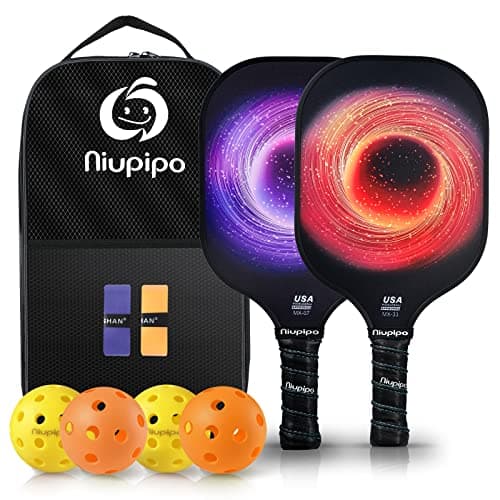
niupipo Fiberglass Pickleball Paddle
Fiberglass facePP honeycomb coreUSAPA approved4.8" grip
The paddle to buy when you are not yet sure you will stick with the sport — cheap, USAPA-approved, and forgiving enough to learn on.
- Control
- 7
- Power
- 6
- Spin
- 5
- Forgiveness
- 8
- Value
- 9
Pros
- +USAPA approved, so it is legal for organized and tournament play from day one
- +Fiberglass face gives a softer, more forgiving pop than bare wood or cheap composite
- +Priced low enough that you have lost almost nothing if you stop playing
Cons
- −The face texture is mild, so it generates little of the spin an improving player will want
- −Build feels its price — this is a first paddle, not a keeper
Don't buy this if…
…you already know you are committed. Skip straight to a carbon-faced paddle you will not out-grow in a month.
How to spend under $100 well
Buy the face and core, not the graphics
A textured carbon face and a 16mm core are what you are actually paying for. Loud paint and marketing buzzwords add nothing. Every carbon paddle on this page has the parts that matter.
Match the paddle to your level
A beginner wants forgiveness (fiberglass, wide body); an improving player wants control and spin (16mm carbon). Do not buy a stiff, elongated carbon paddle if you are still learning to find the center — it will fight you.
Spend the savings on the rest of the kit
The money you save under $100 goes further on proper court shoes and a fresh set of balls than on a pricier paddle. Both do more for your actual game.
Check the live price before you buy
Paddle prices move, and a couple of these hover near the $100 line. The price on each card is stamped with the date we checked it — if one has crept over $100 by the time you click, that is the live market, not a claim we made. See our methodology for how our prices work.
How we picked
We have not physically tested this gear
Everyone in this category says they tested twenty paddles. We have not tested any — and we say so. What we did instead: compiled the manufacturer-published specifications (face material, core thickness, grip size, USAPA approval), normalized them, and scored each product against a published rubric weighted for the skill tier this page serves. The scores are judgments from documented research, not measurements we took, because we do not have a lab and are not going to pretend we do.
Questions
Frequently asked
What is the best pickleball paddle under $100?+
The Franklin Signature Series Pro for all-round value, with a 16mm core and a gritty face. For flagship-style construction just under the line, the Vatic Pro Prism's thermoformed raw carbon is hard to beat.
Do you need to spend more than $100 on a pickleball paddle?+
No. A well-chosen sub-$100 paddle delivers around 95% of a pro model's performance. The extra money buys refinement and brand, not a fundamentally better paddle — and never more skill.
Are cheap carbon fiber paddles any good?+
Yes. Direct-to-player brands like Vatic Pro deliver genuine thermoformed raw-carbon construction under $100. The face grips for real spin; what you give up versus a $220 paddle is marginal balance and refinement.
What is the best budget pickleball paddle for a beginner?+
The niupipo fiberglass paddle — USA Pickleball approved, forgiving and inexpensive. See the full
beginner paddle roundup for the alternatives.
Receipts
Sources
We do not run a testing lab, and we do not pretend to. Our specs come from manufacturer listings and spec sheets; our rules and dimensions come from the official rulebook. Where we could not verify something, we say so on the page rather than quietly leaving it out. Read our full method.