There is no fixed lifespan for a pickleball paddle, and the manufacturers say so: Selkirk writes that “there's no one-size-fits-all answer,” because it depends on how often you play, how you play, the ball you use and where. What you can do is recognize the signs of a worn paddle, know what the warranty will and will not cover, and put off the replacement with a little care.
Why nobody gives you a number
A paddle is a sandwich of a face material over a honeycomb or foam core, wrapped in an edge guard, and each layer wears differently. The face texture smooths with every brush of the ball. The core can crush or lose rigidity after enough hard hits. The bond between face and core can let go. The edge guard takes every scrape on the court surface. A player who dinks three times a week on a cushioned indoor court is asking a completely different question from one who drives outdoor balls daily on rough concrete, and a paddle that lasts years for the first may be dead in months for the second.
That is why the closest thing to a published lifespan is the warranty period, and the warranty periods disagree with each other by a wide margin. JOOLA covers paddles for six months against manufacturer defects and workmanship, extendable to twelve on chip-enabled models, and specifically excludes “normal wear and tear.” Selkirk covers its Selkirk Sport line for the lifetime of the paddle against workmanship and manufacturer defects, its SLK line for one year and its Labs paddles for two. None of those figures is a lifespan; they are the period during which a paddle that fails for reasons that are not your fault gets replaced.
The five signs a paddle is worn out
Selkirk's own replacement guide lists five, and they match what players describe.
- The edge guard is failing.If it is “starting to peel off or come undone,” Selkirk notes, that can precede delamination — the edge is what seals the layers. A lifted edge on an older paddle is a warning, not a cosmetic issue.
- Chips reaching the face.A chipped edge is usually cosmetic. A chip that is “encroaching on the paddle face” is not, because the face is the part doing the work.
- A smooth face.Texture wears with play, and “a significant loss of grip can affect your game.” This is the sign spin players notice first, and it comes sooner on a painted grit coating than on raw carbon. Before you decide the face is done, clean it: a lot of lost bite is ball residue and dirt.
- Cracks in the frame or face.These “can compromise both performance and structural integrity.” A cracked paddle is finished, and in a sanctioned event it may also be illegal — USA Pickleball's equipment standards require a rigid, non-compressible face.
- Delamination or core crush.The layers “separate from each other,” or the core “loses its rigidity.” The symptom players describe is a dead spot: a patch of the face that sounds and feels different, usually duller, and sends the ball shorter than the rest. Tap the face lightly across its surface and listen; a delaminated area typically sounds hollow compared with the rest.
One of those is not like the others. A smooth face means the paddle has lost the feature you may have bought it for, but it still plays; a dead spot, a crack or a lifting edge means the paddle is structurally done. Our when to upgradeguide is about the other reason to replace a paddle — that you have outgrown it — and the two often arrive together.
What wears a paddle faster
Hard outdoor balls. A 40-hole outdoor ball is harder than an indoor ball and hits the face harder on every drive; our indoor vs outdoor balls guide covers the difference. Rough court surfaces scrape the edge guard on every low pickup. Heat. A paddle left in a hot car is a sandwich of glued layers left in an oven. Volume. More sessions, more wear — there is no way around it. Construction. A wood paddle, for what it is worth, does not delaminate or crush, which is the one genuine durability argument in our wood vs composite comparison; everything else about it is worse.
What to replace it with
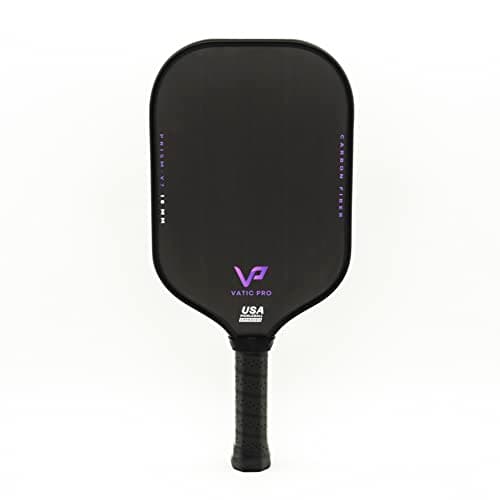
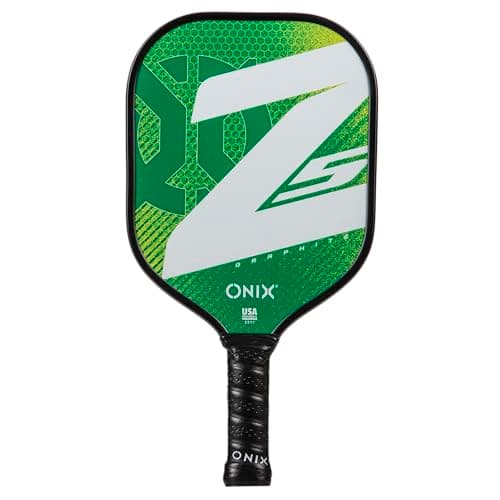
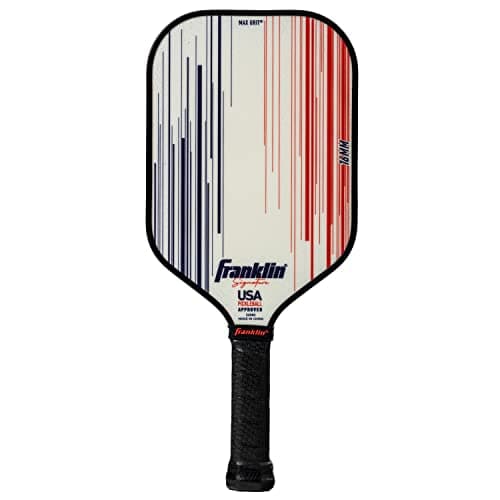
If your paddle is worn out rather than outgrown, replace it with the same tier. The three picks below are the paddles we rank first for value, for the intermediate step up to raw carbon, and for forgiveness — one for each reason a replacement usually happens. Each has a live price; none of the numbers on this page is typed by us.
How to make a paddle last
Use a cover in the bag and never leave the paddle in a hot car. Clean the face with a damp cloth after outdoor play; a dedicated eraser pulls ball residue out of the texture without abrading it. Do not set it face-down on concrete between games. Protect the edge: edge tape is cheap and a lifting edge guard is the first step toward delamination. Re-wrap the gripwhen it gets slick — our overgrip pickscost less than a sleeve of balls — because a slipping grip changes how you hit, not just how it feels.
Will the warranty cover a dead spot?
Sometimes. Delamination and core failure within the warranty period are the kind of thing “manufacturer defects” language is written for, and JOOLA and Selkirk both use that language. What every warranty we read excludes is normal wear: a smoothed face, a scuffed edge, faded graphics. Register the paddle when you buy it — Selkirk's lifetime coverage applies “after warranty activation,” and JOOLA's extension requires registration within fourteen days — and keep the receipt.
Should you keep the old one?
A paddle with a smooth face but no structural damage is a perfectly good second paddle for a guest, a rainy-court day, or a doubles session where you would rather not risk the new one. A paddle with a dead spot or a crack is not: it plays unpredictably, and an unpredictable paddle teaches bad habits faster than a cheap one.