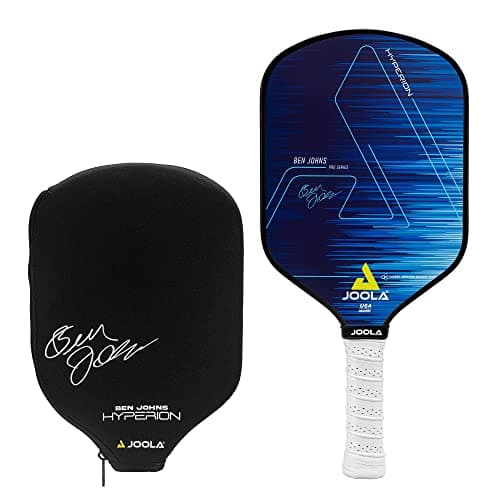
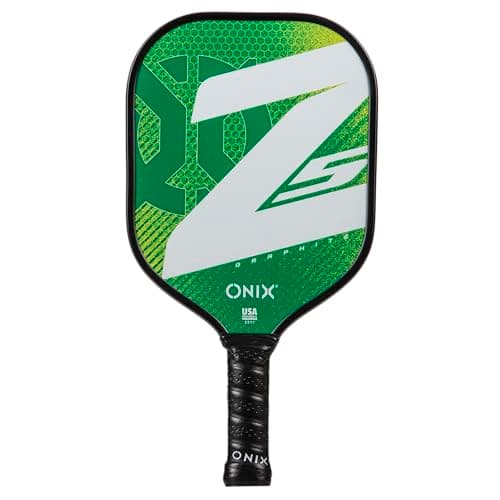
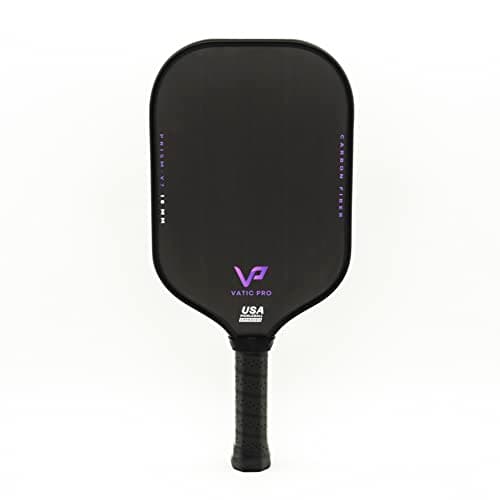
The Vatic Pro Prism V7 is the best carbon paddle for the money — thermoformed construction and a raw carbon face that grips like paddles costing twice as much. The JOOLA Hyperion is the spin flagship; the Onix Z5 keeps a big, forgiving sweet spot.
Why carbon is the enthusiast's face material
A carbon fiber face — especially raw or “T700” carbon — is stiffer than fiberglass and has a gritty texture that bites the ball. That bite is the source of the heavy topspin and slice that shape an advanced game. Carbon also gives a crisp, connected feel on contact that many players prefer once they are used to it. The trade, as always, is forgiveness: a stiff face has a smaller effective sweet spot. We cover the full comparison in carbon vs fiberglass.
Not all carbon is the same
“Carbon fiber” on a box can mean anything from a thin cosmetic layer to a genuine raw-carbon hitting surface. What you want is a face with real, feelable grit — the kind the Vatic Prism and Hyperion have. A smooth, painted “carbon” face grips far less, however premium the marketing. When in doubt, look for “raw carbon” and check that reviewers mention spin, not just looks.
Carbon is for consistent contact
Because a carbon face has a smaller sweet spot, it rewards clean, repeatable contact and punishes mishits. That makes it the right choice for intermediate and advanced players and the wrong one for a beginner. If you are still finding the center of the paddle, learn on a forgiving fiberglass face first — see the beginner paddles.
How to buy a carbon paddle
Feel for real grit
Run a thumbnail across the face in the reviews photos or in person. Genuine raw carbon has a sandpapery texture; that is what grips the ball. A glossy, painted face is mostly for show.
Thermoformed construction is a plus
Thermoformed paddles with foam-injected walls, like the Vatic Prism, are stiff and powerful — the construction expensive paddles use. They are also less forgiving on off-center hits, so they suit consistent players.
Keep the face clean to keep the spin
Raw carbon grit dulls with dirt and use, which slowly reduces spin. A quick wipe keeps it biting — see how to clean a paddle.
Every pick is tournament-legal
All three are USA Pickleball approved (a dimensional and surface check), so they are legal for sanctioned play.
How we picked
We have not physically tested this gear
Everyone in this category says they tested twenty paddles. We have not tested any — and we say so. What we did instead: compiled the manufacturer-published specifications (face material, core thickness, grip size, USAPA approval), normalized them, and scored each product against a published rubric weighted for the skill tier this page serves. The scores are judgments from documented research, not measurements we took, because we do not have a lab and are not going to pretend we do.