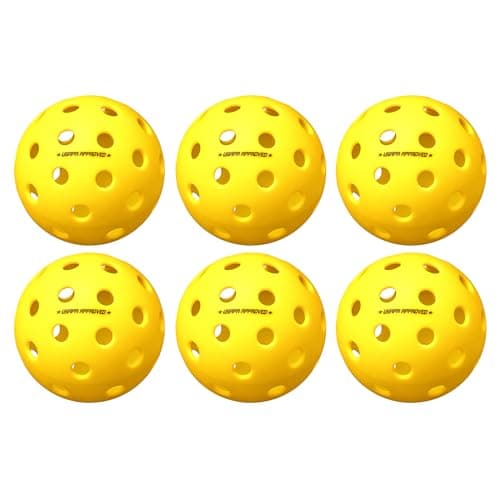
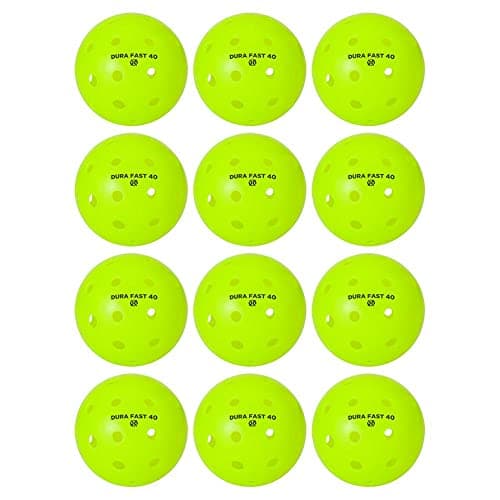
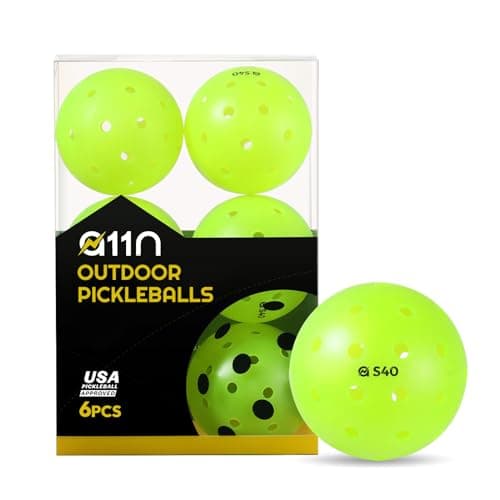
For outdoor play, the Franklin X-40 is the ball to beat — the official ball of USA Pickleball's flagship events, with a true, consistent flight. For the best cold-weather durability and value, the Onix Fuse G2; for fast, competitive play, the Dura Fast 40.
What makes a ball an outdoor ball
Outdoor and indoor pickleballs are genuinely different, and using the wrong one plays badly. Outdoor balls are made of harder, heavier plastic and are drilled with 40 smaller holes so they cut through wind and hold a truer line on a rough, breezy court. They come off the paddle faster and bounce more predictably on concrete. Indoor balls, by contrast, are softer and lighter with 26 larger holes, tuned for a smooth gym floor. If you play outdoors, you want a real outdoor ball; the full contrast is in indoor vs outdoor pickleballs.
How we ranked them
Three things separate good outdoor balls: flight consistency (does it fly true and bounce the same every time, out of the box and after some play), durability (outdoor balls crack eventually, and cold weather accelerates it, so cracking less is a real advantage), and visibility (a bright, easy-to-track color against pavement and sky). We also weigh whether a ball is USA Pickleball approvedand actually used at sanctioned events, which matters if you play rated tournaments. Value — often driven by pack size — breaks ties.
Tournament ball or practice ball?
If you play sanctioned tournaments, buy the ball your events actually use so practice matches competition — often the Franklin X-40 or the specific ball a given circuit sanctions. If you just play recreationally, a durable value ball like the Onix Fuse G2 gives you tournament- grade flight for less, and a small-pack option like the A11N is the low-commitment way to try an approved ball without buying a bulk case. Match the ball to how and where you play, and keep a few spares in your bag— outdoor balls do crack, always at the worst moment.
How to choose an outdoor pickleball
Match the ball to your climate
Cold weather makes hard outdoor balls brittle, and they crack faster the colder it gets. If you play through winter, a ball with a reputation for cold-weather durability, like the Onix Fuse G2, saves you money over a season. In warm climates, durability matters less and you can prioritize flight and speed.
Buy the sanctioned ball if you compete
For tournament players, the most important spec is which ball your events use. Practicing with the same ball you will compete on — its exact speed, bounce and flight — is worth more than chasing a marginally more durable option. All the picks here are USA Pickleball approved; see the equipment standards.
Think in packs, not single balls
Outdoor balls are consumables, so the sensible unit is the pack. Bulk packs drop the per-ball cost sharply for anyone who plays regularly, while a small 6-pack suits a casual player who does not want dozens of balls sitting in a closet. Factor per-ball cost, not sticker price, into your decision.
Do not mix indoor and outdoor
An outdoor ball is too hard and lively for a gym floor, and an indoor ball is too soft and light for wind. Keep the two separate and grab the right one for the surface. If you play both, our general best pickleball balls roundup covers indoor picks too.
How we picked
We have not physically tested this gear
Everyone in this category says they tested twenty paddles. We have not tested any — and we say so. What we did instead: compiled the manufacturer-published specifications (face material, core thickness, grip size, USAPA approval), normalized them, and scored each product against a published rubric weighted for the skill tier this page serves. The scores are judgments from documented research, not measurements we took, because we do not have a lab and are not going to pretend we do.