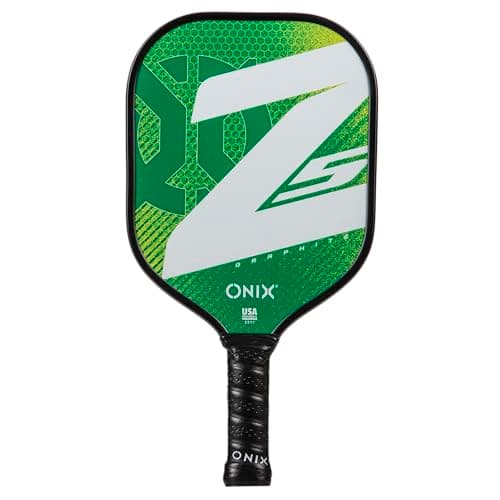
The Onix Z5 is the intermediate sweet spot: the famous wide-body shape now with a carbon face, so you keep the forgiveness that got you here while adding the bite your improving game wants. If you have committed to the soft game and want maximum spin, step up to the JOOLA Hyperion; if you want flagship construction at a mid price, the Vatic Pro Prism is the enthusiast's value pick.
What changes at the intermediate level
By the time you are a solid 3.0–3.5 player, two things are true that were not when you started. First, your contact is consistent enough that a stiffer, higher-spin face rewards you instead of punishing you. Second, you have started to develop a style — you know whether you love to bang from the baseline or grind out the soft game at the kitchen line. The right paddle now leans into that, and the wrong one fights it.
Control-plus-spin is the window most of you want
The 16mm core has become the default at this level for a reason: it is soft enough to reset a hard drive into the kitchen and control a dink, while a textured carbon face still lets you rip topspin when the ball sits up. That combination — a thick control core with a gritty face — is the single most popular paddle profile in the improving-player world, and most of the table below fits it. If you have not yet decided whether you want a fiberglass or carbon face, read carbon vs fiberglass first.
Where the money stops helping
Above roughly the price of the Hyperion, you are into pro-tier paddles where the gains are small and personal — a slightly different balance point, a marginally hotter face. Those are real to a 4.5+ player who can feel them, which is what our advanced hub is for. At 3.0–4.0, a mid-priced carbon paddle gives you 95% of the performance, and the last 5% is not what is holding your game back.
The short answer
Quick picks
#ad · Live prices from the Amazon Product API, as of Sep 5, 2026. Where we have no verified live price, we show none — we would rather leave a gap than print a number that has rotted.
In detail
The picks, in full
Widest sweet spot
Onix Graphite MOD Z5 Paddle
Carbon fiber faceWide-body shapeHoneycomb coreCushion grip
The famous wide-body Z5 shape, updated with a carbon face — a huge sweet spot that flatters an intermediate rally without feeling like a beginner club.
- Control
- 8
- Power
- 7
- Spin
- 7
- Forgiveness
- 9
- Value
- 8
Pros
- +Wide-body shape gives one of the most forgiving sweet spots in the category
- +Carbon face adds bite and a crisper response than the original fiberglass Z5
- +A genuinely iconic shape — it has been a default recommendation for years
Cons
- −The wide body trades a little reach and maneuverability for its forgiveness
- −Not the highest-spin face if grip is your single priority
Don't buy this if…
…you play a fast hands-battle at the net and want maximum maneuverability — a standard or elongated shape moves quicker.
Best value overall
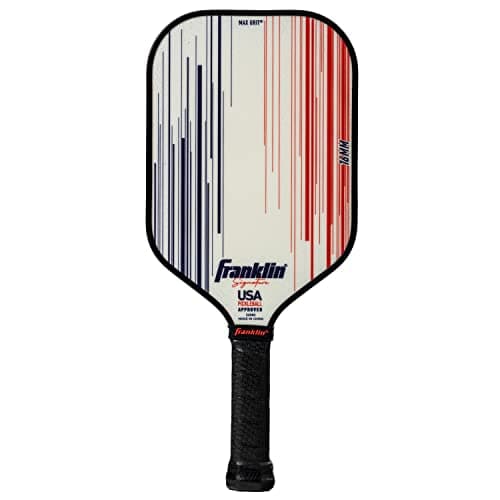
Franklin Signature Series Pro Paddle
MaxGrit surface16mm PP coreUSAPA approvedTournament legal
The value pick that punches above its price: a 16mm polypropylene core and a gritty MaxGrit face on a USAPA-approved, tournament-legal paddle.
- Control
- 8
- Power
- 7
- Spin
- 8
- Forgiveness
- 8
- Value
- 9
Pros
- +16mm core is the thick, control-oriented spec most improving players end up wanting
- +MaxGrit textured face grips the ball for real, usable spin
- +Franklin makes the official US Open ball, and that credibility shows in the build
Cons
- −The elongated pros favor a longer handle; this is a standard shape
- −Graphics are loud if you like an understated paddle
Don't buy this if…
…you want a thin, poppy power paddle — the 16mm core is tuned for control, not raw put-away speed.
Spin and reach
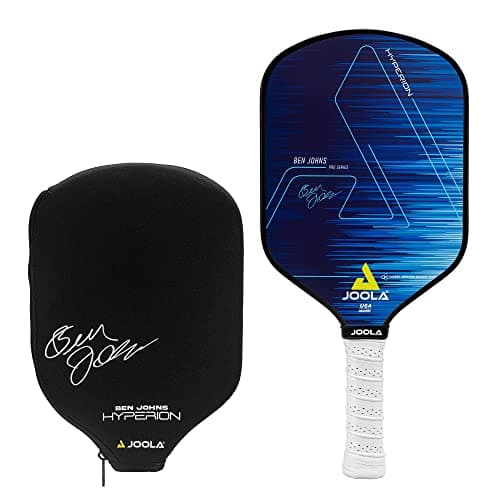
JOOLA Ben Johns Hyperion Paddle
Carbon surfaceHigh-grit faceElongated handlePP honeycomb core
The original Ben Johns signature paddle: a high-grit carbon face and an elongated handle built to generate spin and reach.
- Control
- 8
- Power
- 8
- Spin
- 10
- Forgiveness
- 6
- Value
- 7
Pros
- +High-grit carbon face is built specifically for heavy topspin and slice
- +Elongated handle adds reach and leverage for two-handed backhands
- +Carries the name and design lineage of the sport's most dominant player
Cons
- −The elongated shape has a smaller sweet spot than a wide-body — it rewards clean contact
- −Premium price; overkill for someone still learning to keep the ball in
- −This is the GEN 1 Hyperion — JOOLA has since built newer generations of the Ben Johns line, so it is the original rather than the paddle he plays today
Don't buy this if…
…you are still missing the sweet spot regularly — the reach and spin are wasted until your contact is consistent.
Enthusiast value
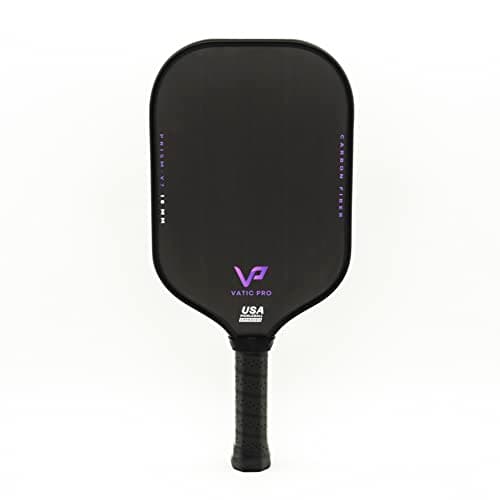
Vatic Pro Prism V7 Carbon Paddle
Raw carbon face16mm coreFoam-injected wallsThermoformed
The enthusiast's value paddle: a thermoformed, foam-injected 16mm carbon build that mimics paddles costing twice as much, from a direct-to-player brand.
- Control
- 9
- Power
- 8
- Spin
- 9
- Forgiveness
- 6
- Value
- 8
Pros
- +Thermoformed build with foam-injected walls is the construction expensive paddles use
- +Raw carbon face grips the ball hard for spin without a gritty coating that wears off
- +A cult favorite in enthusiast circles for delivering flagship specs at a mid price
Cons
- −Thermoformed paddles are stiff and unforgiving on off-center hits
- −A smaller brand — you are trusting the community's word, not a household name
Don't buy this if…
…you are a beginner — a stiff, thermoformed paddle punishes the mishits you are still making.
Brand-name value
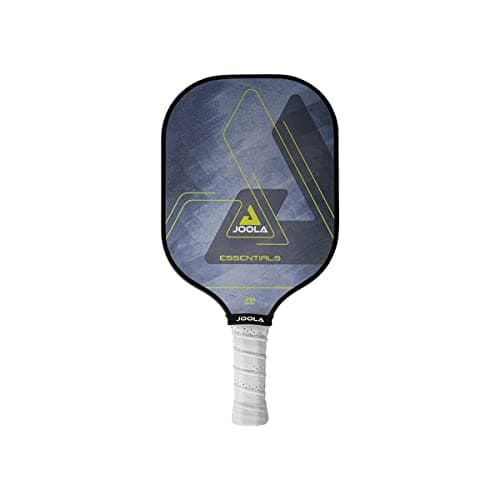
JOOLA Essentials Performance Paddle
Reinforced fiberglassPP honeycomb coreStandard shapeMid-weight
JOOLA's entry paddle brings the brand that sponsors the sport's biggest names down to a first-paddle price — reinforced fiberglass, honeycomb core, no gimmicks.
- Control
- 8
- Power
- 7
- Spin
- 6
- Forgiveness
- 8
- Value
- 8
Pros
- +JOOLA is the paddle brand of the sport's top pros, and the quality control carries down
- +Reinforced fiberglass edge holds up better than bargain paddles that crack at the tip
- +Neutral balance makes it easy to transition onto from a beginner paddle
Cons
- −It is the Essentials line for a reason — the premium feel lives in JOOLA's carbon paddles
- −Spin is fine, not remarkable
Don't buy this if…
…you are chasing the carbon-face spin JOOLA is known for — that is the Hyperion, not this.
How to choose your next paddle
Pick your core thickness by your game
If you win points at the net with soft resets and dinks, a 16mm control core is your friend. If you win by hitting through people from the back, a thinner 13–14mm core adds pop. Most improving players are better served leaning toward control — the soft game is what separates 3.0 from 4.0, and a control core helps you learn it.
Standard vs elongated shape
A standard shape keeps a generous sweet spot and quick hands at the net. An elongated shape (like the Hyperion) trades a little of both for extra reach and leverage — great for a two-handed backhand and baseline drives, less forgiving in a fast hands-battle. Choose based on where you win your points.
Textured carbon is the upgrade that matters
The jump from a smooth fiberglass beginner paddle to a textured raw-carbon face is the single most noticeable upgrade at this level. It is what lets you put real, visible topspin on the ball — and spin is what makes your third-shot drops and drives suddenly start working.
Don't forget the ball and the shoes
A spin-friendly paddle is wasted on a slick, worn-out ball. If you play outdoors, use a fresh outdoor ball with texture. And lateral support from real court shoes does more for your intermediate game than most people admit.
How we picked
We have not physically tested this gear
Everyone in this category says they tested twenty paddles. We have not tested any — and we say so. What we did instead: compiled the manufacturer-published specifications (face material, core thickness, grip size, USAPA approval), normalized them, and scored each product against a published rubric weighted for the skill tier this page serves. The scores are judgments from documented research, not measurements we took, because we do not have a lab and are not going to pretend we do.
Questions
Frequently asked
What is the best pickleball paddle for an intermediate player?+
The Onix Z5 for most — a wide-body carbon paddle that keeps a big sweet spot while adding spin and control. If you want maximum spin, the JOOLA Ben Johns Hyperion; for flagship construction at a mid price, the Vatic Pro Prism.
Is a 16mm paddle better than a 14mm paddle?+
Neither is universally better — 16mm is softer and more control-oriented, 14mm is poppier and more powerful. Most intermediate players developing the soft game prefer 16mm, because control at the kitchen is what raises your rating.
When should I upgrade from a beginner paddle?+
When you can consistently hit the center of the paddle and you find yourself wishing the ball would grip more on your dinks and drives. That is the moment a textured carbon face starts adding real spin instead of just costing you forgiveness.
Do I need a pro-level paddle at 3.5?+
No. A mid-priced carbon paddle delivers around 95% of a pro model's performance. The last few percent — a specific balance or a marginally hotter face — is only felt by advanced players, and it is not what is capping a 3.5 game.
Receipts
Sources
We do not run a testing lab, and we do not pretend to. Our specs come from manufacturer listings and spec sheets; our rules and dimensions come from the official rulebook. Where we could not verify something, we say so on the page rather than quietly leaving it out. Read our full method.