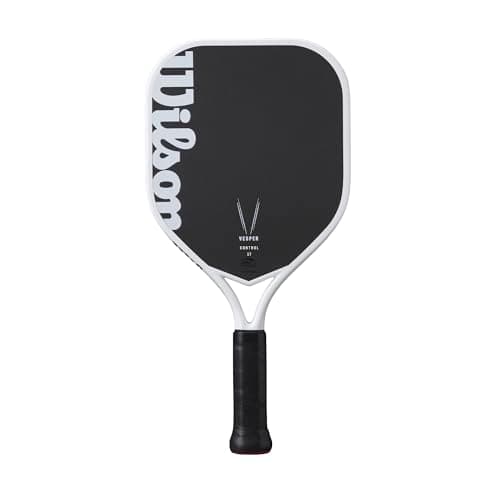
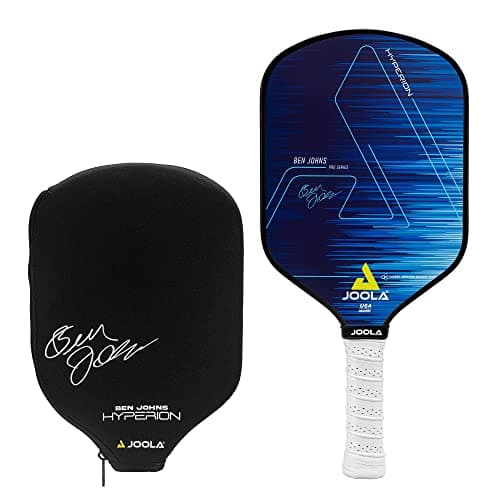
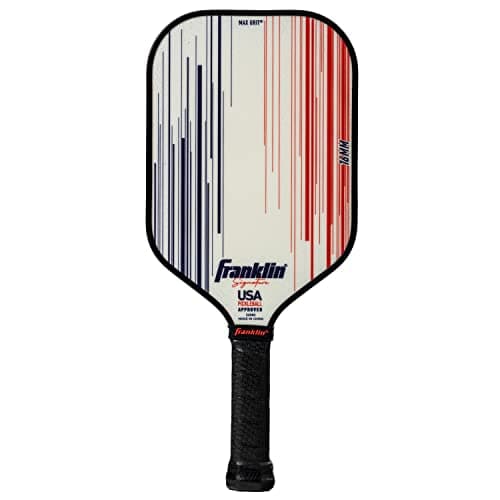
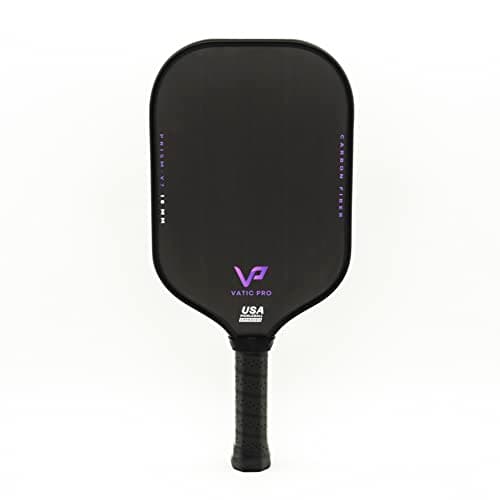
For spin and control together, the Vatic Pro Prism is our top pick — a raw T700 carbon face on a 16mm core that scores a 9 on both. The Wilson Vesper leans further toward control, the JOOLA Hyperion further toward spin, and the Franklin Signature Series Pro is the budget way to get most of both.
Why this is a different list from “best for spin”
We already rank paddles purely for spin and purely for control, and the two lists do not agree with each other. They should not. Spin comes from face texture and a stiff, fast face that lets you brush up the back of the ball; control comes from a thick core that absorbs pace so a dink dies in the kitchen instead of popping up. A paddle built for one usually gives something up on the other — the spin list is topped by a paddle with a forgiveness score of 6, and the control list by a paddle with a power score of 6.
This page is for the player who refuses that trade. In practice that is the 3.5-to-4.0 intermediate who has stopped bashing, started shaping shots, and wants a topspin drive that dips and a third-shot drop that lands. The picks are the paddles whose spin and control scores are both high, ranked by the sum of the two and then by how little they give up elsewhere.
What we looked for
A textured carbon face.Every pick except the Franklin has a carbon face, and the Franklin's MaxGrit coating is the reason it makes the list at all. Raw carbon holds its texture longer than a painted grit, which our carbon vs fiberglass guide covers. A 16mm or thicker core. Thickness is what turns a fast, spinny face into a controllable one. Four of the five picks are 16mm; the Vesper is 17mm. Both scores at 8 or above. A paddle scoring a 10 on one and a 6 on the other belongs on a specialist list, not here.
We did not rank for power, and this list is not the place to look for it. A paddle that scores high on both spin and control is, almost by definition, one that asks you to generate your own pace — see the power picks if that is the missing piece of your game.
How to pick between them
The Vatic Pro Prismis first because its scores are the most balanced — 9 and 9 — and because Vatic Pro positions the paddle for exactly this reader: not as powerful as a full thermoform, not as soft as an older-generation paddle. It is the paddle to buy if you want one that does both jobs and do not want to think about it again.
The Wilson Vesper is the pick if control is the bigger half of your problem. Its 17mm core is the thickest in our registry and it scores a 10 on control with an 8 on spin; what it gives up is put-away power, which is the honest price of that much touch. The JOOLA Hyperionis the mirror image — a 10 on spin with an 8 on control — and the one to take if you brush the ball hard and want the grittiest face here, with the elongated 5.5-inch handle a two-handed backhand wants.
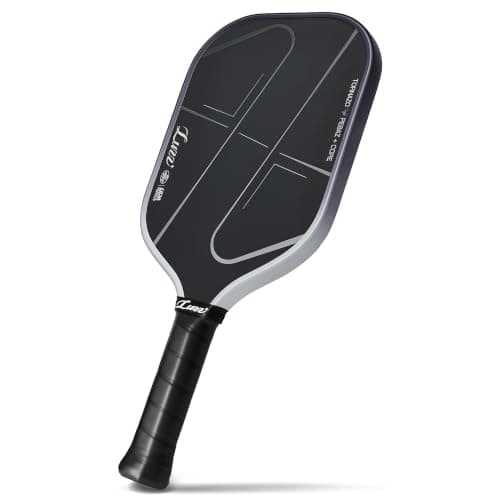
The Luzz Pro 4 Tornazo matches the Prism at 9 and 9 and adds a forgiveness score of 8, which is unusual for a spin paddle; it sits fourth only because its value score is the lowest here. And the Franklin Signature Series Prois the paddle for a player who wants to try shaping shots before spending three times as much — 8 on both, with a coating that our review notes will wear sooner than raw carbon.
Spin is technique first, texture second
Worth saying plainly on a page ranking paddles for spin: the paddle is the smaller half of it. Topspin comes from brushing up the back of the ball with a low-to-high swing and a slightly closed face, and a player who does that with a beginner paddle will generate more spin than a player who does not with the Hyperion. If your grip is the limiting factor, our guide to how to hold a pickleball paddle covers the small shift toward an eastern grip that opens up a topspin forehand without wrecking your backhand.
Control is mostly the core
The thick-core effect is real and it is the reason this list exists. A 16mm polymer honeycomb holds the ball on the face fractionally longer and returns less of its energy, which is what makes a soft dink stay soft. Our 14mm vs 16mm guide goes through it; the short version is that if you want control, do not buy the 14mm version of any paddle here, even though most of them are sold in both.
Texture wears; plan for it
Every gritty face gets smoother with play, and a painted grit goes first. When the spin fades, the paddle has not necessarily died — but the reason you bought it has. Our guide to how long a paddle lasts covers what wear looks like and when a smooth face means it is time to replace, and cleaning the face recovers some of the bite that is really just dirt.
Approval
USA Pickleball caps surface roughness and, under the newer testing regime, paddle power (PBCoR). A face gritty enough to fail the roughness limit is not approved, which is why every paddle here is one that its manufacturer sells as approved. Confirm the model on the approved list before a tournament; the link is in the sources.