Skip to content
Four Oh Club

Balls, bags & sets · Gear

The Best Pickleball Training Equipment

Most training gear sells you the feeling of improving. These five tools create reps you would not otherwise get — ranked by how much of the skill they build actually shows up in a game, with published specs and live prices.

By Stephen V.Updated How we score
#ad

We earn a commission when you buy through our Amazon links, at no extra cost to you. It never changes our rankings, and we say so when the cheaper paddle is the better buy. How this works.

Almost nothing sold as “pickleball training equipment” makes you better. The handful that does shares one property: it manufactures repetitions you cannot get in a social game. A doubles evening gives you maybe a dozen third-shot drops and a handful of real dinks, spread across two hours. A rebounder gives you two hundred dinks in twenty minutes. That gap — reps, not gadgetry — is the only thing this page is ranking.

The criteria

Four tests, applied in this order. A product had to pass the first three to appear at all.

  1. Does it create reps you would not otherwise get? A tool that only works when you already have a partner, a court and an hour is not solving the problem that stops people practicing. The best tools here work alone, at home, in the time you actually have.
  2. Does the skill transfer? Some drills build a skill that exists only inside the drill. Hitting a smaller paddle face transfers directly, because the correction is your contact point. A gizmo that changes your swing path in a way a real paddle never would does not.
  3. Can you use it where you live?Noise and space are the two real constraints. An outdoor plastic ball against a garage door at 7am will end your neighborhood standing; a foam ball at a published ~60 dB will not. Courts have rules too — the same facilities that publish “non-marking shoes are required” often restrict what equipment you may set up.
  4. Price per rep.A $30 tool used twice a week for a year is the cheapest coaching available. A $900 machine used monthly is the most expensive. Frequency, not price, decides which is which — and only you know your frequency.

What we left out, and why

Weighted and oversized “power” trainers. Swinging something much heavier than your paddle changes your mechanics while you swing it; whether anything good survives the switch back is a claim nobody in this category supports with evidence. If your aim is arm health rather than power, our tennis elbow page is the more useful read.

Rebound boards without published dimensions. Several angled dink boards came up in the search; the ones we checked either had thin stock, no published surface size, or both. We are not ranking a product whose basic geometry the seller will not state.

Anything we could not verify as buyable.Every pick here was resolved and confirmed live on the day of publication — the title matches the brand and model named, and the listing returned a real offer. Training gear is a churn-heavy category full of dead listings, which is exactly why the prices on this page come from our price pipeline rather than from a number typed into the text.

Where each tool fits by level

LevelThe limiting skillWhat to buy first
BeginnerClean contact; getting the ball to go where you aimedFoam balls, then the trainer paddle
IntermediateDink and reset consistency under paceRebounder, plus targets for the third shot
AdvancedRepeatable placement at speedTargets and a ball machine

That ordering is the whole buying guide in three rows. A beginner who buys a ball machine has bought a device that feeds balls faster than their contact can handle; an advanced player who buys a trainer paddle has bought a correction for a problem they solved two years ago. Our ratings guide explains the levels if you are not sure which row is yours.

The one that surprised us

The trainer paddle. On paper a cut-down paddle sounds like a novelty; on the published spec sheet it is a real paddle — a 16mm polypropylene honeycomb core with a textured T700 carbon face at 7.7 oz average, the same construction as paddles we rank on the main paddle list— built at 15 by 5.1 inches so the entire face sits where a normal paddle's sweet spot is. There is no way to fool it. If you catch the ball off-center, you miss, and you find out immediately rather than three dead dinks later. That immediate feedback is the mechanism every good training tool has and every bad one fakes.

Noise is the real constraint, not money

The reason most people do not practice at home is not the cost of equipment. It is that a hard plastic pickleball against a wall is genuinely, measurably loud, and the sport has a well-earned noise reputation that has gotten courts closed. GAMMA publishes an approximate 60 dB figure for its foam ball against the harder crack of an outdoor plastic ball, which is the difference between a conversation and an argument with a neighbor. It is also the cheapest thing on this page, which is why it sits second rather than fifth: a $13 purchase that converts your garage into a practice space beats a $300 one that needs a court.

The trade is honest and worth stating plainly: foam does not fly like plastic. It is slower, it carries less, and it will not reproduce the pace of a real drive. You are buying contact reps and hand speed, not a simulation of a match.

How the scores work here

The four new products on this page are scored on a different set of metrics from a paddle or a shoe, because the question is different. Skill transferasks how much of what the tool builds shows up in a game — it is the heaviest consideration and the one that separates the trainer paddle from a novelty. Build quality is a read on published construction, and it is deliberately conservative where a seller publishes nothing. Ease of use is really a measure of friction: a tool you have to assemble, carry and book a court for gets used a quarter as often as one that lives by the door. Versatility covers how many drills the thing supports, and value is cost against the reps it generates, not against its competitors. The full rubric and how we weight it is on our methodology page.

Two consequences worth flagging. A cheap tool can out-score an expensive one here and does — the foam balls beat the machine on three of five metrics. And a product loses points for undocumented construction even if it is perfectly good, because an unverifiable claim is not a feature. That is the same standard we apply to budget paddles, and it is the reason the rebounder scores a 6 for build quality rather than a question mark.

The mistake that wastes the most practice time

Hitting without counting. Most solo practice is a pleasant twenty minutes of rallying that leaves no trace, because nothing was measured and nothing was at stake. The fix costs nothing: pick one drill, define a success, and keep a number. Consecutive dinks before a miss. Drops out of ten that land in the kitchen. Serves out of twenty inside the target. A number turns a hit-around into a session you can beat next week, and it is the single biggest difference between players who own training gear and players who improve with it.

The second mistake is drilling only what you are good at. Everyone's rebounder session drifts toward comfortable mid-pace volleys, because missing is unpleasant. If your miss rate in a drill is under one in ten, the drill is too easy to be teaching you anything — move the target, add pace, or switch to the trainer paddle and let it hurt for a while. Our improvement guide covers the practice structure side of this, and the doubles strategy guide covers what to do with the skills once they hold up.

Build a 30-minute solo session

Equipment without a plan is clutter. A session that uses most of this page and actually improves things: five minutes of warm-up; ten minutes of dinks against the rebounder, counting consecutive returns and restarting the count on every miss; five minutes with the trainer paddle doing the same drill at half pace, where the miss rate will humble you; and ten minutes of targets — put a spot at each kitchen corner and hit third shot drops at it, scoring one point per landing inside. Record the three numbers. Next week, beat them. Our drills guide has more structure if you want it, and our dinking guide covers the technique the rebounder reps are supposed to be grooving.

The short answer

Quick picks

#Paddle / gearBest forScorePrice
01
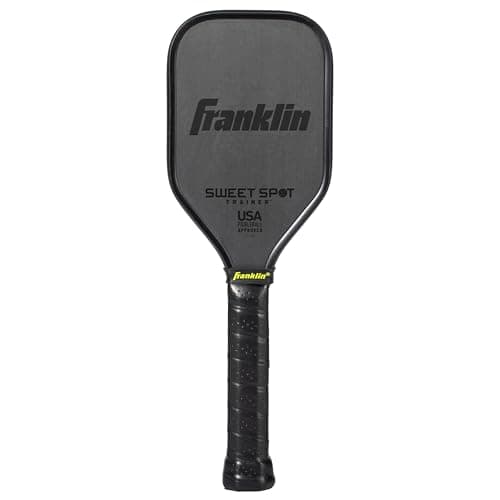
Franklin Sports Franklin Sports Sweet Spot Training Paddle
Franklin Sports Sweet Spot Training Paddle

A real 16mm carbon paddle shrunk to the size of a normal paddle's sweet spot — the cheapest honest way to fix sloppy contact.

Fixing off-center contact
8.0
$54.90Amazon
02
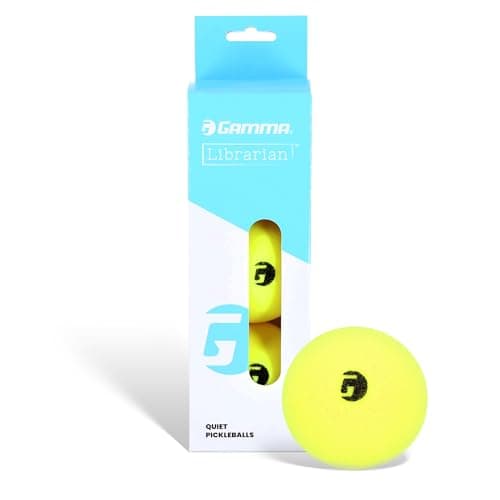
GAMMA GAMMA Librarian Foam Pickleballs
GAMMA Librarian Foam Pickleballs

Holeless foam balls that GAMMA rates at approximately 60 decibels — the thing that makes practicing at home possible without a neighbor dispute.

Practicing where noise matters
8.0
$12.99Amazon
03
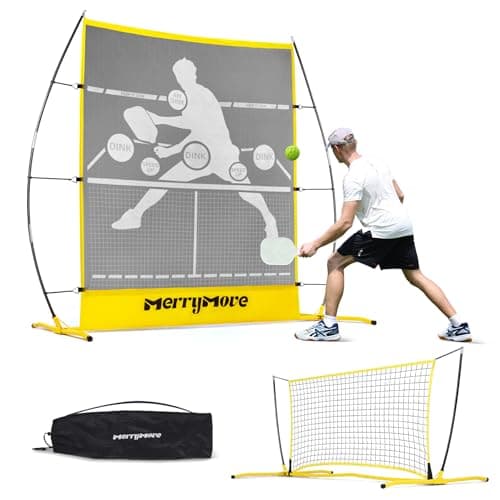
MerryMove MerryMove 6ft Pickleball Rebounder & Mini Net
MerryMove 6ft Pickleball Rebounder & Mini Net

The cheapest way to get a partner who never misses — a 6-foot frame that works as a rebound wall and as a mini net.

Solo dinking and reset practice
7.2
$54.99Amazon
04
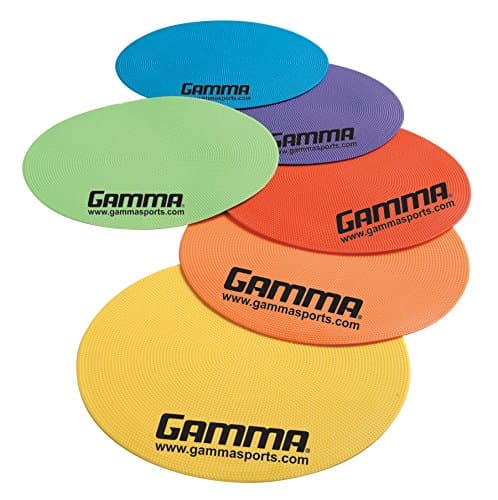
GAMMA GAMMA Rainbow Spots (6-pack)
GAMMA Rainbow Spots (6-pack)

Six flat 10-inch vinyl targets that stay put when a ball hits them — the cheapest upgrade from hitting at nothing to hitting at something.

Target drills on any court
7.8
$29.72Amazon
05
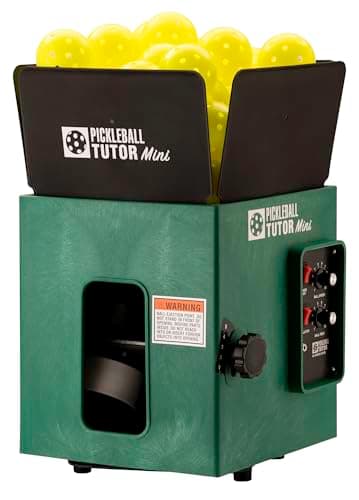
Sports Tutor Pickleball Tutor Mini with Oscillator
Pickleball Tutor Mini with Oscillator

The one to buy if you have to carry it. Compact, light, US-built, and it still oscillates so the ball does not land in the same square all session.

Carrying it to the court
7.4
$979.00Amazon

#ad · Live prices from the Amazon Product API, as of October 4, 2026. Where we have no verified live price, we show none — we would rather leave a gap than print a number that has rotted.

In detail

The picks, in full

01
Franklin Sports Franklin Sports Sweet Spot Training Paddle

Fixing off-center contact

Franklin Sports Sweet Spot Training Paddle

15" x 5.1" face16mm PP coreT700 carbon face7.7 oz avg
8.0/10

A real 16mm carbon paddle shrunk to the size of a normal paddle's sweet spot — the cheapest honest way to fix sloppy contact.

Skill transfer
9
Build quality
8
Ease of use
8
Versatility
6
Value
9

Pros

  • Published 5.1-inch width puts the whole face where a normal paddle's sweet spot is, so a mishit simply misses
  • Built like a paddle rather than a toy: T700 carbon face over a 16mm polypropylene honeycomb core
  • The 7.3-inch handle lets you practice two-handed backhands with it, not just forehand contact

Cons

  • It is a drill tool, not a game paddle — it is not the paddle you take into a match
  • Progress is slow and unglamorous; this only pays off if you actually use it weekly

Don't buy this if…

…your problem is strategy rather than contact. A trainer paddle sharpens the strike, not the shot selection.

$54.90View on Amazon

$69.9922% off

Price as of October 4, 2026. Prices change — Amazon's is the one that counts.

#ad · we may earn a commission from this link to Franklin Sports Sweet Spot Training Paddle

02
GAMMA GAMMA Librarian Foam Pickleballs

Practicing where noise matters

GAMMA Librarian Foam Pickleballs

Foam, no holes2.91" diameter0.847 oz~60 dB (claimed)
8.0/10

Holeless foam balls that GAMMA rates at approximately 60 decibels — the thing that makes practicing at home possible without a neighbor dispute.

Skill transfer
6
Build quality
7
Ease of use
10
Versatility
8
Value
9

Pros

  • GAMMA publishes an approximate 60 dB noise level, which retailers describe as roughly half the noise of an outdoor plastic ball
  • Published diameter of 2.91 inches and a true bounce, so the contact point is close to a real ball
  • Works on hard and wood laminate surfaces, which is most garages, driveways and gym floors

Cons

  • Foam flies slower and shorter than plastic, so it will not reproduce a real drive or a real third shot
  • Softer construction means it will not survive outdoor concrete the way a hard outdoor ball does

Don't buy this if…

…you want game-realistic ball flight. These are for noise-constrained reps, not for simulating match pace.

$12.99View on Amazon

Price as of October 4, 2026. Prices change — Amazon's is the one that counts.

#ad · we may earn a commission from this link to GAMMA Librarian Foam Pickleballs

03
MerryMove MerryMove 6ft Pickleball Rebounder & Mini Net

Solo dinking and reset practice

MerryMove 6ft Pickleball Rebounder & Mini Net

6 ft frameRebounder + mini netPortableIndoor or outdoor
7.2/10

The cheapest way to get a partner who never misses — a 6-foot frame that works as a rebound wall and as a mini net.

Skill transfer
7
Build quality
6
Ease of use
7
Versatility
8
Value
8

Pros

  • Two tools in one frame: a rebound surface for solo reps and a low net for short-court dinking games
  • A rebounder returns the ball at you relentlessly, which is exactly the volume a dink or reset drill needs
  • Costs a fraction of a ball machine while covering the two drills most players actually need

Cons

  • The seller publishes almost nothing beyond the listing — no tension spec, no frame gauge, no material detail
  • A rebound comes back flatter and faster than a real dink, so it trains your hands more than your touch

Don't buy this if…

…you want programmable, repeatable feeds. That is a ball machine's job, and a rebounder is not a substitute.

$54.99View on Amazon

$74.9927% off

Price as of October 4, 2026. Prices change — Amazon's is the one that counts.

#ad · we may earn a commission from this link to MerryMove 6ft Pickleball Rebounder & Mini Net

04
GAMMA GAMMA Rainbow Spots (6-pack)

Target drills on any court

GAMMA Rainbow Spots (6-pack)

10" diameterFlat disc markers6 per packAssorted colors
7.8/10

Six flat 10-inch vinyl targets that stay put when a ball hits them — the cheapest upgrade from hitting at nothing to hitting at something.

Skill transfer
7
Build quality
7
Ease of use
9
Versatility
9
Value
7

Pros

  • GAMMA describes its 10-inch flat spots as non-slip and resistant to warping from light impacts, so they stay where you put them
  • Six colors lets a coach or a partner call a target mid-rally rather than just naming a corner
  • Published 10-inch diameter is a sensible target size for a kitchen-line drop or a serve to the corner

Cons

  • Generic court training gear, not pickleball-specific — it is the same product tennis coaches have used for years
  • GAMMA publishes no material composition beyond durable and flexible, so outdoor longevity is unknowable from the spec sheet

Don't buy this if…

…you only play games. Targets only pay off if you actually run drills with a purpose and a count.

$29.72View on Amazon

Price as of October 4, 2026. Prices change — Amazon's is the one that counts.

#ad · we may earn a commission from this link to GAMMA Rainbow Spots (6-pack)

05
Sports Tutor Pickleball Tutor Mini with Oscillator

Carrying it to the court

Pickleball Tutor Mini with Oscillator

Built-in oscillatorLightweight and compactMade in USA
7.4/10

The one to buy if you have to carry it. Compact, light, US-built, and it still oscillates so the ball does not land in the same square all session.

Ball control
7
Capacity
6
Portability
9
Durability
8
Value
7

Pros

  • Small and light enough that taking it to a public court is realistic, not theoretical
  • Still oscillates, which is the feature that separates practice from a feeding drill
  • Built in the US by a company that only makes ball machines

Cons

  • The listing states no hopper capacity, speed range or spin control
  • Compact machines hold fewer balls, so you collect more often

Don't buy this if…

…you want programmable spin and a big hopper. Size and simplicity are the trade you are making.

$979.00View on Amazon

Price as of October 4, 2026. Prices change — Amazon's is the one that counts.

#ad · we may earn a commission from this link to Pickleball Tutor Mini with Oscillator

When a ball machine is actually worth it

A machine does one thing nothing else here does: it feeds the same ball to the same place at the same pace, as many times as you want. That is the right tool for grooving a return or a drop under repeatable conditions, and nothing on this page substitutes for it. The honest threshold is frequency. Drilling twice a week for a season, a machine is cheaper per rep than a weekly coaching hour. Drilling twice a month, it is an expensive object that lives in your trunk. Our ball machine roundup covers the full range, from the compact unit ranked here up to the club-grade ones.

Check the venue rules before you buy a rebounder

Freestanding equipment on a shared public court is a social question as much as a rules question. Indoor facilities publish equipment and footwear policies — the same policies that state things like “non-marking shoes are required” — and many prohibit setting up anything freestanding during open play. Outdoors, a rebounder on a court during a queue will make you unpopular fast; our etiquette guide covers the norms. The happiest home for a rebounder is a driveway, a garage or an empty court at an off hour.

What you do not need to buy

A second paddle for practice (use the one you play with, so the feel transfers), a net for solo drills (a rebounder or a line of targets does more per dollar; if you do want one, the net roundup covers it), or special shoes for home practice. If you are kitting out from scratch rather than adding to a bag, start with our equipment listinstead — training gear is the second purchase, not the first.

What we cannot tell you

We have not drilled with any of these five products, and we did not measure a decibel level, a rebound angle or a wear rate. Every figure above is published by the manufacturer or a specialty retailer and is attributed in the sources below. Where a seller publishes nothing — which is the case for the rebounder's frame and materials — we have said so on the product card rather than filling the gap with a guess. The scores are our judgment of the published evidence against the rubric on our methodology page, and the prices come from our live price pipeline, not from this text.
How we picked

We have not physically tested this gear

Everyone in this category says they tested twenty paddles. We have not tested any — and we say so. What we did instead: compiled the manufacturer-published specifications (face material, core thickness, grip size, USAPA approval), normalized them, and scored each product against a published rubric weighted for the skill tier this page serves. The scores are judgments from documented research, not measurements we took, because we do not have a lab and are not going to pretend we do.

Questions

Frequently asked

What pickleball training equipment is actually worth buying?
In order: quiet foam balls (so you can practice at home at all), a trainer paddle with a reduced face (so contact errors are obvious), a rebounder (for dink and reset volume), court targets (for placement), and a ball machine once you are drilling at least twice a week. Everything else is optional.
Do training paddles actually work?
A reduced-face trainer works by a simple mechanism: the face is roughly the size of a normal paddle's sweet spot, so an off-center hit misses instead of limping over. The Franklin model here publishes a 15 x 5.1 in face on a 16mm polypropylene core with a T700 carbon surface, so the feel is close to a real paddle. It fixes contact, not shot selection.
How do I practice pickleball at home without annoying the neighbors?
Use foam balls. GAMMA publishes an approximate 60 dB level for its Librarian foam ball, against the much sharper crack of a hard outdoor plastic ball. Pair them with a rebounder or a garage wall and you have a practice space that does not generate complaints.
Is a rebounder better than a ball machine?
They do different jobs. A rebounder is cheap, portable and relentless, and it is excellent for dinks and hand speed; the ball comes back flatter and faster than a real dink would. A machine gives you repeatable, programmable feeds at the pace and place you choose, and costs several times as much. Start with the rebounder.
What should a beginner buy first?
Foam balls and a trainer paddle, in that order — together they cost less than a decent paddle. The limiting skill at the start is clean contact, and those two tools attack exactly that. See our beginner hub for the rest of the starter kit.
Can I use a wall instead of a rebounder?
Yes, and it is free. A flat wall returns the ball harder and lower than a tensioned rebounder, which makes it better for hand speed and worse for soft-game touch. If you have a suitable wall, use it with foam balls first and see whether you keep showing up before spending anything.

Keep reading

Receipts

Sources

We do not run a testing lab, and we do not pretend to. Our specs come from manufacturer listings and spec sheets; our rules and dimensions come from the official rulebook. Where we could not verify something, we say so on the page rather than quietly leaving it out. Read our full method.