Outdoor pickleball is the harder test of a shoe, and it is a durability test rather than a grip test. Outdoor courts are asphalt or concrete finished with a textured acrylic coating, and that texture — the thing that gives the court its pace — works on rubber the way a file works on a fingernail. A shoe chosen for maximum grip can lose its tread in a few months of regular outdoor play. These four are ranked on the evidence that actually predicts survival.
The criterion nobody else uses
A shoe appears on this page only if its maker, or a specialty retailer quoting the maker, publishes something concrete about the outsole: a named compound, a stated tread pattern, or an explicit surface designation. We score nothing here on how a shoe “feels outdoors,” because we have not worn these shoes, and a guide that pretends otherwise is the thing this site exists to be an alternative to.
That rule has teeth. Several shoes we rank highly on the main court shoe list are absent from this one, not because they are bad but because their makers publish a cushioning story and say nothing at all about the rubber. On a question that is entirely about rubber, that silence is the answer.
What each maker actually publishes
| Shoe | Published outsole evidence | What it points to |
|---|
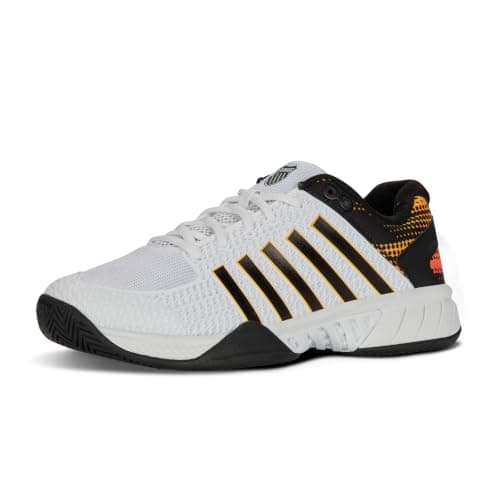
| K-Swiss Express Light | Non-marking Aosta 7.0 rubber, modified herringbone tread, DragGuard wear resistance, DuraWrap toe | Listed as ideal for outdoor hard courts |
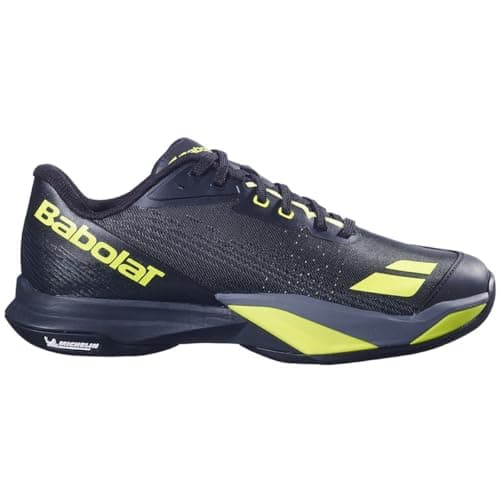
| Babolat Jet Mach 4 | Michelin rubber outsole, described for traction and durability on all court surfaces | All court, performing best on hard courts |
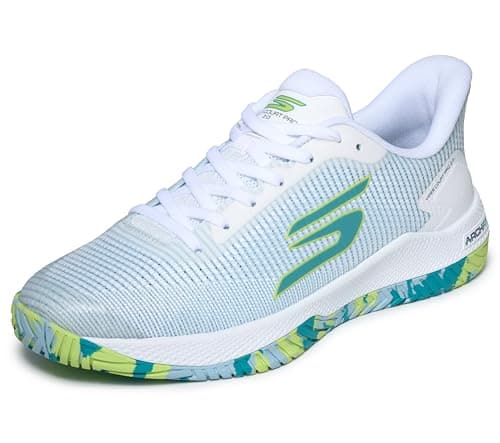
| Skechers Viper Court Pro 2.0 | Goodyear Gold compound “built for increased durability”; ULTRA GO midsole | Durability claim, but no surface stated either way |
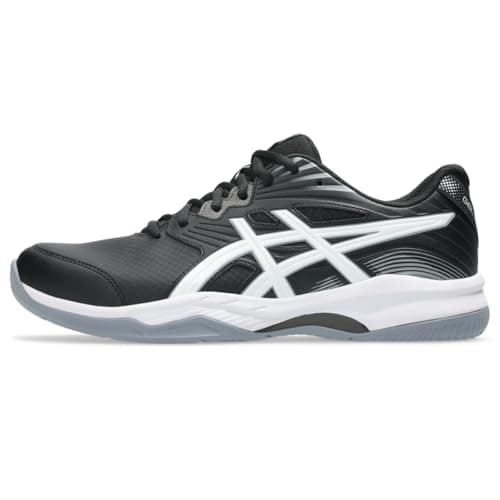
| ASICS Gel-RENMA 2 | Wrap-up outsole, wider gauge, flexibility grooves; no compound named (the first RENMA listed ASICS' AHAR rubber) | Framed by ASICS for indoor players |
Read down the middle column and the ranking explains itself. One shoe publishes a compound, a pattern, a wear technology and a non-marking claim. Two publish a tire company's rubber — which is a durability claim a brand can be held to. One publishes a shape and an intent, but no material at all.
The three things that decide outdoor life
1. Compound hardness
This is a trade, not a feature. Softer rubber deforms into the surface, which is grip; harder rubber resists abrasion, which is life. Outdoors you want the hard end of that range, which is why the shoes here name compounds — Aosta 7.0, Michelin, Goodyear Gold — rather than describing how sticky they feel. You will give up a sliver of bite for it, and on a textured outdoor court you will not miss it, because the surface is supplying grip of its own.
2. Where the rubber is, not just what it is
Outdoor wear is not even. It concentrates on the outside edge of the forefoot, where you push off laterally, and on the medial toe, which drags on serves and on stretched backhands. A shoe that protects those two zones specifically — K-Swiss calls its toe version DuraWrap — lasts meaningfully longer than one with the same compound and no reinforcement. When you are comparing two listings, that detail beats the star rating.
3. Non-marking, if you ever go indoors
Non-marking is a property of the compound, and it is the one spec an indoor facility will actually check: Kent State's published court policy states it in four words, “Non-marking shoes are required,” and that is typical of gyms and rec centers. It does not matter at all on an outdoor court. It matters enormously the first winter night your group moves inside, which is why we treat it as a tiebreaker rather than a footnote. Our indoor vs outdoor court shoe explainer covers the surface comparison in full if that is the question you actually came with.
What does NOT change outdoors
Nearly everything else. Lateral support, torsional rigidity, a low stable platform, heel containment, forefoot cushioning — identical requirements indoors and out, because the footwork is identical. Anyone selling you a fundamentally different shoe for outdoor play is overselling a compound choice. Our how to choose court shoes guide covers that shared core; this page is the outdoor delta on top of it, and if you have not read it, read it first.
Why the ASICS is here at all, ranked last
Because honest ranking sometimes means including the shoe you would not buy for this job. The Gel-RENMA 2 is the best-cushioned pickleball-specific shoe in our registry and our top women's pick, and plenty of people play outdoors in it happily. But ASICS frames it for indoor players and names no outsole compound, so on this page's one criterion it finishes fourth of four. If you play mostly indoors and occasionally outside, flip the order: read our Gel-RENMA 2 review and buy it.
Sliding, and why outdoor players should not
Controlled sliding is a real technique on some surfaces, and Skechers markets the Viper's Goodyear compound partly on it. On outdoor acrylic over concrete, a slide is how you convert an outsole into dust and an ankle into a problem: the surface is designed to grip, so the slide either does not happen or happens as a sudden release. Plant and push instead. If your shoes show a scuffed patch on the outside edge of the forefoot, that is a footwork tell, not a shoe defect, and our injury guide covers what that loading pattern does further up the leg.
Widths and women's versions, because outdoor play punishes a bad fit
A shoe that fits badly outdoors does not just feel worse — it wears worse, because your foot moves inside it and the outsole scrubs instead of gripping. Two things worth knowing before you pick from this list. The K-Swiss Express Light is sold in wide versions for both men and women as well as standard, which is unusual in this category and a real argument for it if your foot is broad. The ASICS Gel-RENMA 2, by contrast, is listed in D (medium) only. If you need a wide, start from our wide-feet picksinstead of trying to size up out of the problem; a half size longer buys length you do not want and no extra room across the ball of the foot. Women's lasts exist for several shoes in our registry, and our women's rankingsorts them properly rather than treating a women's size as a smaller men's shoe.
Think in cost per hour, not price
The spread between the cheapest and most expensive shoe on this page is large, and the instinct is to read that as a quality ladder. Outdoors it is closer to a durability lottery with a documented favorite. A shoe that costs forty percent more and lasts the same number of hours on concrete is simply a more expensive consumable; a cheaper shoe with a named abrasion-resistant compound and a reinforced toe may well be the better buy per hour played. That is why the cheapest pick here ranks first, and it is the same logic our budget court shoe page applies across the whole category.
One caveat to keep this honest: nobody publishes hours-to-failure for a court shoe, ourselves included, so cost per hour is a way to think rather than a number we can hand you. What you can do is track your own. Write the month on the inside of the tongue when a pair goes into rotation. After two or three pairs you will know your real replacement interval, which is worth more than any guide's estimate — including this one's.
Treat outdoor shoes as a consumable
The useful mental shift: outdoors, a court shoe is closer to a tire than to a jacket. It has a service life measured in hours of play, and paying more does not exempt you — it mostly buys you more hours. Two practical consequences. Buy the pair whose outsole is documented rather than the pair with the best upper, because the upper will outlive the sole. And when the tread goes smooth but the midsole is still alive, retire the pair to indoor duty instead of binning it, provided it is still non-marking and not picking up grit that will mark a floor.
Reading a listing when the brand says nothing
Three signals, in order of usefulness. A named compound (Aosta, Michelin, Goodyear) means the maker is standing behind durability. A named tread pattern — herringbone, modified herringbone, pivot points — tells you the shoe was designed for multi-directional sport rather than straight-line running. Toe and drag protection tells you the maker expects the shoe to be dragged, which is exactly what happens on a serve. A listing with none of the three has told you nothing about the outsole, whatever its rating says.
How outdoor shoes actually die
Two separate failure modes, and most players only watch one. The outsole wears smooth, which is visible and obvious. The midsole packs down, which is invisible: the shoe still grips, still looks fine, and quietly starts passing the court straight into your knees. Our shoe lifespan guide covers the signals for both. The short version: smooth tread is outdoor wear; aching legs with good tread is dead foam.
Heat, grit and the things nobody mentions
A dark outdoor court in midsummer runs far hotter than the air above it, and heat softens rubber, which accelerates wear on exactly the day you are playing longest. Grit blown onto the surface acts as loose abrasive underfoot. Neither is a reason to buy a different shoe; both are reasons to rinse the soles occasionally, to avoid storing shoes in a hot trunk, and to expect a summer of outdoor play to cost more tread than a winter of it.
What we cannot tell you
We have not worn any of these four shoes, and we have not measured an outsole's hardness or its wear rate on any surface. What we did was read each maker's published outsole claims (or a specialty retailer quoting them), check a facility's actual footwear policy rather than assuming the non-marking rule, verify every listing live on the day of publication, and score the shoes against the rubric on our methodology page. The claims are theirs; the judgment of what they mean for a concrete court is ours.