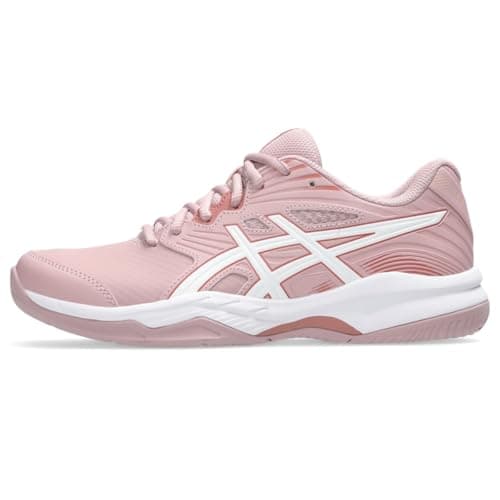
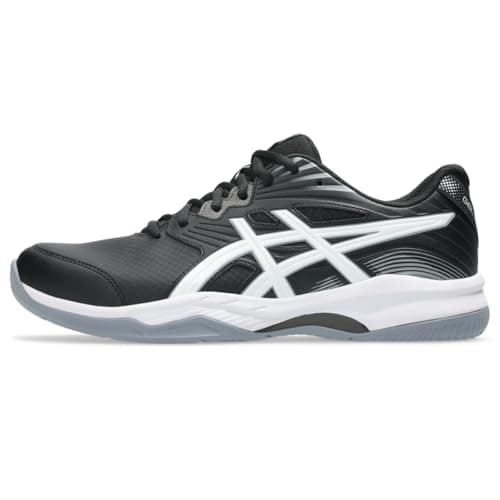
The ASICS Gel-RENMA 2 is the cushioning pick in our shoe registry: a purpose-built pickleball court shoe with forefoot GEL, a TRUSSTIC anti-twist midsole plate and a wrap-up outsole, at a published 12.8 ounces. It is the shoe we rank first on our best pickleball shoes for women list and keep near the top of the main court shoe ranking. It is also the shoe ASICS itself describes as built for indoor players, which matters more than most reviews admit if your games are on outdoor concrete.
What it is
ASICS has made court and running shoes for decades, and the GEL-RENMA line is its answer to pickleball specifically rather than a tennis shoe with a new sticker. The version on sale now is the second generation, style 1071A124, sold in men's and women's lasts. We re-verified both Amazon listings on the day this review was published: the men's listing (ASIN B0FFDV3CBM) returned “ASICS Men's Gel-RENMA 2 Pickleball Shoes” with a thin stock warning on the size the listing defaults to, and the women's listing (B0FV48F1ZY) returned “ASICS Women's Gel-RENMA 2 Pickleball Shoes” in stock. Both buy buttons on this page point at those listings and carry a search fallback if a size or colorway disappears, which on shoe listings happens constantly.
The published spec sheet
| Spec | Published figure | Source |
|---|
| Upper | No-sew film covered soft mesh vamp with synthetic leather midfoot overlays | ASICS copy via Do It Tennis; Holabird Sports |
| Midsole | TRUSSTIC anti-twist unit with forefoot GEL | ASICS copy via Do It Tennis |
| Outsole | Wrap-up outsole, wider gauge, flexibility grooves | ASICS copy via Do It Tennis; Holabird Sports |
| Weight | 12.8 oz (men's, as listed) | Holabird Sports |
| Widths | D (medium) only | Holabird Sports |
| Heel drop | Not published for the RENMA 2; the first RENMA was listed at 10 mm | Fleet Feet (first generation) |
| Outsole compound | Not published for the RENMA 2; the first RENMA was listed with ASICS' AHAR rubber | Racquetball Warehouse (first generation) |
| Style number | 1071A124 | Holabird Sports; Tennis Express |
Two of those rows are blanks on purpose. ASICS publishes a tidy feature list for the RENMA 2 but not a heel drop and not an outsole compound name, and we are not going to carry the first generation's numbers across and present them as this shoe's. Where a figure below comes from the original RENMA it is labeled as such.
What GEL and TRUSSTIC actually do
ASICS puts GEL in the forefoot of this shoe, not the heel. That is a deliberate choice for a sport played on the balls of your feet: in pickleball you are rarely heel-striking the way a runner does, and the repeated load is the split-step and the push-off at the kitchen line. Forefoot cushioning is where it helps, and it is the single biggest reason this shoe scores a 9 for cushioning on our rubric while cheaper court shoes sit at 7.
TRUSSTIC is a rigid plate under the arch whose job ASICS states plainly: reduce twisting of the shoe during movement. Torsional rigidity is the quiet half of lateral support. A shoe can have a tall, supportive upper and still let your foot wring itself out through the midfoot on a hard change of direction, and that wringing is what a plate stops. Paired with the wrap-up outsole — rubber that climbs the sidewall rather than stopping at the edge of the foot — you get a platform that stays flat when you load the outside edge. Our how to choose court shoes guide explains why that combination, not cushioning, is the thing that actually separates a court shoe from a running shoe.
The indoor question, honestly
ASICS's own description of the GEL-RENMA 2 opens by framing it for indoor sports players who need stability and flexibility for multi-directional movement. That is not marketing noise — it is a surface hint. A wrap-up outsole with flexibility grooves and a grippy compound is tuned for the clean, consistent friction of a gym floor or a coated indoor court. Outdoor pickleball is played on broom-finished concrete and asphalt, which is an abrasive the way sandpaper is an abrasive, and it eats outsoles that were optimized for grip rather than hardness.
We cannot tell you how many hours this specific outsole survives outdoors, because ASICS does not publish a durability figure or an outdoor guarantee for it and we have not worn the shoe. What we can tell you is what the published material points at: if you play indoors, this is squarely the shoe it was designed to be. If every one of your games is outdoors on concrete, read our outdoor court shoe picks first, because the shoes that advertise an abrasion-resistant compound are a better bet for cost-per-hour even when they cushion less.
RENMA 1 vs RENMA 2: what actually changed
This is the comparison Google suggests most for the model, and the honest answer is: less than the number implies, at least in what is published. The first GEL-RENMA was listed at 12.6 oz men's / 10.0 oz women's with a 10 mm heel drop, an AHAR outsole compound, an EVA midsole with forefoot GEL, a TRUSSTIC unit, flex grooves and a wrap-up outsole. The RENMA 2 is listed at 12.8 oz with forefoot GEL, a TRUSSTIC unit, flexibility grooves, a wrap-up outsole with a “wider gauge,” and a no-sew film covered mesh vamp with synthetic leather midfoot overlays.
Read those side by side and the technology package is the same; the published differences are two tenths of an ounce, the described wider outsole gauge, and the upper construction. ASICS does not publish a changelog, so anything beyond that — a tweaked last, a different foam density, a revised fit — is something we would be inventing. If you own and like the first RENMA, nothing in the published material says you must upgrade; if the original is still on clearance in your size, it is the better value of the two.
Men's and women's are different shoes
ASICS builds the women's RENMA 2 on a women's last, not a downsized men's one, and the first-generation spec sheet put the women's weight 2.6 oz below the men's — a meaningful gap on a shoe you push off in a few hundred times a session. That is why the women's version is our top pick on the women's court shoe listrather than a footnote under the men's. The two listings are separate ASINs with separate stock and separate prices, and at our check they were priced within a dollar of each other; both buttons above are live.
Four reasons to skip it
- One width.The RENMA 2 is listed in D (medium) only. If you need a wide, this shoe is not a candidate at any price — go to our wide-feet picks, where the New Balance option exists precisely because of this gap.
- It is an indoor-first design. See above. ASICS frames it for indoor play, and nothing it publishes claims outdoor abrasion resistance.
- Price. It sits at the upper end of the category and is routinely beaten on cost-per-game by shoes that are 80 percent as good. If budget is the binding constraint, the K-Swiss Express Light is the shoe we send most people to.
- ASICS sizing is its own thing. ASICS court lasts run narrow and often short through the toe box relative to American running sizes. Order from a retailer with free returns and plan on a size exchange being possible, not a failure.
How it compares
Against the K-Swiss Express Light, our all-around pick, the ASICS is the more cushioned and more torsionally rigid shoe and the K-Swiss is the lighter, cheaper, firmer one; our K-Swiss review covers the narrow heel that comes with that firmness. Against the Skechers Viper Court Pro 2, the ASICS trades Skechers' soft, walk-all-day midsole for a firmer, more connected platform — and gives up the Viper's explicitly indoor/outdoor-approved Goodyear outsole. Against the Babolat Jet Mach 4, a tennis all-court shoe with a Michelin outsole, the ASICS is the pickleball-specific design and the Babolat is the one built for abrasive hard courts; that is the whole trade. Against the FILA Volley Zoneon the women's side, the ASICS costs meaningfully more and returns real cushioning for it.
Getting the size right
Measure late in the day, when your feet are at their largest, and leave a thumb's width at the toe — a court shoe that is too short jams your toes on every stop, which is how players lose toenails to a sport with no running in it. With one width available, the fit decision is length and volume only: if your foot is high-volume, lace it through the last eyelet with a heel lock rather than sizing up, because a half size up in a D width buys you length you do not want and no extra room across the ball of the foot.
When to replace it
Court shoes die from the midsole in, not the outsole out. A packed-down midsole still looks fine and still grips, but it transmits far more of the court into your knees — the exact failure our shoe lifespan guide walks through, and the reason our injury guide puts fresh cushioning near the top of the prevention list. If your knees or feet ache after play and the tread still looks good, the foam is the suspect, not your legs.
Alternatives by reason
Need a wide: see the wide-feet list. Plantar fasciitis or arch pain: the plantar fasciitis picks are chosen for arch support specifically, which is a different requirement from cushioning. Ankle history: our ankle support picks lead on lateral containment. Playing outdoors only: the outdoor court picks. Spending less: the main shoe rankinghas three picks under the RENMA's price.
What we cannot tell you
We have not played in either RENMA. How the outsole holds up over a season of outdoor concrete, whether the second version's upper breaks in softer than the first, how the fit compares with your current shoe in your size — none of that is knowable from a spec sheet, and we will not pretend otherwise. What we did was read ASICS's published technology copy, two specialty retailers' spec sheets for the RENMA 2 and two more for the original, verify both Amazon listings live on the day of publication, and score the result against the rubric on our methodology page. Every figure above is theirs; the judgment is ours.