Skip to content
Four Oh Club

The flagship · Paddles

The Best 16mm Pickleball Paddles

Every one of these five publishes the same core thickness and plays differently, because 16mm tells you nothing about what is inside. Ranked with the core material spelled out, published specs only, live prices.

By Stephen V.Updated How we score
#ad

We earn a commission when you buy through our Amazon links, at no extra cost to you. It never changes our rankings, and we say so when the cheaper paddle is the better buy. How this works.

If you want a 16mm paddle and you are past the beginner stage, the Luzz Cannon is the pick: it is the highest-scoring paddle in our whole catalog, and it publishes the same T700 carbon face and 16mm core as its own flagship siblings for roughly half the money. But the more useful thing this page can tell you is that 16mm is a thickness, not a feel. Five paddles here publish the same number and play meaningfully differently, because the number describes the gap between the faces and says nothing whatsoever about what fills it.

What 16mm actually buys you

A thicker core puts more material between your hand and the ball. More material absorbs more energy, which means less pop off the face and more time for the ball to sit on the paddle. In practice that reads as control: softer dinks, easier resets, a bigger margin on a drop. The trade is put-away power, which you now have to generate yourself rather than borrow from the paddle.

That is why 16mm became the default for improving players and 14mm stayed popular with people whose game is speed and hands. Our 14mm vs 16mm guide covers the choice in full; this page assumes you have made it and want to know which 16mm paddle to buy.

The criteria

Four tests, applied in this order. A paddle had to pass the first to appear at all.

  1. Does the maker publish 16mm?Not “thick core”, not “mid core” — the number, on the listing. Five of the twelve paddles in our registry do. Everything else was excluded regardless of how good it is, because a core thickness we cannot cite is not a spec.
  2. What is the core made of?This is the question the thickness hides, and it is where these five separate. Polypropylene honeycomb, foam-injected walls, a floating core, a PEBA-family foam and a microporous polymer are five different answers to “what fills the 16mm?”
  3. How much does the construction punish a mishit? Thick and stiff are not the same thing. A thermoformed 16mm paddle is less forgiving than a conventional one at the same thickness, which matters more than most spec sheets admit.
  4. Price against the published spec. Two paddles here publish nearly identical specs at very different prices. That is a finding, and it decides the order between them.

The five, by what is inside the 16mm

PaddlePublished coreFacePublished weightOur score
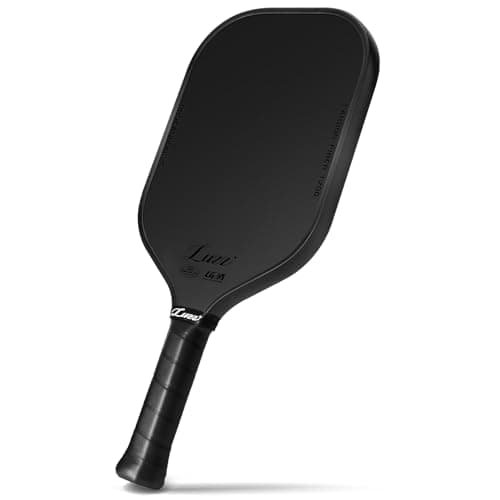
Luzz Cannon16mm floating coreT700 carbonNot published (swing weight is)8.4
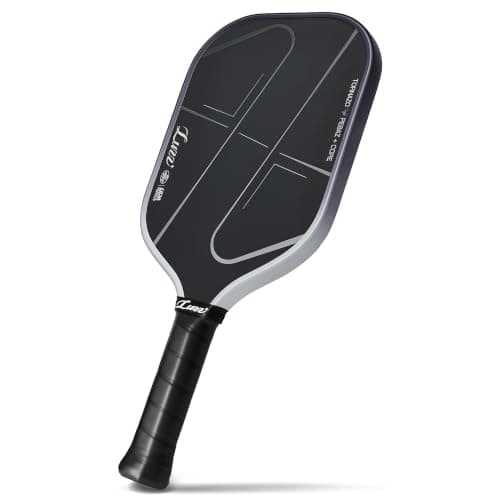
Luzz Pro 4 Tornazo16mm PeBaz foam3D grooved carbon7.93 oz avg8.2
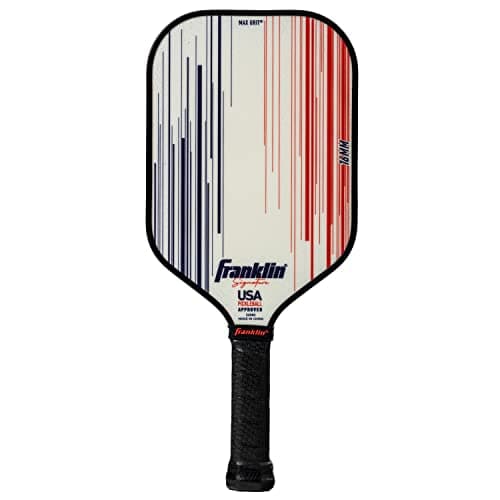
Franklin Signature Series Pro16mm polypropylene honeycombMaxGrit texturedNot published8.0
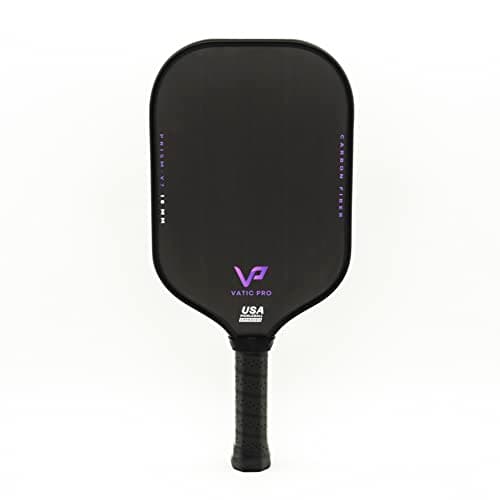
Vatic Pro Prism V716mm, foam-injected wallsRaw carbonNot published8.0
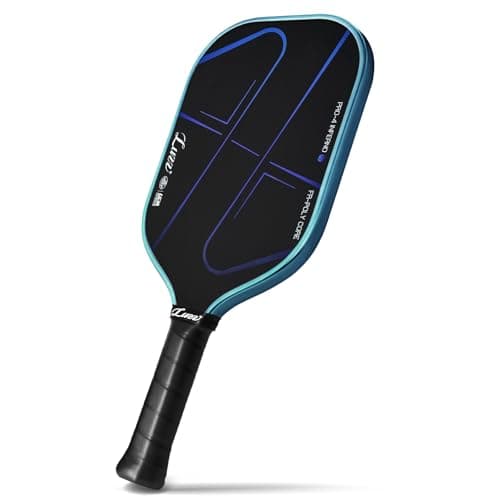
Luzz Inferno16mm microporous polymerT700 carbon7.83–8.03 oz7.8

Read the weight column before you read anything else. Three of these five do not publish a weight at all — and weight changes how a paddle feels at least as much as core thickness does. That is not a gap in this table; it is a gap in the category, and it is the subject of our paddle weight guide.

The honest finding: two of these are nearly the same paddle

The Luzz Cannon and the Luzz Inferno publish the same T700 carbon face and the same 16mm core thickness. The Inferno's differentiator is its core material — a microporous polymer the maker says absorbs 90% of impact — and it costs more. If your elbow is the thing limiting your play, that claim is worth paying for and the Inferno is your paddle; our tennis elbow page covers that decision properly. If your elbow is fine and you are buying on specs, the Cannon publishes the same face and thickness for less, which is exactly why it sits first here and the Inferno sits fifth despite being the more expensive paddle.

The Tornazo is the one to pick if you shape shots rather than just hit them: the 3D grooved carbon face is a genuinely different surface treatment from the flat raw carbon everyone else sells, and it is the only paddle of the five to publish both a weight average and a grip circumference. It is also priced with the flagships, and the material story behind the PeBaz core is a manufacturer claim that no independent lab has separated from ordinary foam. We have said so on the card rather than treating the name as evidence.

Thermoformed is a separate axis, and it is not free

Two paddles here publish thermoformed construction: the Cannon and the Vatic Prism. Thermoforming bonds the paddle as a single unit, which makes it stiffer and generally more powerful. The cost is forgiveness — a stiff paddle transmits an off-center hit as a dead, uncomfortable miss rather than a softened one. Both score lower on forgiveness than the conventional 16mm paddles here, and that is the trade rather than a defect.

This is the reason a 16mm core is not automatically a beginner-friendly paddle, even though 16mm is the control-oriented spec. Thickness helps a beginner; stiffness does not. If you are still finding the middle of the face, the Franklin is the pick of this group — conventional polypropylene honeycomb, the most forgiving construction here, and the cheapest. Or skip the group entirely and start at our best beginner paddles page, which is built for exactly that reader.

Who each one is for

One line each, because this is the part most roundups bury. The Cannon is for an improving player who wants flagship specs without flagship pricing and can live with a stiff, elongated paddle. The Tornazo is for a player who already shapes shots and wants the grippiest published face here, with the fattest published grip of the three Luzz models. The Franklin is for someone moving up to 16mm for the first time who wants the forgiving version. The Prism is for the enthusiast who wants thermoformed construction and does not need a household-name brand. The Inferno is for the player whose arm is the limiting factor.

If none of those is you, the cut you actually want is probably by level or by budget rather than by core thickness. Our intermediate paddles, advanced paddles and under $150 pages all cut the same catalog on different criteria, and our paddle comparison chart puts every paddle we have scored in one table so you can cut it yourself.

The short answer

Quick picks

#Paddle / gearBest forScorePrice
01
Luzz Luzz Cannon Thermoformed Carbon Paddle
Luzz Cannon Thermoformed Carbon Paddle

The Luzz to start with: the same T700 carbon face and 16mm foam-surrounded core as the Pro 4 pair, at roughly half the money.

Best Luzz to start with
8.4
$109.99Amazon
02
Luzz Luzz Pro 4 Tornazo Foam Core Paddle
Luzz Pro 4 Tornazo Foam Core Paddle

Luzz's most interesting paddle on paper — a 3D-grooved carbon face over a PeBaz foam core, aimed at players who shape shots rather than just hit them.

Spin and shot shaping
8.2
$229.00Amazon
03
Franklin Sports Franklin Signature Series Pro Paddle
Franklin Signature Series Pro Paddle

The value pick that punches above its price: a 16mm polypropylene core and a gritty MaxGrit face on a USAPA-approved, tournament-legal paddle.

Best value overall
8.0
$57.29Amazon
04
Vatic Pro Vatic Pro Prism V7 Carbon Paddle
Vatic Pro Prism V7 Carbon Paddle

The enthusiast's value paddle: a thermoformed, foam-injected 16mm carbon build that mimics paddles costing twice as much, from a direct-to-player brand.

Enthusiast value
8.0
$99.99Amazon
05
Luzz Luzz Inferno MPP Carbon Paddle
Luzz Inferno MPP Carbon Paddle

The arm-comfort pick of the line: Luzz claims its microporous polymer core absorbs 90% of impact, which is the claim to chase if your elbow is the limiting factor.

Arm comfort
7.8
$239.00Amazon

#ad · Live prices from the Amazon Product API, as of October 5, 2026. Where we have no verified live price, we show none — we would rather leave a gap than print a number that has rotted.

In detail

The picks, in full

01
Luzz Luzz Cannon Thermoformed Carbon Paddle

Best Luzz to start with

Luzz Cannon Thermoformed Carbon Paddle

T700 carbon face16mm floating coreThermoformedUSAP + UPA-A
8.4/10

The Luzz to start with: the same T700 carbon face and 16mm foam-surrounded core as the Pro 4 pair, at roughly half the money.

Control
8
Power
9
Spin
9
Forgiveness
7
Value
9

Pros

  • Carries the same published face material and 16mm core thickness as the far pricier Pro 4 models
  • Elongated 16.54in body with a 5.52in handle — the reach and two-hand room a driving game wants
  • USAP and UPA-A approved and PBCoR .43 rated, so it is legal under the current tournament testing regime

Cons

  • Thermoformed, stiff and elongated — an off-center hit is punished harder than on a forgiving beginner paddle
  • Sold in both 14mm and 16mm on the Luzz site, and the Amazon listing does not always make the configuration obvious

Don't buy this if…

…you are still learning where the middle of the face is. An elongated, stiff paddle makes a beginner's mishits worse, not better.

$109.99View on Amazon

Price as of October 5, 2026. Prices change — Amazon's is the one that counts.

#ad · we may earn a commission from this link to Luzz Cannon Thermoformed Carbon Paddle

02
Luzz Luzz Pro 4 Tornazo Foam Core Paddle

Spin and shot shaping

Luzz Pro 4 Tornazo Foam Core Paddle

3D grooved carbon face16mm PeBaz core7.93 oz avgUSAP + UPA-A
8.2/10

Luzz's most interesting paddle on paper — a 3D-grooved carbon face over a PeBaz foam core, aimed at players who shape shots rather than just hit them.

Control
9
Power
9
Spin
9
Forgiveness
8
Value
6

Pros

  • The 3D grooved weave is a genuinely different face treatment from the flat raw-carbon everyone else sells
  • PeBaz is a PEBA-family foam, the material class running-shoe midsoles moved to for energy return
  • Published 4.25in grip circumference is the fattest of the three, which suits larger hands without an overgrip

Cons

  • Amazon's listing calls the core EPP foam while Luzz calls it PeBaz — the same part described two different ways
  • Priced with the flagships, so you are paying a premium for a material story that no independent lab has separated from ordinary foam

Don't buy this if…

…you want the cheapest way into the brand. The Cannon shares the carbon face and the 16mm core for far less.

$229.00View on Amazon

Price as of October 5, 2026. Prices change — Amazon's is the one that counts.

#ad · we may earn a commission from this link to Luzz Pro 4 Tornazo Foam Core Paddle

03
Franklin Sports Franklin Signature Series Pro Paddle

Best value overall

Franklin Signature Series Pro Paddle

MaxGrit surface16mm PP coreUSAPA approvedTournament legal
8.0/10

The value pick that punches above its price: a 16mm polypropylene core and a gritty MaxGrit face on a USAPA-approved, tournament-legal paddle.

Control
8
Power
7
Spin
8
Forgiveness
8
Value
9

Pros

  • 16mm core is the thick, control-oriented spec most improving players end up wanting
  • MaxGrit textured face grips the ball for real, usable spin
  • Franklin makes the official US Open ball, and that credibility shows in the build

Cons

  • The 16mm version's published 4.5-inch grip runs large for smaller hands (the 13mm version's is 4.25 inches)
  • Graphics are loud if you like an understated paddle

Don't buy this if…

…you want a thin, poppy power paddle — the 16mm core is tuned for control, not raw put-away speed.

$57.29View on Amazon

Price as of October 5, 2026. Prices change — Amazon's is the one that counts.

#ad · we may earn a commission from this link to Franklin Signature Series Pro Paddle

04
Vatic Pro Vatic Pro Prism V7 Carbon Paddle

Enthusiast value

Vatic Pro Prism V7 Carbon Paddle

Raw carbon face16mm coreFoam-injected wallsThermoformed
8.0/10

The enthusiast's value paddle: a thermoformed, foam-injected 16mm carbon build that mimics paddles costing twice as much, from a direct-to-player brand.

Control
9
Power
8
Spin
9
Forgiveness
6
Value
8

Pros

  • Thermoformed build with foam-injected walls is the construction expensive paddles use
  • Raw carbon face grips the ball hard for spin without a gritty coating that wears off
  • A cult favorite in enthusiast circles for delivering flagship specs at a mid price

Cons

  • Thermoformed paddles are stiff and unforgiving on off-center hits
  • A smaller brand — you are trusting the community's word, not a household name

Don't buy this if…

…you are a beginner — a stiff, thermoformed paddle punishes the mishits you are still making.

$99.99View on Amazon

Price as of October 5, 2026. Prices change — Amazon's is the one that counts.

#ad · we may earn a commission from this link to Vatic Pro Prism V7 Carbon Paddle

05
Luzz Luzz Inferno MPP Carbon Paddle

Arm comfort

Luzz Inferno MPP Carbon Paddle

T700 carbon face16mm MPP core7.93 oz avgUSAP + UPA-A
7.8/10

The arm-comfort pick of the line: Luzz claims its microporous polymer core absorbs 90% of impact, which is the claim to chase if your elbow is the limiting factor.

Control
8
Power
8
Spin
8
Forgiveness
9
Value
6

Pros

  • Microporous polymer core is the one thing in the line pitched at shock absorption rather than power
  • Published weight range is the tightest of the three (7.83-8.03 oz), so what arrives is closer to what is advertised
  • Same USAP and UPA-A approval and PBCoR .43 rating as the rest of the Pro line

Cons

  • The most expensive of the three at the last price check, and the spec sheet is otherwise near-identical to the Tornazo
  • Neither Luzz nor its retailers publish an edge-guard specification for it

Don't buy this if…

…you have no arm trouble and are buying on specs alone. The cheaper Cannon publishes the same face, core thickness and swing weight.

$239.00View on Amazon

Price as of October 5, 2026. Prices change — Amazon's is the one that counts.

#ad · we may earn a commission from this link to Luzz Inferno MPP Carbon Paddle

16mm is not a quality tier

It is worth saying plainly, because the marketing implies otherwise: a 16mm paddle is not a better paddle than a 14mm one. It is a differently tuned one. The reason 16mm dominates the enthusiast conversation is that the modern game is decided in the soft exchanges at the kitchen line, and a thicker core is better at those. If your game is drives and fast hands, a thinner core suits you and no amount of core thickness will fix the mismatch. Our power paddles and control paddles pages cut by what you are trying to do rather than by a millimeter figure.

Check the listing configuration before you buy

Several of these models are sold in both 14mm and 16mm, and the Amazon listing does not always make the configuration obvious — the Cannon's card says exactly that. Read the variant selector, not the headline. This is a real risk on a page like this one: the whole reason to buy these paddles is a core thickness that the listing may let you get wrong in one click.

What we cannot tell you

We have not hit a ball with any of these five, and we did not measure a core, a weight or a deflection. Every spec above is published by the manufacturer or its retailers and is attributed on each product's own page; the “not published” entries are the honest state of the listings rather than an omission on our part. The scores are our judgment of the published evidence against the rubric on our methodology page, weighted for the improving player this page serves, and the prices come from our live price pipeline rather than from this text.
How we picked

We have not physically tested this gear

Everyone in this category says they tested twenty paddles. We have not tested any — and we say so. What we did instead: compiled the manufacturer-published specifications (face material, core thickness, grip size, USAPA approval), normalized them, and scored each product against a published rubric weighted for the skill tier this page serves. The scores are judgments from documented research, not measurements we took, because we do not have a lab and are not going to pretend we do.

Questions

Frequently asked

What is the best 16mm pickleball paddle?
The Luzz Cannon, on our scoring — it is the highest-scoring paddle in our catalog and publishes the same T700 carbon face and 16mm core as its pricier siblings. If you want the most forgiving 16mm paddle rather than the highest-scoring one, the Franklin Signature Series Pro uses conventional polypropylene honeycomb and is the gentler choice.
Is a 16mm paddle better than a 14mm paddle?
No — it is tuned differently. 16mm absorbs more energy, which reads as control and touch; 14mm gives more pop and suits a speed-and-hands game. See our 14mm vs 16mm guide.
Is 16mm good for beginners?
The thickness is, but the construction often is not. Thermoformed 16mm paddles are stiff and punish off-center contact. A beginner wanting 16mm should look at the conventional polypropylene-honeycomb option here rather than a thermoformed one, or start at our beginner paddles page.
Does 16mm mean the paddle is heavier?
Not necessarily, and you usually cannot tell from the listing — three of the five paddles on this page publish no weight at all. Core thickness and weight are independent specs. Our paddle weight guide covers what is actually published.
What is the difference between the 16mm cores on this page?
Five different fills at the same thickness: polypropylene honeycomb (Franklin), foam-injected walls with thermoformed construction (Vatic Prism), a floating core (Luzz Cannon), PeBaz foam (Luzz Tornazo) and a microporous polymer (Luzz Inferno). The thickness is the same; the feel is not.

Keep reading

Receipts

Sources

We do not run a testing lab, and we do not pretend to. Our specs come from manufacturer listings and spec sheets; our rules and dimensions come from the official rulebook. Where we could not verify something, we say so on the page rather than quietly leaving it out. Read our full method.