Skip to content
Four Oh Club

Court footwear · Shoes

The Best All-Court Pickleball Shoes

If you play indoors and outdoors and want one pair, the question is not which shoe is best - it is which maker will actually tell you the shoe works on both surfaces. Four that do, ranked on what is published.

By Stephen V.Updated How we score
#ad

We earn a commission when you buy through our Amazon links, at no extra cost to you. It never changes our rankings, and we say so when the cheaper paddle is the better buy. How this works.

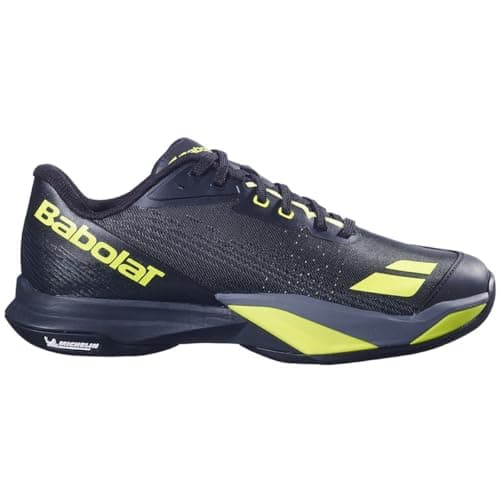
If you want one pair for both surfaces, buy the Babolat Jet Mach 4. It is the only shoe in our catalog whose published model name and published outsole designation are both all-court, and its outsole uses a named Michelin rubber compound. That is a documentation answer, not a performance one, and the distinction is the whole point of this page: in this category almost nobody publishes what surfaces their shoe is for, so the honest way to rank “one shoe for both” is by who tells you.

The criterion, and why it is only one

USA Pickleball describes the game as played “indoors or outdoors,” and a great many players do both in the same week. The two surfaces ask different things of a shoe. Outdoor concrete and asphalt abrade an outsole and reward a durable compound. Indoor wood and synthetic sport surfaces are higher-grip, so the shoe needs to release rather than grab — and the facility almost certainly requires a non-marking sole.

A shoe that genuinely does both needs an outsole compound and tread that work on both. Makers know this and mostly do not say — so this page ranks on exactly one thing: what the manufacturer or its specialist retailers publish about surface suitability. Not overall score, not comfort, not our opinion of the shoe. One criterion, applied consistently, stated up front.

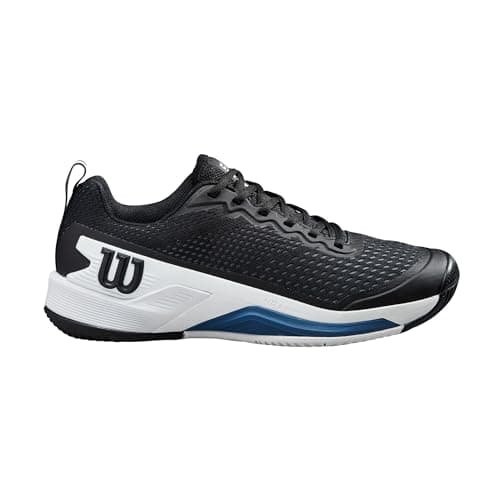
That produces an order that will look wrong if you are reading overall scores, so here it is plainly: the Wilson Rush Pro 4.5 has the highest overall score of the four (8.4) and is ranked second. The Babolat leads because it documents the thing this page is about better than the Wilson does. If you want the catalog sorted by overall quality instead, our best pickleball shoes for men and best for women pages do that, and our comparison chart is the equivalent reference table for paddles.

What each maker actually publishes

ShoePublished surface designationNamed outsole compoundNon-marking statedOur score
Babolat Jet Mach 4All-court, in the model name and the specMichelinNot stated8.0
Wilson Rush Pro 4.5All-court outsoleNot named; hard-court abrasion compoundNot stated8.4
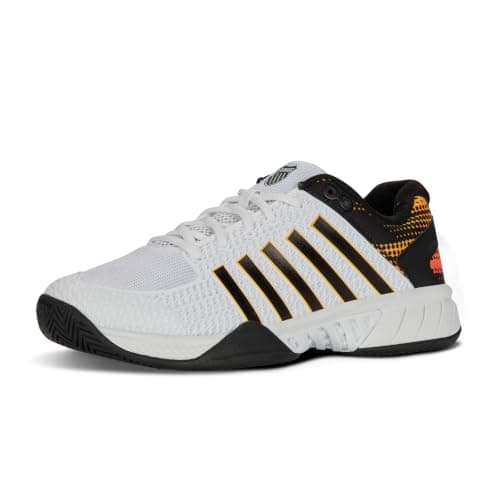
K-Swiss Express LightCourt; modified herringbone treadAosta 7.0Yes8.0
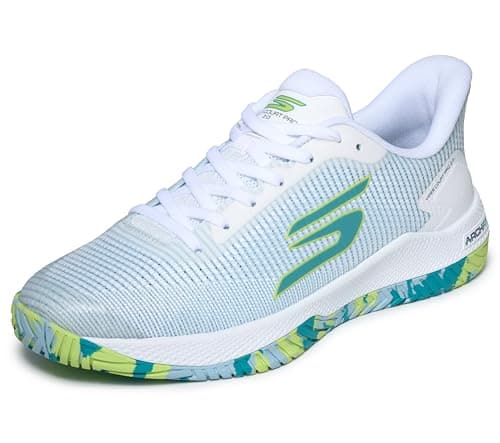
Skechers Viper Court Pro 2.0None publishedGoodyearNot on Skechers' own US page8.0

Three of those four rows contain a “not stated”. That is the state of the category, and it is why we rank on documentation: every other way of answering this question involves deciding for yourself what an unlabelled outsole is for.

The K-Swiss is the one that solves the gym problem

Read the non-marking column again, because it is the only column with a hard consequence. Indoor facilities publish footwear policies, and they are enforced at the door — Kent State University's recreational court policy states flatly that “Non-marking shoes are required.” If you turn up to an indoor session in a shoe nobody will confirm is non-marking, you may not play.

The K-Swiss Express Light is the only shoe of these four to publish a non-marking sole, alongside a named Aosta 7.0 compound and a modified herringbone tread. If your indoor play happens at a facility with a posted footwear policy, that moves it to the top of this list for you personally, whatever the order on this page says. It is third here only because its published surface designation is “court” rather than “all-court” — the single criterion this page ranks on.

Herringbone is worth a sentence on its own, because it is the tread pattern that genuinely suits both surfaces: it channels dust on a wood floor and still bites on hard court. It is the reason a modified-herringbone court shoe is usually a safer all-court bet than a shoe with an aggressive outdoor-only tread.

Why the Skechers is last, and why that is not an insult

The Viper Court Pro 2.0 is the most cushioned shoe in our entire catalog — it scores 9 for cushioning, higher than anything else we have scored, and it is pickleball-specific rather than a tennis shoe pressed into service. On most of our pages it ranks well, and on our plantar fasciitis page that cushioning is exactly the point.

It is last here because Skechers' own US product page publishes a Goodyear Performance Outsole and no surface designation at all. We found international retail listings claiming the outsole is “indoor/outdoor approved and non-marking”, and we are not repeating that, because the manufacturer does not say it. A retailer's unsourced claim is not a specification, and on a page whose entire criterion is published surface suitability, the absence has to count. That is a result about the documentation, not about the shoe.

Does one pair for both actually make sense?

Honestly, for most players, yes — with one caveat worth knowing before you spend. The trade-off is wear rate. An outsole compound tuned to survive outdoor concrete tends to be harder than one optimised purely for indoor grip, and a softer indoor-friendly compound wears noticeably faster outdoors. Doing both in one shoe means accepting a compromise at one end.

Where the compromise stops being worth it: if you play outdoors several times a week on rough concrete, a dedicated outdoor shoe will outlast an all-court one by enough to pay for itself, and our outdoor shoe roundup ranks on exactly that durability evidence. If your indoor venue has a strict non-marking policy and your outdoor play is occasional, buy for the indoor requirement and accept faster outdoor wear. Our indoor vs outdoor guide walks through the difference between the two surfaces in full, and our shoe lifespan guide covers what wear actually looks like and when to replace.

What all-court does not mean

It does not mean a running shoe will do. All-court describes the surfaces a court shoe covers, not a relaxation of what a court shoe is. The lateral support that keeps your ankle together during a sideways push-off is the whole reason to wear a court shoe at all, and running shoes are built to roll forward rather than resist sideways load. Every shoe on this page scores 8 or 9 for lateral support. Our running vs tennis vs court shoes guide covers that properly, and our do you need pickleball shoes page answers the prior question.

It also does not override fit. A shoe that documents its surfaces beautifully and is the wrong shape for your foot is the wrong shoe. If you have wide feet, start at our wide feet page; if you need room through the midfoot, the flat feet pageis the better starting point; and the Babolat's card notes a snug fit, which is a genuine reason to skip our top pick. Our how to choose guide puts fit ahead of every spec on this page, and it is right to.

The short answer

Quick picks

#Paddle / gearBest forScorePrice
01
Babolat Babolat Jet Mach 4 All-Court Shoe
Babolat Jet Mach 4 All-Court Shoe

A tennis all-court shoe that crosses over to pickleball perfectly — lightweight, aggressive, and built for exactly the lateral movement pickleball demands.

Tennis crossover players
8.0
$111.30Amazon
02
Wilson Wilson Rush Pro 4.5 Court Shoe
Wilson Rush Pro 4.5 Court Shoe

Wilson's stalwart court shoe, frequently on deep discount — a proven, supportive platform that crosses over to pickleball without complaint.

Discount court value
8.4
$83.00Amazon
03
K-Swiss K-Swiss Express Light Pickleball Shoe
K-Swiss Express Light Pickleball Shoe

A purpose-built, lightweight pickleball court shoe from a brand that has made court shoes for half a century — the safe default.

Best all-around court shoe
8.0
$79.94Amazon
04
Skechers Skechers Viper Court Pro 2.0 Pickleball Shoe
Skechers Viper Court Pro 2.0 Pickleball Shoe

Skechers' pickleball line leans on the brand's comfort reputation, giving you a court-legal outsole with a softer, more forgiving ride than most.

Comfort-first players
8.0
$99.49Amazon

#ad · Live prices from the Amazon Product API, as of October 5, 2026. Where we have no verified live price, we show none — we would rather leave a gap than print a number that has rotted.

In detail

The picks, in full

01
Babolat Babolat Jet Mach 4 All-Court Shoe

Tennis crossover players

Babolat Jet Mach 4 All-Court Shoe

All-court outsoleLightweightTennis-grade supportSnug fit
8.0/10

A tennis all-court shoe that crosses over to pickleball perfectly — lightweight, aggressive, and built for exactly the lateral movement pickleball demands.

Lateral support
9
Grip
9
Cushioning
7
Durability
8
Value
7

Pros

  • Tennis all-court shoes are engineered for the same lateral loads pickleball creates
  • Light and responsive for quick direction changes
  • Babolat's racket-sport pedigree means a shoe that lasts

Cons

  • It is a tennis shoe — perfect on court, unnecessary off it
  • The performance fit runs snug and low-volume

Don't buy this if…

…you have a wide foot — Babolat's performance last runs narrow, and this is not the forgiving option.

$111.30View on Amazon

$159.0030% off

Price as of October 5, 2026. Prices change — Amazon's is the one that counts.

#ad · we may earn a commission from this link to Babolat Jet Mach 4 All-Court Shoe

02
Wilson Wilson Rush Pro 4.5 Court Shoe

Discount court value

Wilson Rush Pro 4.5 Court Shoe

All-court outsoleSupportive fitDurable buildOften discounted
8.4/10

Wilson's stalwart court shoe, frequently on deep discount — a proven, supportive platform that crosses over to pickleball without complaint.

Lateral support
9
Grip
8
Cushioning
7
Durability
9
Value
9

Pros

  • A long-running, proven court shoe with a stable, supportive fit
  • Frequently sells well below list, making it a value standout
  • Durable outsole compound built for hard-court abrasion

Cons

  • A tennis shoe rather than a pickleball-specific one (functionally identical for the court)
  • Heavier than the lightest options here

Don't buy this if…

…you want the lightest possible shoe for fast footwork — this prioritizes support and durability over weight.

$83.00View on Amazon

$138.0040% off

Price as of October 5, 2026. Prices change — Amazon's is the one that counts.

#ad · we may earn a commission from this link to Wilson Rush Pro 4.5 Court Shoe

03
K-Swiss K-Swiss Express Light Pickleball Shoe

Best all-around court shoe

K-Swiss Express Light Pickleball Shoe

Court outsoleLightweightDurable toeLateral support
8.0/10

A purpose-built, lightweight pickleball court shoe from a brand that has made court shoes for half a century — the safe default.

Lateral support
9
Grip
8
Cushioning
7
Durability
8
Value
8

Pros

  • Designed as a pickleball court shoe, not a running shoe pressed into service
  • Reinforced toe survives the toe-drag that shreds running shoes on court
  • Light enough for quick lateral steps without feeling flimsy

Cons

  • Court shoes are firmer underfoot than a cushioned running shoe — that is the point, but it is an adjustment
  • Styling is functional, not fashion

Don't buy this if…

…you want a plush, max-cushion feel for all-day wear — a court shoe is deliberately firmer and lower.

$79.94View on Amazon

$110.0027% off

Price as of October 5, 2026. Prices change — Amazon's is the one that counts.

#ad · we may earn a commission from this link to K-Swiss Express Light Pickleball Shoe

04
Skechers Skechers Viper Court Pro 2.0 Pickleball Shoe

Comfort-first players

Skechers Viper Court Pro 2.0 Pickleball Shoe

Court outsoleCushioned midsoleLateral supportPickleball-specific
8.0/10

Skechers' pickleball line leans on the brand's comfort reputation, giving you a court-legal outsole with a softer, more forgiving ride than most.

Lateral support
8
Grip
8
Cushioning
9
Durability
7
Value
8

Pros

  • Skechers' comfort-focused cushioning is easy on the feet and joints
  • A genuine pickleball court outsole, endorsed by touring pros
  • Widely available with generous width options

Cons

  • The soft midsole gives up a little of the firm, connected feel competitive players prefer
  • Not the most durable outsole for players who grind daily

Don't buy this if…

…you want the firmest, most connected court feel for aggressive lateral play — a stiffer shoe serves you better.

$99.49View on Amazon

$120.0017% off

Price as of October 5, 2026. Prices change — Amazon's is the one that counts.

#ad · we may earn a commission from this link to Skechers Viper Court Pro 2.0 Pickleball Shoe

Check your venue's policy before you check our ranking

It costs nothing and it can override everything above. Indoor facilities post footwear rules, and some are specific about non-marking soles and about shoes that have been worn outdoors at all — a grit-filled outsole marks a wood floor regardless of its compound. If your venue is strict, the practical answer some players land on is a cheap second pair kept for indoor use only, which beats buying one expensive pair that satisfies nobody.

Tennis shoes are not a downgrade here

Two of these four are tennis models rather than pickleball-branded ones, and that is not a compromise — tennis court shoes are built for the same lateral loads on the same surfaces, and the all-court designation this page ranks on comes from tennis in the first place. It is also where the discounts are: the Wilson frequently sells well below list, which is the single largest price lever on this page. Our pickleball vs tennis shoes guide covers the comparison in full.

What we cannot tell you

We have not worn any of these four shoes, measured an outsole compound, or tested a wear rate on either surface. Every claim above is published by the manufacturer or a specialist retailer and is attributed in the sources below; the “not stated” and “none published” entries are the honest state of those listings and are the reason the ranking looks the way it does. We have deliberately not repeated a retailer's indoor/outdoor claim that the manufacturer does not make. The scores are judgments of the published evidence against the rubric on our methodology page, and prices come from our live price pipeline rather than from this text.
How we picked

We have not physically tested this gear

Everyone in this category says they tested twenty paddles. We have not tested any — and we say so. What we did instead: compiled the manufacturer-published specifications (face material, core thickness, grip size, USAPA approval), normalized them, and scored each product against a published rubric weighted for the skill tier this page serves. The scores are judgments from documented research, not measurements we took, because we do not have a lab and are not going to pretend we do.

Questions

Frequently asked

What are the best all-court pickleball shoes?
The Babolat Jet Mach 4, on the criterion this page uses: it is the only shoe in our catalog published as an all-court model with a named outsole compound (Michelin). If your indoor venue enforces a non-marking rule, the K-Swiss Express Light is the better buy — it is the only one of the four to publish a non-marking sole.
Can you use the same shoes for indoor and outdoor pickleball?
Usually yes, with a wear trade-off. A compound hard enough to survive outdoor concrete is not the one optimised purely for indoor grip, and a softer indoor-friendly sole wears faster outdoors. If you play outdoors several times a week, a dedicated outdoor shoe will last longer.
Do indoor pickleball courts require non-marking shoes?
Many do, and it is enforced. Kent State University's court policy states “Non-marking shoes are required.” Check your facility's posted policy, because a shoe nobody will confirm is non-marking can keep you off the floor.
What does all-court actually mean on a shoe?
That the maker intends the outsole compound and tread for multiple hard surfaces rather than one specific type. It is a tennis designation originally. It does not mean the shoe is less of a court shoe — it still needs the lateral support a running shoe lacks.
Why is the Skechers Viper ranked last here?
Because Skechers' own US product page publishes a Goodyear outsole and no surface designation, and this page ranks on published surface suitability. It is the most cushioned shoe in our catalog and ranks highly elsewhere — this is a documentation result, not a verdict on the shoe.
Is herringbone tread good for both surfaces?
It is the pattern most associated with doing both: it channels dust on wood and still grips hard court. The K-Swiss publishes a modified herringbone tread, which is one reason it is a sensible all-court bet despite being designated simply as a court shoe.

Keep reading

Receipts

Sources

We do not run a testing lab, and we do not pretend to. Our specs come from manufacturer listings and spec sheets; our rules and dimensions come from the official rulebook. Where we could not verify something, we say so on the page rather than quietly leaving it out. Read our full method.